‘Til Death…and After

Not even a bird could be heard in pre-dawn mist

The quiet hours can be overwhelming. When one finds the way outdoors, at times when no other human guests are likely to be encountered, there is no shortage of wonders to be found in such silent vistas. Nor is there any way around confronting the unadorned absences of those who should be here with us.

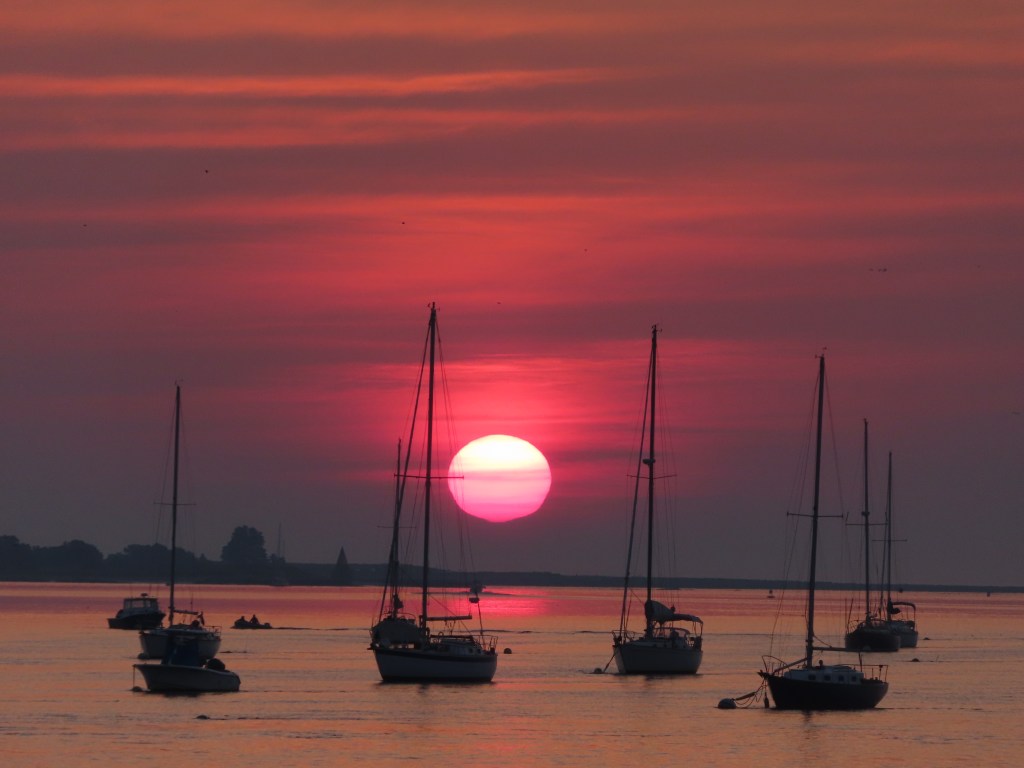
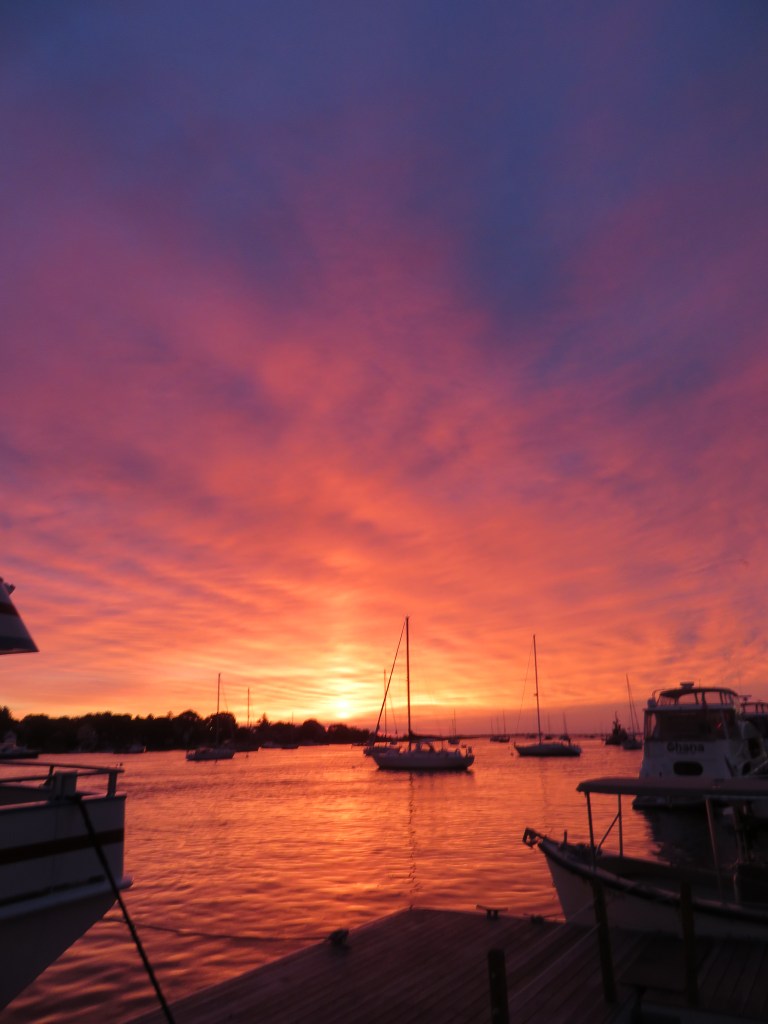
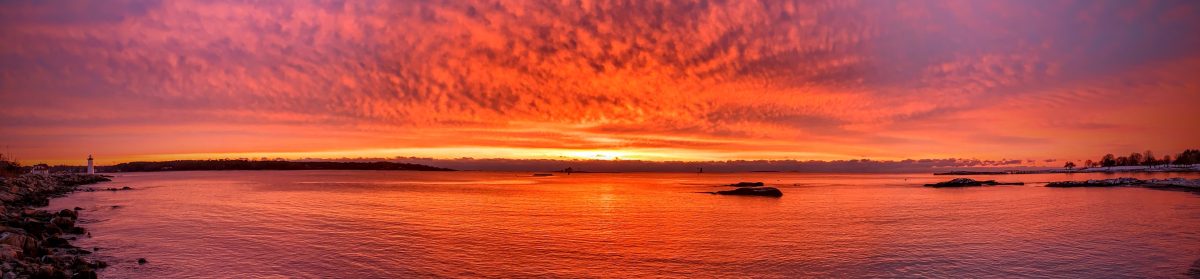
There’s nothing quite like watching the sun emerge above a sea of clouds, or disappear underneath the horizon at sundown, to underscore the thin and immeasurable wordless space between heaven and earth.

I’ve been alone to see such moments–before dawn and after dusk–in some of the planet’s most densely-populated cities, and some of its emptiest places.

It’s been quite some time since I’ve been able to regularly appear on these pages. I’m still not able to explain what’s caused me to be-for far longer than I could have imagined-uncharacteristically hushed about major portions of my last several years.

But such enforced silenced swaths have left me enough space to share my very present past, packed today with the quiet hours in which I still celebrate the July marriage that brought me everywhere I’ve been since leaving home for school. Not only to the earthbound places my husband and I were lucky enough to share, but all the places to which his loss indirectly has brought me.

On each such anniversary, I’m astounded anew that he hasn’t aged alongside me. It stunned me when, during one of these quiet hours, I first realized I’d not only caught up with, but already somehow lived beyond the age he’d reached at his death. It was more crushing when I realized one of our children had lived more than half a young lifetime without him.

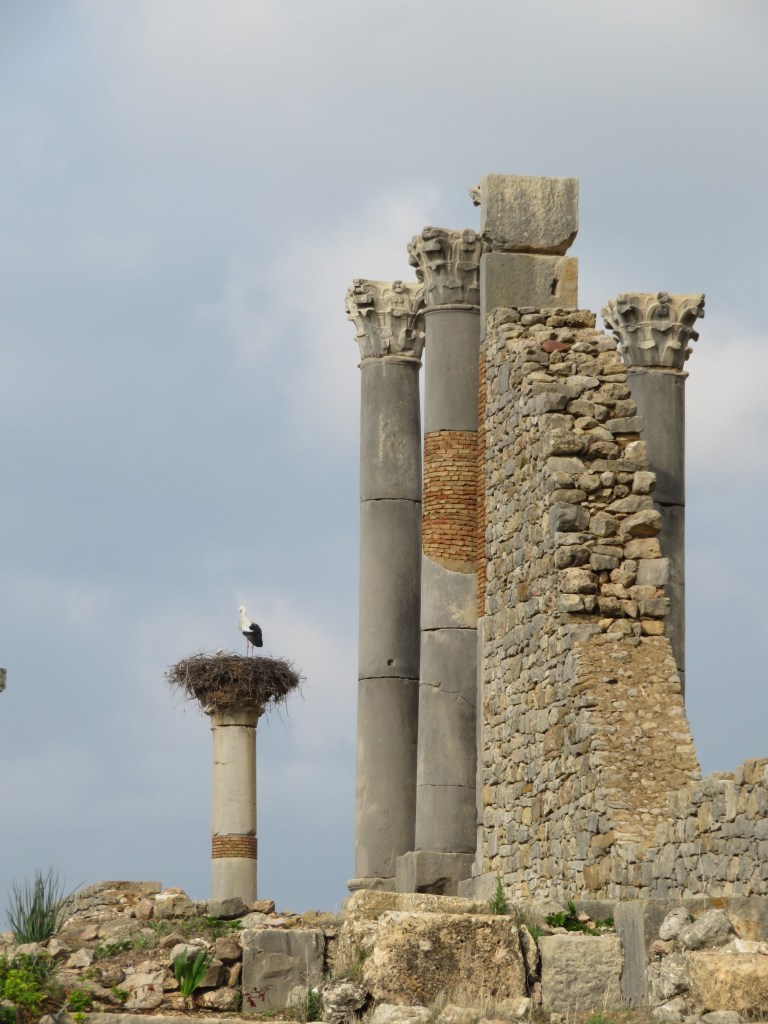
But in quiet hours at timeless vistas and ancient places, I can sometimes spare my aggrieved self the focus on earthly years. I allow myself to see the enduring forever.

Pre-dawn in Udaipur, Rajasthan

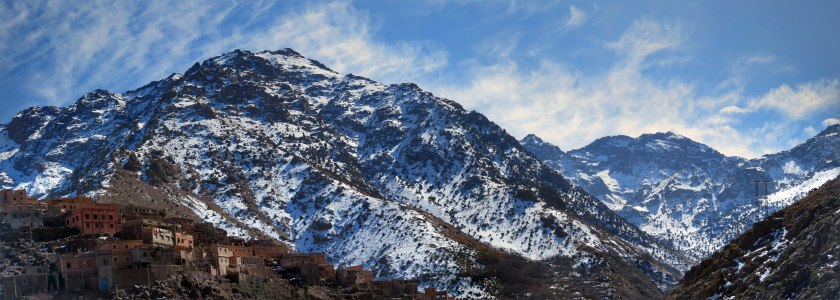
Even when the colors fizzle, or are overwhelmed by fog, there are treasures in the near-silent spaces of the endless quiet hours.

Happy Anniversary.

A Dozen Red Roses

Some of the brilliant reds of my mother-in-law’s home state

The dazzling woman in the red dress?

That was my mother-in-law.

We don’t know if the story was as much of a legend as my mother-in-law herself, but the story my father-in-law told was that he’d been at a Boston College dance where he saw a beautiful woman in a red dress from across the room. When she later emerged from behind a column he had asked her to dance… and discovered it was a different woman in a red dress.

Their own family would begin with their first child and only son, my husband. And Grandma Jackie would become a legend in that family, experiencing joy and enduring tragedy with grace; dedicating herself to service and all the families to which she belonged; maintaining her strong faith and fortitude and good humor; creating art; and teaching the rest of us a great deal about acceptance of all the beauty and tragedy in her long life.

My father-in-law grew up as the youngest of five brothers, just south of Boston. But far northern Maine, where my mother-in-law had grown up as the middle child among more than a dozen–some of whom had died very young– was an entirely different story. My husband had been anxious to share that part of his mother’s life and world with our own children, especially the outdoor wonders which were so close and omnipresent even when life itself had been so hard.

Seeing my mother-in-law with her brothers and sisters at “The Camp” was a revelation. I suppose we all revert to our original selves when we play games, and it was a feast to watch and listen as gaggles of very serious men and women (including those who wore collars and habits) snapped at and joked with each other when the stakes peaked. After all, only one would win the Cribbage game at hand.

The “Camp” was a cabin built by a half-dozen of my mother-in-law’s brothers, including three priests. Of multitudinous siblings, on my best count, eleven had reached adulthood. They included a heavenly complement: two Diocesan priests and one Franciscan, one Dominican sister, and one Daughter of Wisdom. All had French names, including my mother-in-law, and one had been Christened Jeanne D’Arc, lending some support to the intersection of given names and destiny. She was a force in the world, and would spend the next quarter-century providing nursing care to women and children in Malawi. The rest stayed closer to home, triangulated within the 1.5 latitudinal degrees which separate Lewiston and Montreal. In rotation they would conduct the marriage ceremonies of dozens of nieces and nephews, beginning with our branch of this very fruitful tree.

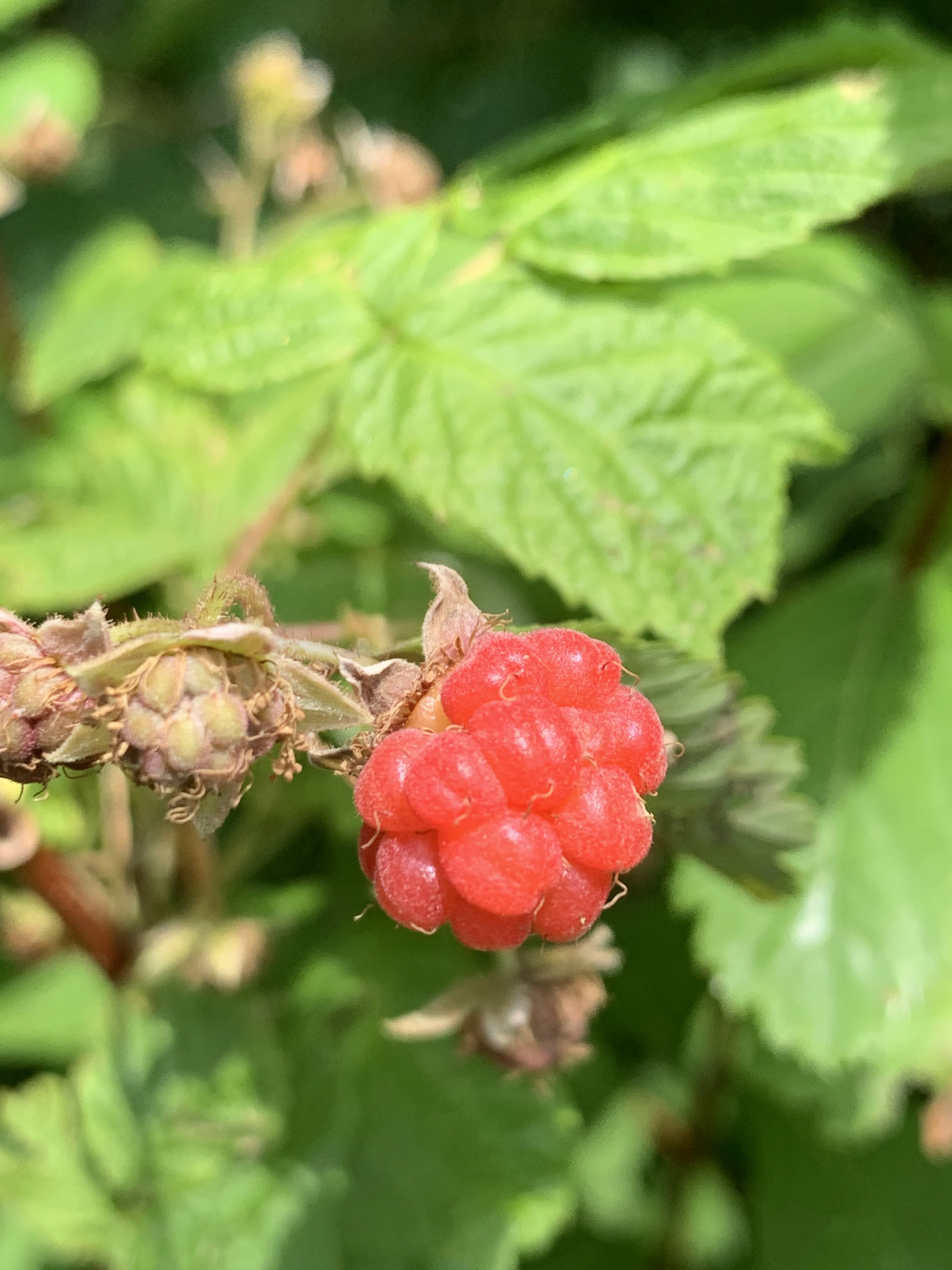
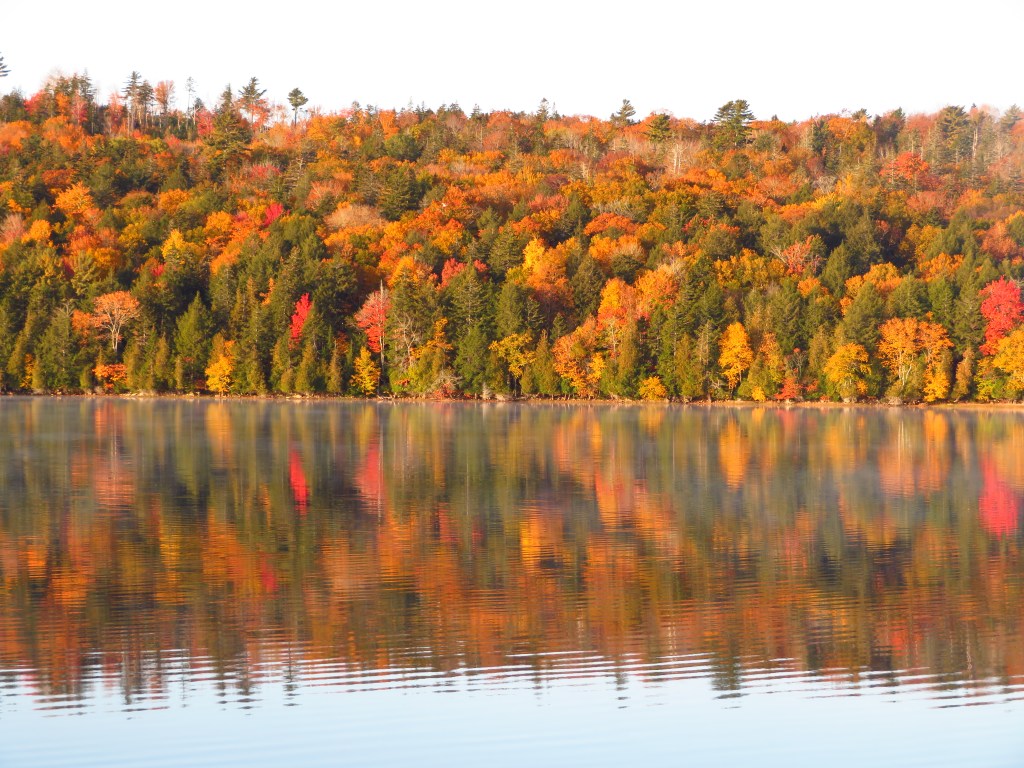
Whenever we went to Maine, I found shades of red. They simmered and blazed and reflected on Eagle Lake. They glowed like red phosphorus on the shining casings of what was represented to me to be a regionally beloved hot dog. I did not partake. Reds flashed on birds’ wings and beckoned from berries, and I wondered if they included the poisonous ones which may have been consumed by young Valére, who had been among the siblings of my mother-in-law who did not grow up to be an uncle to the next generation. This place was part of my mother-in-law, too, which she carried with her to her new life in Massachusetts and transmitted to all of us for whom she set an example of tenacity and quiet strength and resilience, all of it anchored in faith and love.

Her grandchildren adored her, and she would host an army of them every Sunday. The cousins would exhaust themselves playing games outside, eventually settling in groups all over the house. My in-laws upsized for retirement, in order to be able to fill their home with their children’s children. Some, thumbs locked in cupid mouths between bright cheeks, napped in cribs under Grandma Jackie’s quilts. Toddlers cradled newborns on the big yellow couch as parents hovered within lurching distance. Children clustered around early-generation computers in Papa Dick’s office, its walls overflowing with family photos and their artwork-of-the-day. Above them was always the hand-hammered silver letter “G” his own little boy had forged for him in elementary school, which also hung on the wall of his room when he peacefully passed away to rejoin his son almost five years ago.

Grandma Jackie was so vibrant and strong and giving for so very long, and all her grandchildren had a chance to say goodbye before she passed away in comfort and at peace. On a glorious day when it could just as easily have been an ice storm, there was clear blue sky and sun when we whispered what we needed to say as she took her place next to her husband in a cemetery just down the street from their retirement home.

Papa Dick had always marked special occasions by bringing her a dozen roses in dancing-dress red.

Under a heart-shaped rose wreath, a dozen red roses glowed in Pentecost red, under a perfect sun.

The Long Way Through…

I’m so conditioned to my lens of somber reflection that if I see the word “zigzag,” a snippet of a poem about grief pops into my mind: “you went zig and I went zag….”

Never to share the same geometric or worldly plane again.

Zigzagging as a complete rupture–permanent separation from a single once-common point and place in the world. No longer a connection at the root, but instead an ever-widening impenetrable vortex away from it.

The wedge of the tornado, not its swirling touchdown point.

Charles Causley’s poetry-fueled rambles around his home town of Launceston included the hardest of hard-edged zigzags set into quarry stone.

But when searching my own images for zigzags, I find they’re not always sharp-edged, and rarely are set in stone.

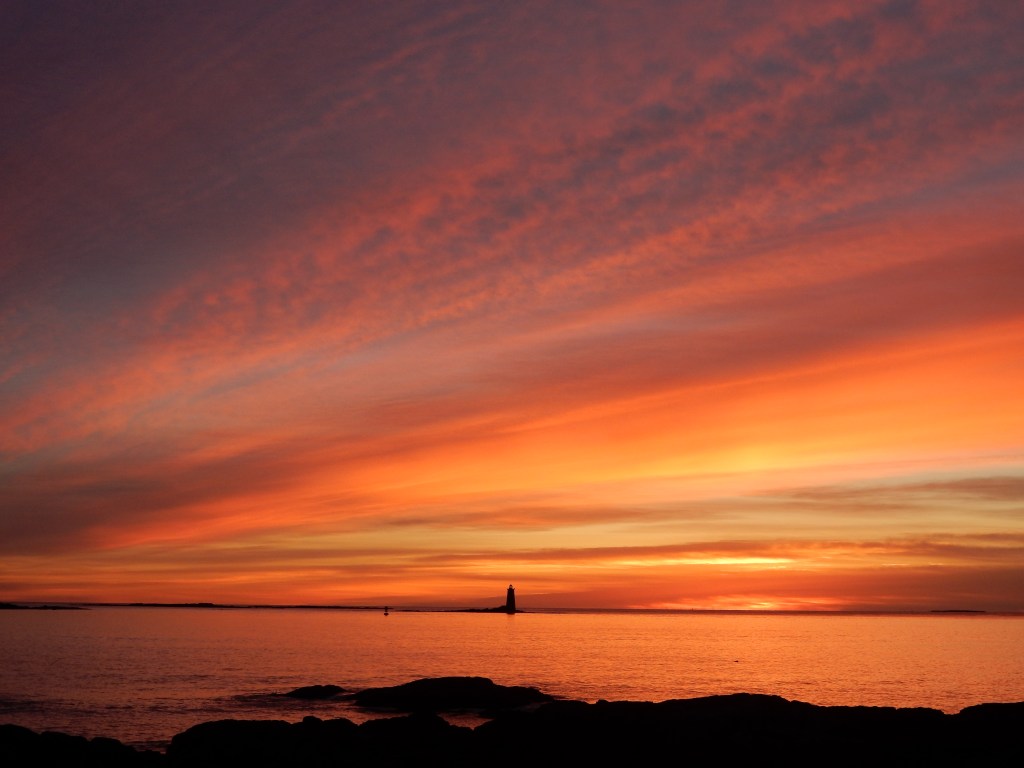
Early sunset clouds cast a beautiful Icelandic pony in a otherworldly soft ice-gold that makes her appear to glow. A Cedar waxwing’s bright feathers set off soft black triangles and by perching on bare March branches divides the sky into floating triangles of pure blue. Sunrise pauses just long enough to separate itself into a sharply angled fan of fire that reduces a lighthouse to a tiny point. Sunlit leaves reveal a tree’s branching zigs and zags, which may rearrange themselves with as little as the weight of a squirrel.

Zigzags aren’t only sharp edges and set or severed stone.

Not nearly.

Rabatment and Ruins

Plum Island, Newbury, Massachusetts

It’s all about the balance.

I’d neither learned the techniques people use to frame shots with a “real” camera, nor ever heard of rabatment until now. It is but one way to capture a slice of the world with rectangles-within-rectangles.

Consider all the lines one could draw to carve up the whole of a Plum Beach sunrise space into geometric planes. The cornflower sky becomes slatted air, as if one could reach up and gather sunrise’s starbursts into a morning monture.

Light and air carve off rectangular planes from landscapes of still water and gusting sky.

The above photo was taken on an extraordinary sub-zero Massachusetts morning. It somehow packs in each separate category of cleaving and balance in a landscape: rabatment on the left, where a leafless island tree anchors the composition; sky sheared off at the lower third, where the Merrimack River flows East to the horizon and the Atlantic; and a trick of light and clouds that slices straight down the mid-seam.

And I could not possibly leave the subject of rectangular composition without sharing a bit of rabbatement–tricks of composition by means of color and light and segmented negative space in and around another Rabat. . . .