Oh Dark Thirty

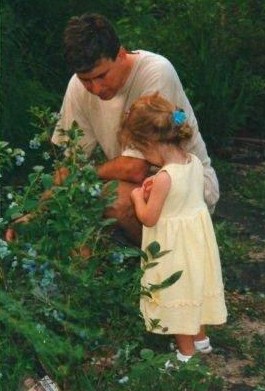
I plan to dine with ghosts again tonight.

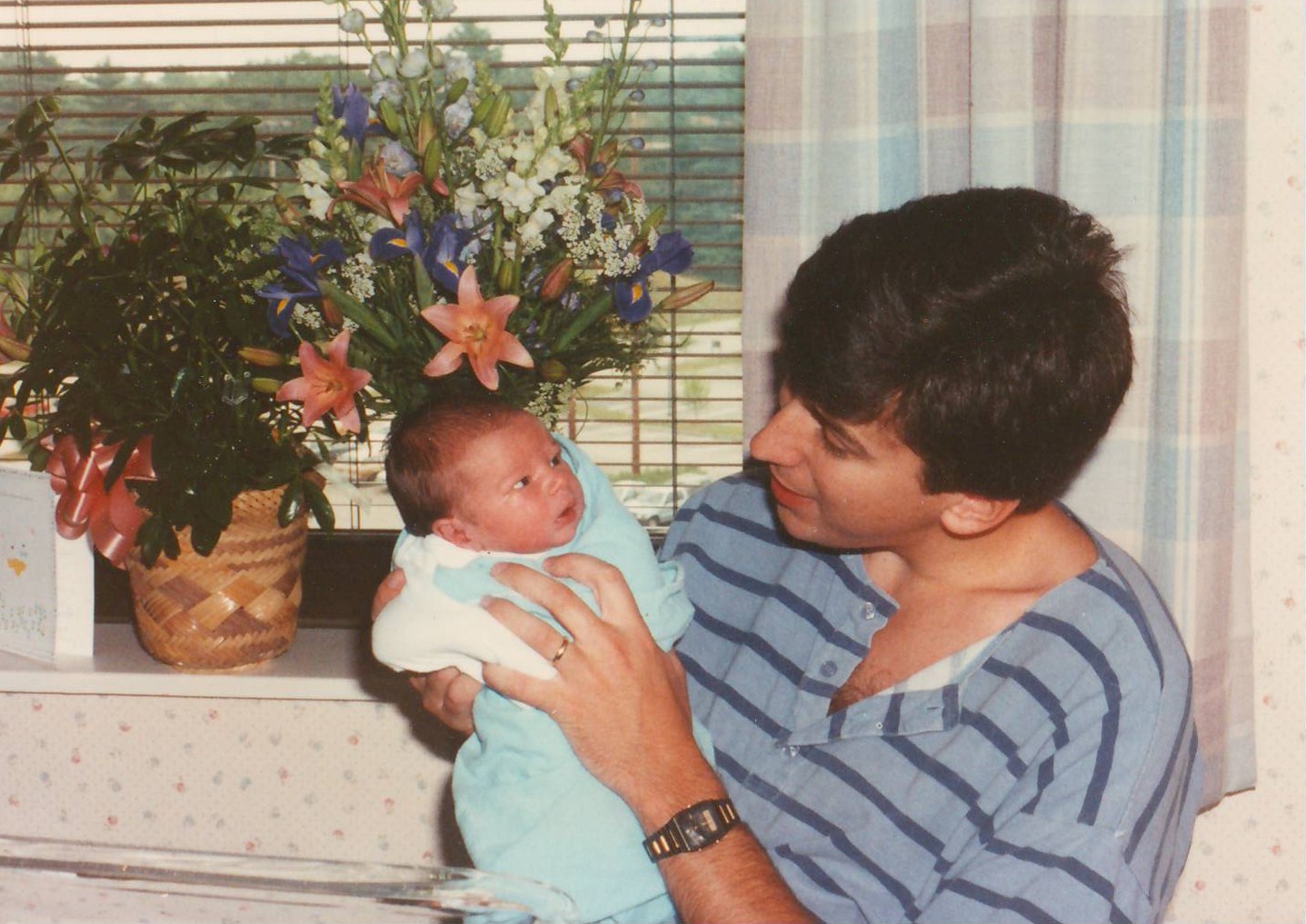
Today would have been, and I suppose still is, another Anniversary of Significance.

That day, a Saturday, set a high-temperature record in Boston at the moment our wedding ceremony began. It was only 99 degrees then.

Today, there is melancholy rain, and tornado warnings in Middlesex County. Since then, on the other side of the world and in temperatures in the mid 120s, my footwear has come close to being entombed in melting streets.

That day we were students. You remained a student all your life, not just up-to-date but creatively forward-thinking. You were considering going back for another degree when you were diagnosed. While you were devoted to helping and healing, my work made me a student of the immeasurable harm people intentionally inflict on others.

Today I’m still trying hard to learn new things. Our children continue to point me in the right directions and educate me. Pure mathematics and theoretical physics, spillover viruses, computer engineering. Books and languages and art and endless music. Kindness and attention to all living creatures.

That day you were at my side. Even today, I cannot wrap my mind around the thought you would not always be.

You were an optimist when I had no hope.

You could see light at oh dark thirty.

En Guard!

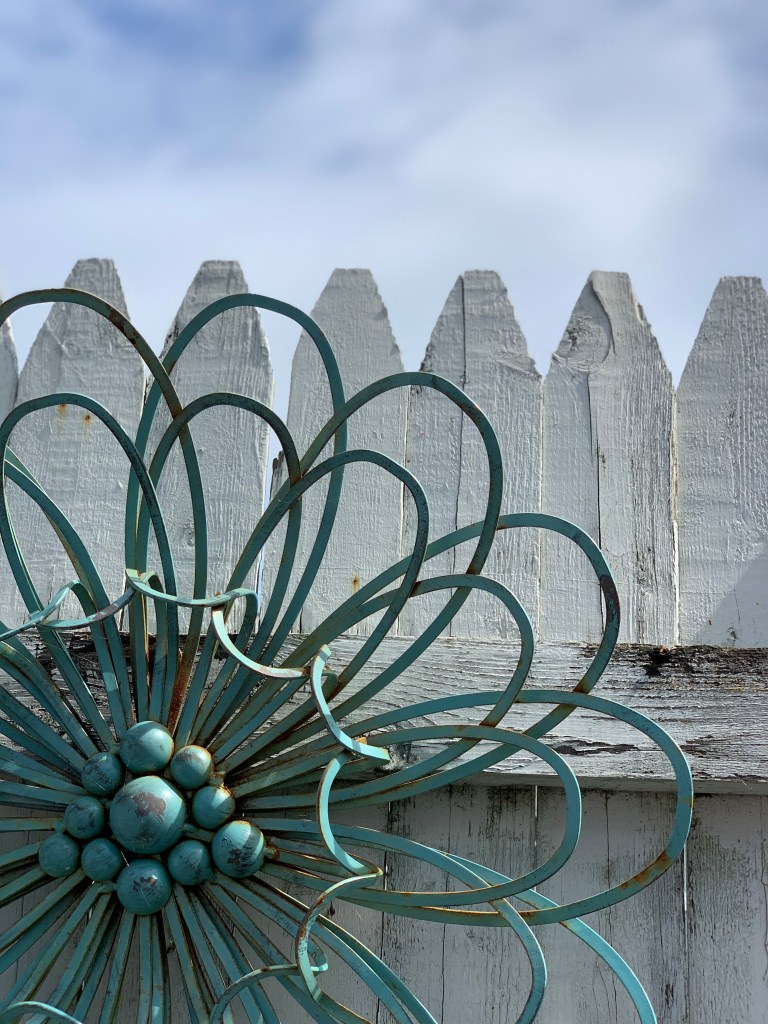
Fences are said to make good neighbors, but they provide many other services, including considerable photographic opportunities. They help keep our beagles from escaping while chasing scents. My husband once forwarded me an account of an undoubtedly well-meaning beagle who was recovered–in Indiana–after more than two years on the lam and 850 miles from his fence-free home. My husband’s header: “I wonder how far the rabbit got?”

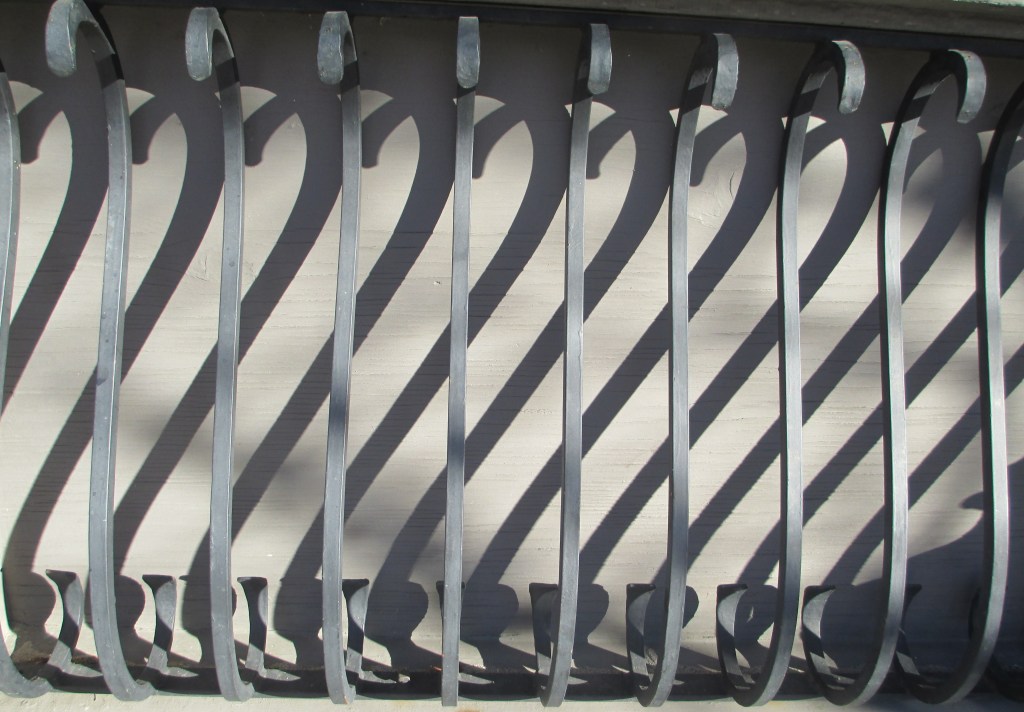
“En guard” is spoken to alert fencers to take their defensive positions, but fences themselves need not be uninviting. They lend scale to and break up the vastness of landscapes. They mark paths and house buoys and tchotchkes and seasonal displays. They are backdrops for posters and banners, and display political sentiments and commercial enticements.

While birds frequently situate themselves comfortably on fences, a fence-sitting human tends to be one unwilling to commit to one side of an issue or another.

For the attentive, an unusual fence can identify the particular place in the world of an otherwise undifferentiated seascape or skyscape.

They may be whole or broken, winding or at strict high alert. Antique or modern. Functional or decorative. Enduring or flimsy, or somewhere in between. Sometimes they completely block one’s view. Others are so porous as to be nearly invisible, wrought of wire that melts into its surroundings. Lush summer flowers may exuberantly burst through their grids.

Sometimes, fences are so perfectly situated within their surroundings that they seem to echo the sky.

At least for awhile.

Simple Gifts

“‘Tis the gift to be simple, ‘Tis the gift to be free, ”Tis the gift to come down where we ought to be…”

When we are lucky enough to choose and be able to navigate our paths, we will always find simple gifts there. A single starling or bud. A cove of cairns. Storm-fallen leaves gathering themselves into a tree formation. A cluster of burnished yellow leaves shaped like a lone heron in a field of pure green.

Glowing lilac petals on two continents and a tiny balletic figure trying to dance out and away from a July flower’s sodden plum-yellow skirt. Reflections rendered in brass ribbons by a dropping sun. Sunny buds singing from limestone seams.

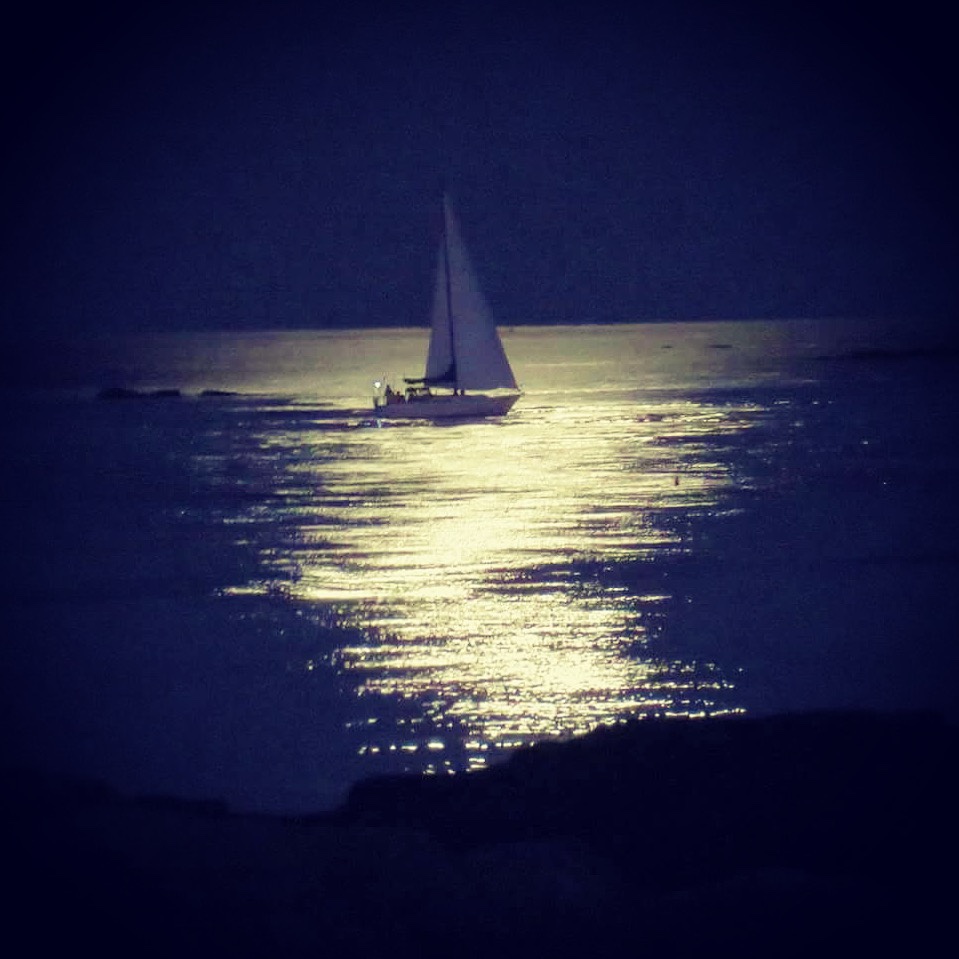
Weathered wood. A slumbering canvas sail about to be unfurled to catch the wind. Each of the infinite time-rounded stones beneath my feet.

Such gifts can be gathered almost everywhere.

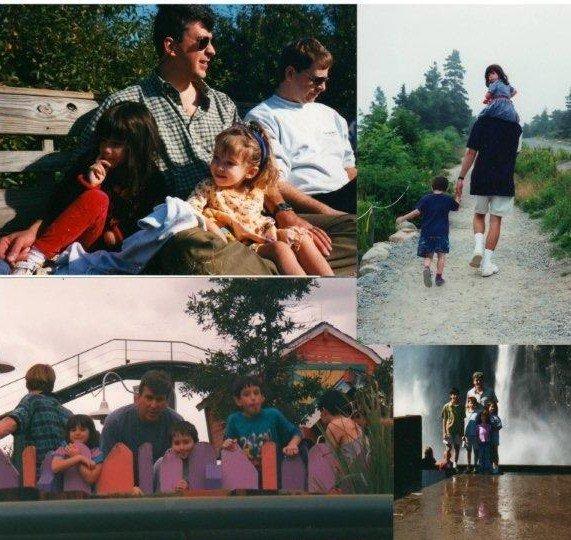
Every time I consciously think of the simple gifts around us, I hear a single verse in Alison Kraus’s voice, accompanied by Yo-Yo Ma. And an undertone of Raffi, from a time when my children were young and safe with my husband and me during some of the best days of our lives. Woven into those glorious days, for me alone now, is the lacerating beauty of the music Yo-Yo Ma played at my son’s graduation, two months to the day after his father’s death. The first of so many graduations, including one only weeks ago, which my husband ought to have been able to attend in the more traditional way.

Such Tralfamadorian layering is not only part of each simple earthly gift, but is its essence.

In his introduction to the time traversed and gifts lost and regained in TransAtlantic, the late, great Colum McCann quoted Eduardo Galeano’s exquiste observation about the give-and-take among and melding of memories and moments and movements: “the time that was continues to tick inside the time that is.”

And so it does.

Life Among Roman Ruins (Volubilis)

McCann’s novel has ties to New England, particularly the state of Maine. Perhaps it is not a coincidence that Simple Gifts originated there, too, in a mid-coastal Shaker community where it was thought to have been written by Elder Joseph Brackett of Alfred, who was called to the ministry in 1848.

Almost a century later, Aaron Copland used it in scoring a 1944 ballet, Appalachian Spring, and in 1950 he repurposed it among his Old American Songs. From there, it was a hop, skip, and a few generational jumps to the embedded memories of the parents and children who raptly listened again and again to the old-school Raffi cassette tapes and CDs which carried us into the next century.

When true simplicity is gained,
To bow and to bend we shan’t be ashamed,
To turn, turn will be our delight,
Till by turning, turning we come ’round right
.”

McCann wrote a lesser-known TransAtlantic in the same year he published his historical fiction: the lyrics to the eponymous song in Clannad’s album Nádúr. In it the singer describes walking among the ordinary sights along the roads of her home country, in whose “shadows, a light of” someone absent “flared.” Across the Atlantic again, she walks along the water where “dreams were calling out/ Of sky and stone.”

Simple elements and offerings in complicated and transformative layers and combinations.

From Cóbh to New York, blood and shadows and dreams and memory, water and stone and sky, regrouping and reshaping themselves and us for as long as we are here.

And perhaps long afterwards.

An Eye from the Past to the Present (Delhi)

Kitsch and Kaboodle

Anyone who knows me understands that I consider ordinary cooking regalia– and sometimes food itself–primarily for its artistry and sentimental value. So while I was delighted to come across this colorful cutlery display in a Marrakesh souk, I did not sample any of the food or drink. (At least two fellow travelers did, and came deeply to regret it.)

Like my mother, I find colorful kitchen kitsch irresistible. I have a bat-shaped bottle opener, Los Pollos Hermanos glassware, neon lime spaghetti tongs shaped like a Simpsons alien, and the pièce de résistance: my brother’s gift of a trivet shaped like a chalk outline at a crime scene.

He gets me.

I have painted many kitchen items that rarely–and sometimes never–have been used to hold food, but have traveled with me from sparsely-used kitchen to kitchen. These include birthday plates for my children, and a platter I made for my stargazing husband when we moved into the home of his dreams. And a bowl I painted for him one Christmas, when his whispers were not so distant. I adorned it with Samuel Taylor Coleridge’s words: “The sun’s rim dips; the stars rush out; At one stride comes the dark; With far-heard whisper, o’er the sea; Off shot the spectre-bark.

And while authentic fruits and vegetables rarely meet their fates in my own kitchen space, I always find room there to memorialize them in fabric, in eternal perfect bloom.

I married into a family in which the kitchen was, and remains, a hub of family and love. And food. So much food.

As our children grew, we would gather almost every Sunday with three of my husband’s sisters’ families at their parents’ house for holidays, walks to playgrounds, games and conversation and feasts.

Each of more than a dozen grandchildren had favorite hors d’ouevres and main dishes and desserts, and their Grandma Jackie tirelessly made their culinary dreams come true. She even drafted for me two favorite family recipes that I eventually was able to execute myself without structural kitchen disaster or serious medical repercussions.

Tables continue literally to groan on a daily basis in my sisters-in-laws’ homes. Although my husband mightily manned the grill when weather allowed, our own assorted refrigerators largely became backdrops for kitschy magnets which held our children’s artwork. (I wonder if it is a coincidence that he eventually decided to get a refrigerator with a paneled door that was impervious to my random decorative explosions.)

I grew up in very different spaces, where kitchens came with the apartment or home, tastes were picky and internally inconsistent, and family meals were rare. There could not have been a more stark contrast between bounty and frugality than the space between my husband’s and my views of food and its preparation and consumption. Stylistically, it was like Quaker versus Baroque.

My father had a habit, which I hope was unique, of combining disparate things he found while staring at cabinet shelves and presumably thinking about entropy. He had grown up making due with what he had and wasting nothing. The dregs of an ancient gin bottle would find themselves mixed with equally world-weary vodka, perhaps in quixotic hope that they might merge into something palatable, or at least non-injurious if eventually consumed.

His peculiar kitchen habits may have informed a phase in which my children vied for bragging rights in contests involving decoratively consolidating leftovers.

This is a roundabout way of saying that my richest kitchen memories only rarely involve food, and always link to other senses. My mind has convinced me that nothing ever tasted as sublimely delicious as the August tomatoes my mother brought from a nearby farm when I was recovering after my first son’s birth. Or the dense quadruple-chocolate cake my father-in-law brought after my first daughter’s winter birth, when I sat with her and her brothers in the irreplacable warmth of our first house’s woodstove.

I still have a coffee mug bought during our honeymoon in Quebec, which has been safeguarded from kitchen use and has not changed at all during the intervening decades. I wish I had taken a picture of the tall ceramic mugs I no longer have, handpainted with swirls of autumnal green and gold. They were in a coffee shop in Perkins Cove that now has gone missing, too. The set was the next-to-last corporeal gift my husband gave me. In my first detective novel, it was no coincidence that my grieving heroine was undone when she dropped its doppelgänger: she “closed her fingers into a white-knuckled fist over the corpus of its only remaining large shard, with its tauntingly intact handle. The rim from which [her husband] had sipped just months earlier was gone, gone away.”

No treasured household gift stands, or falls, alone.