Looking Over

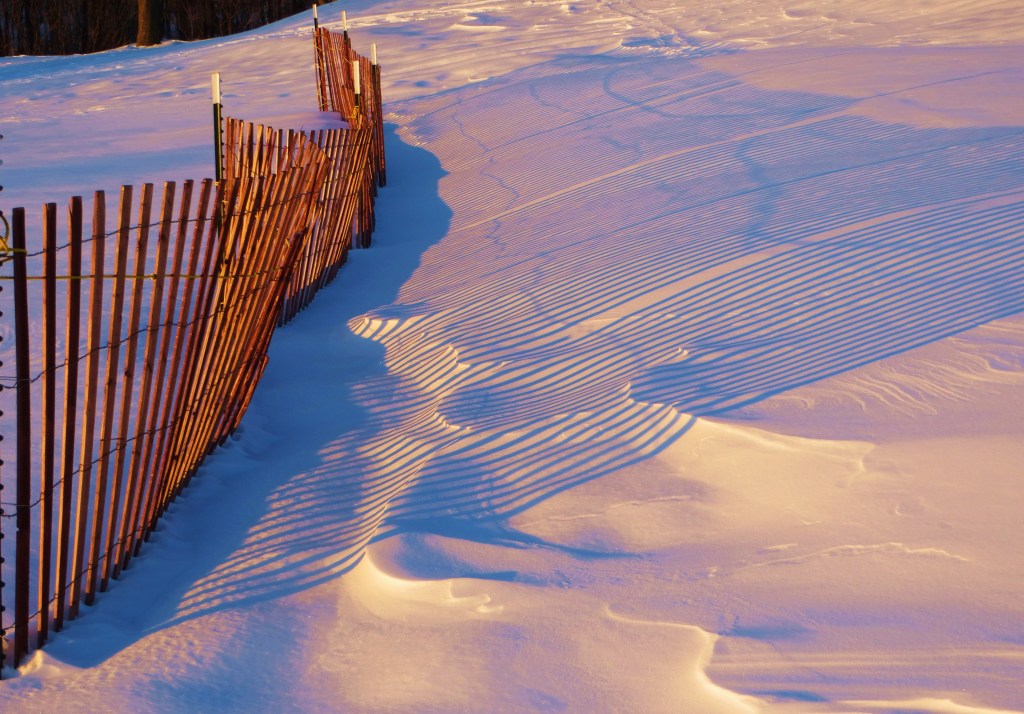
The more rarefied the vantage point, the rarer (and hence ordinarily overlooked) is the view.

I once followed waterfalls, hiking through woods to a mountaintop garden in New Hampshire’s Ossippee Mountain Range. The mountains were rendered in green at street level, but bathed in bright blue from on high.

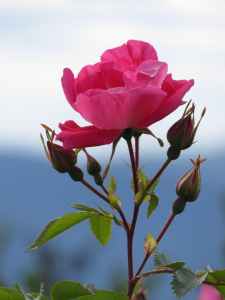
This rose stretched exuberantly at the Castle in the Clouds that Father’s Day. Like an outgoing youngest child in a large family, it launched itself above its brethren and refused to be overlooked.

It was not so very far from Mt. Washington, which my husband and I had tried to climb on our 15th wedding anniversary. Ultimately we had to give up on seeing the sights from the highest vantage point in New Hamspshire available to mere mortals. I had insufficient ballast, and was no match for fierce winds across a broad open expanse of rock. It was too difficult to hold onto my steady spouse, and I was nearly swept off the mountain’s face.

(The nearby Mt. Washington Hotel is sometimes mistaken for a very different overlook: The Shining‘s Overlook Hotel; I can assure you the White Mountains’ version is far more serene).

Sometimes I have found myself in thinner air, overlooking a golden world as the sun sets. Or walking through seas of swirling pastel clouds atop Acadia’s Cadillac Mountain, taking in the Northeast’s crown view of a rising sun.

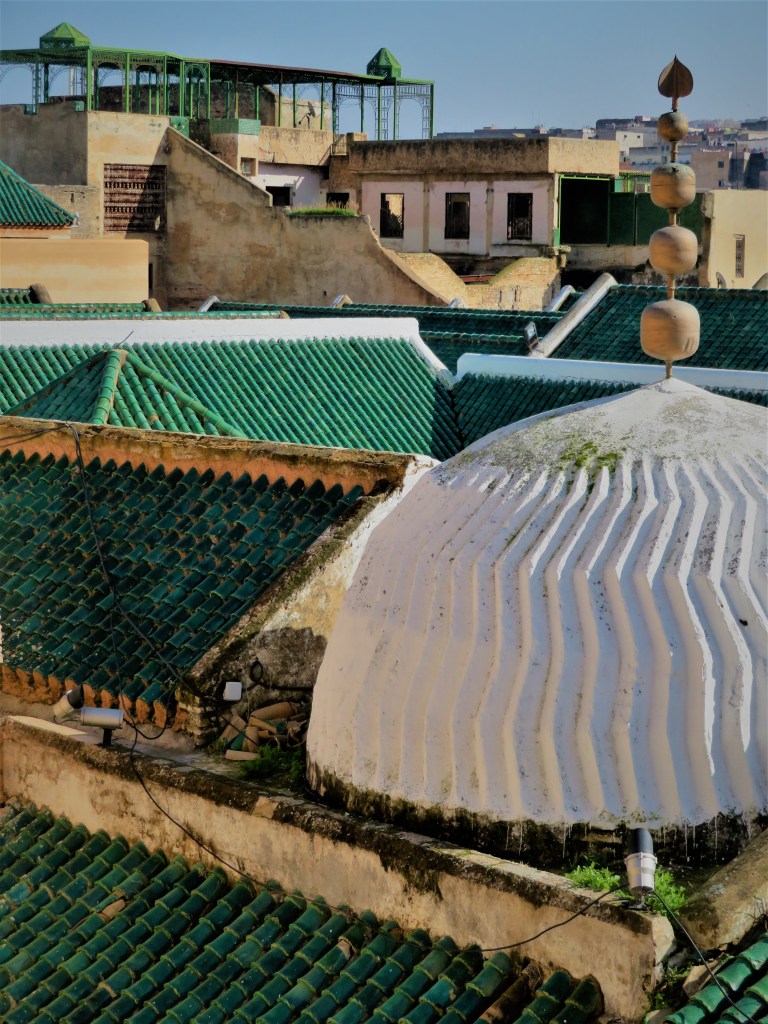
In more recent years, I’ve looked over land and sea and sandscapes from atop camels and towering dunes. From watchtowers and volcanic islands. I’ve surveyed ancient blue and pink cities and violet seas from slitted holes in stone castles and fortresses.

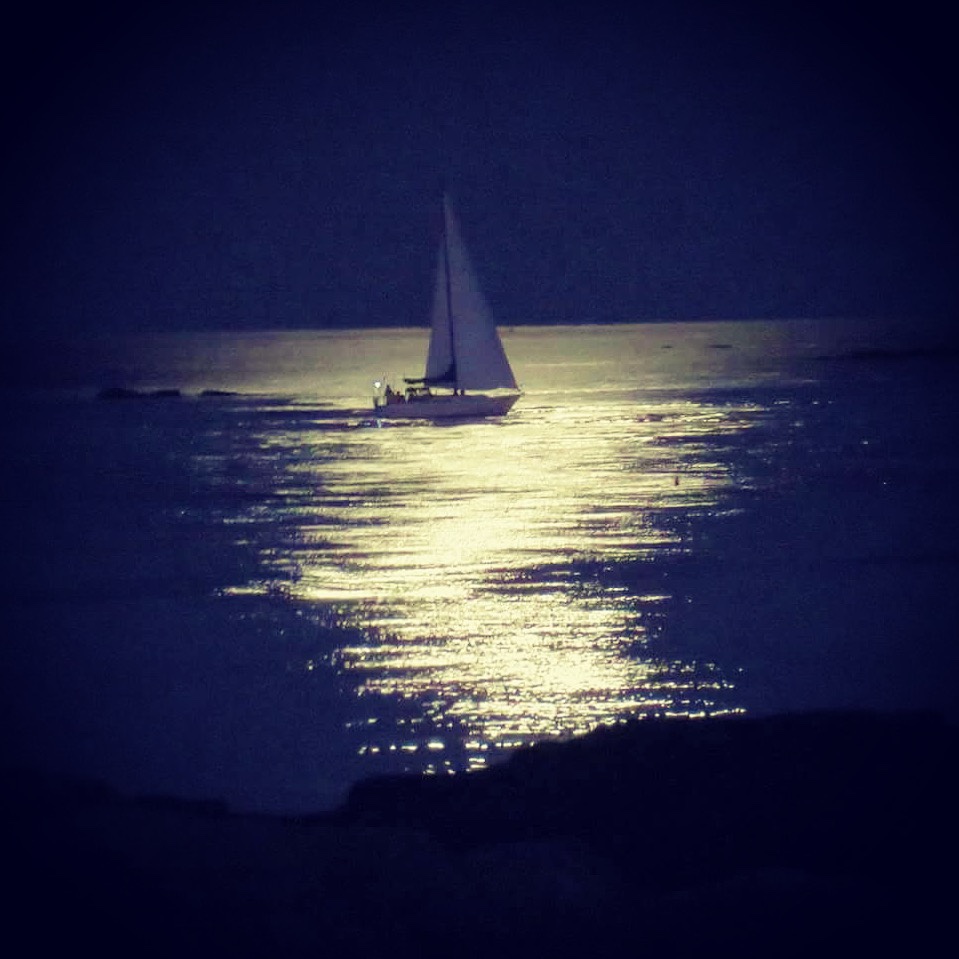
From a distance of many years, I realize I’ve found myself climbing ever-farther upwards on such days.

At dizzying heights, I feel closer to my missing piece. He frequently took photos from such spots when he was here with us, on “earth, our heaven, for a while.” Words I read from Mary Oliver’s “A Pretty Songat his service.

In some ways, we can best see what we’re missing from on high. Where the heady view is also heavenly.

A man looking out over the City of Lights with his daughters, not knowing it would be the last time. The same man on a Equatorial island cliff, knowing it was for the last time, and seeing the rarest of Pacific nesting birds.

One of my children recently told me of Sgùrr Dearg, where we earthbound folks may survey both very present Puffins and great swaths of the visible world from the Inaccessible Pinnacle.

If she climbs it someday, I hope she’ll send me a picture of what she overlooks.
Row by Row, Peace by Piece

Some fabrics are much too special to sit on shelves or in boxes, never to be leavened by sunlight, or by a child’s fingers gripping them for comfort at naptime.

img_4873

I have found peace in some unusual places, including a snowy owl’s golden eyes, a sedate sunrise, and yards upon yards of cotton fabric.

I collect mainly what my father would aptly have described as an “absurd” amount of fabric. I have traveled as far as India to marvel at woven silks and printed and embroidered cottons. Our elder son’s first declarative sentence was made at the threshold of the room where I kept my stash: “Mess room!”

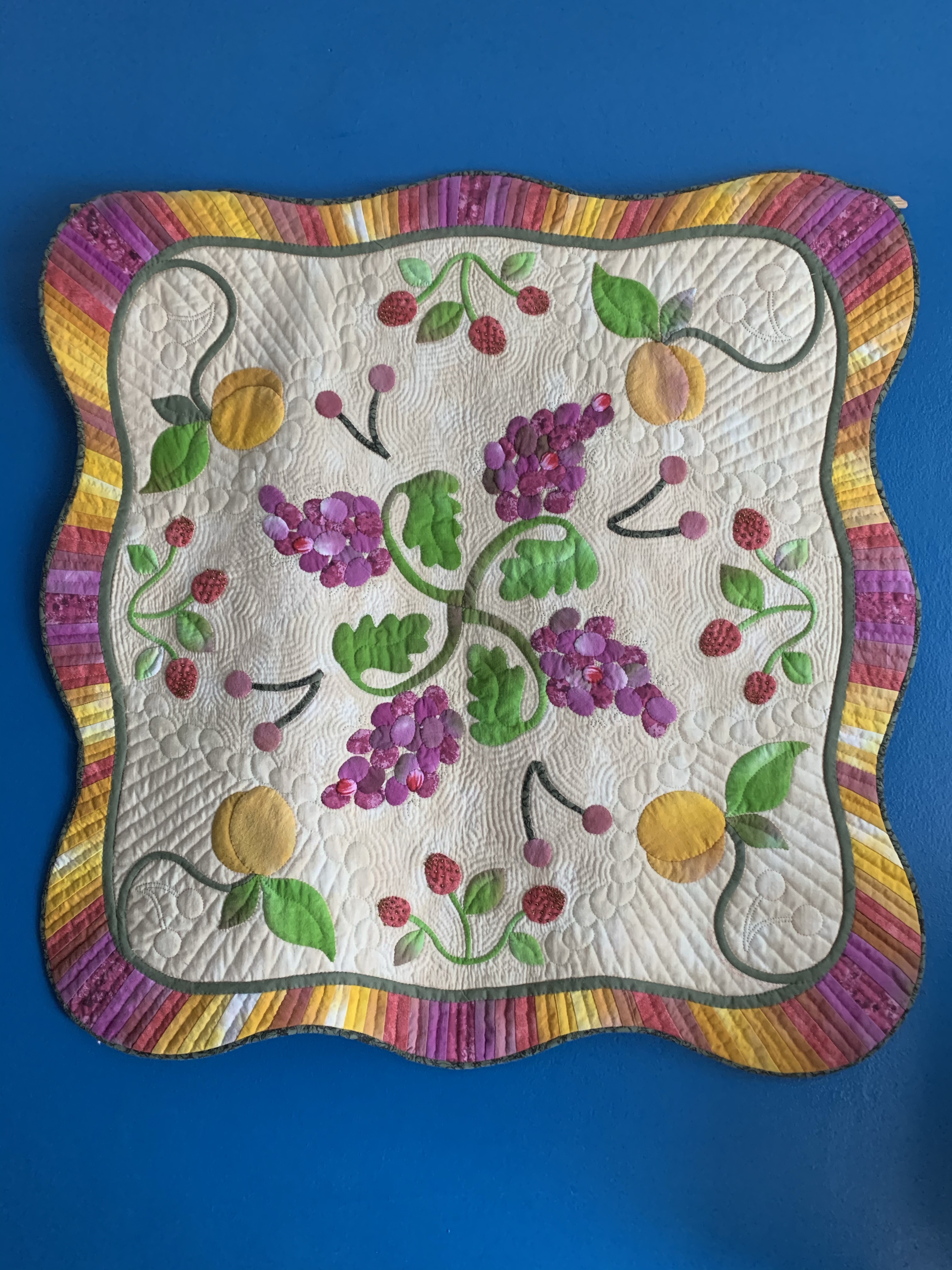
In “Noah’s Garden,” a wall hanging I made soon after my second son’s birth, the fruits and radiating colors were cut from a single enormous piece of woven cotton hand-dyed with plants; it was carried back from Malawi on a visit from my husband’s Aunt Jeanne, who was a nurse there for decades and knew I loved to sew. Some fabrics are much too special to sit on shelves or in boxes, never to be leavened by sunlight, or by a child’s fingers gripping them for comfort at naptime.

My fabric collection patiently waits–sometimes for decades–until I am stricken with inspiration. I usually end up cutting fat-quarters into much smaller pieces before introducing them to dramatically contrasting or subtly companionable neighbors, reconfiguring them into something unique and new.

Fabric will always be tied to family. It may not be a coincidence that my mother’s principal art form was making fabric collages. She collected and made all her clothes from wildly bold Marimekko prints from the 1960s and 70s. I saw the way she looked at those fabrics and hypnotically ran her hands across the tall bolts they wound around. Pure, silk-screened vivid reds and yellows and blue-greens she gathered from Copenhagen to Cambridge.

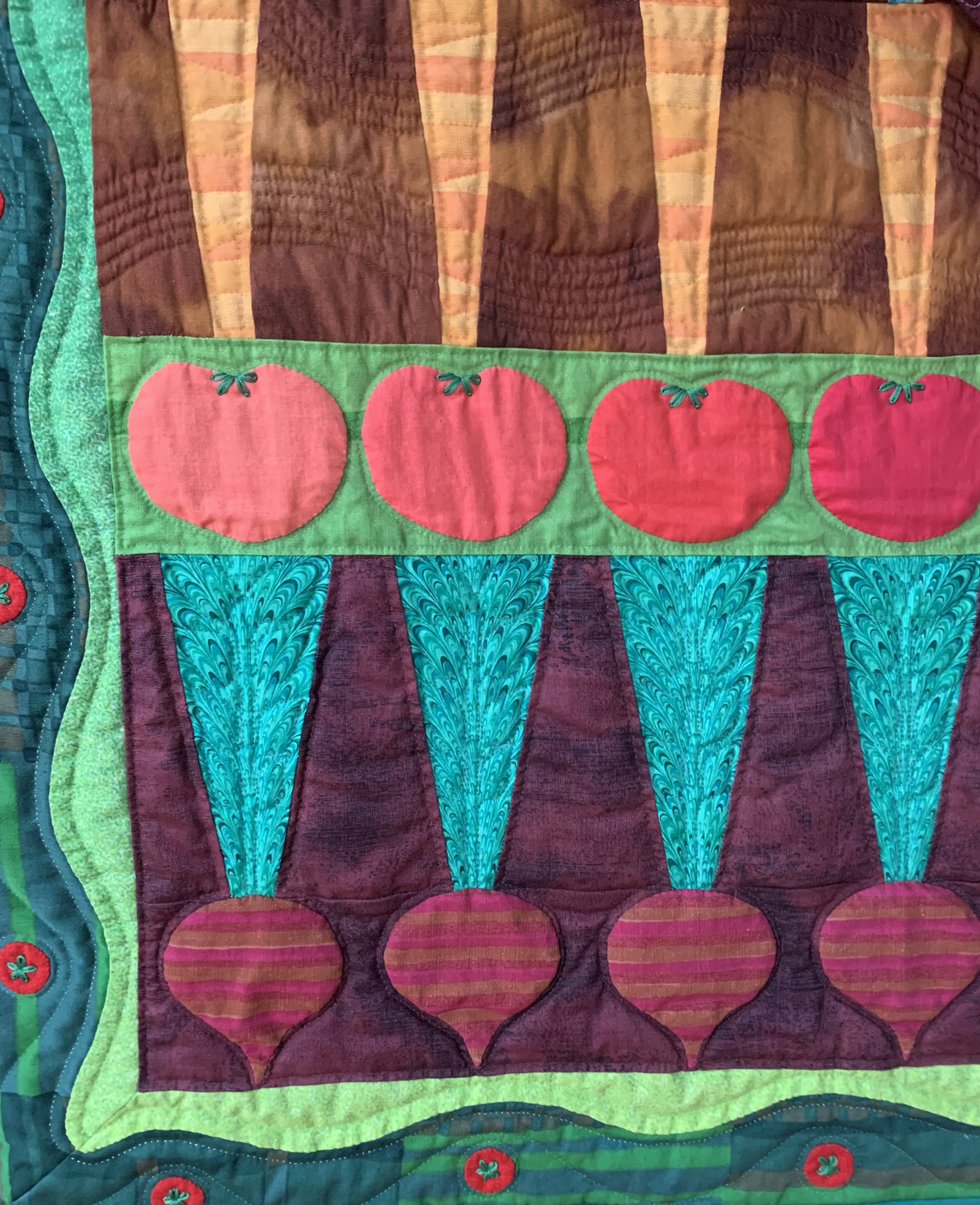
Having grown up without money for luxuries, and some necessities, she would not throw out even the tiniest scraps when she cut the pattern pieces she designed for clothing or collages. Many of her fabrics’ saturated colors now enliven fabric insects and radishes and carrots and wildflowers in quilts I’ve made.

Clipper Ships

I began sewing clothing when I was a child, but did not begin sewing in earnest until I was in college. By the time I graduated, more than one professor had observed what I had not: that much of my academic writing was a patchwork (“not that there’s anything wrong with that”), taking them on a winding path through seemingly unrelated concepts–history, literature, philosophy, religion, poetry, music, plant biology–until, at the end, they began to see the connections I had assumed everyone sought among such disparate elements.

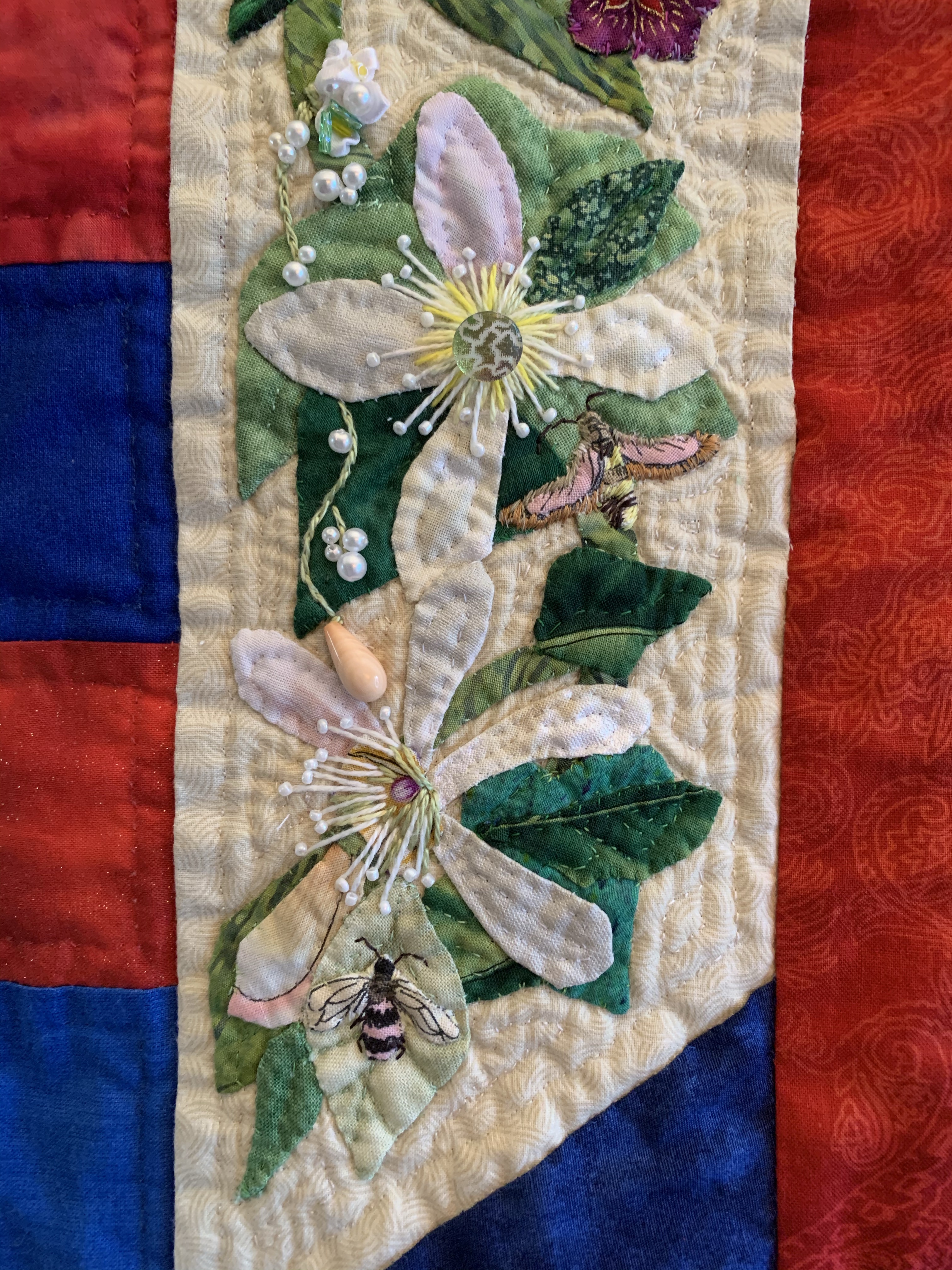
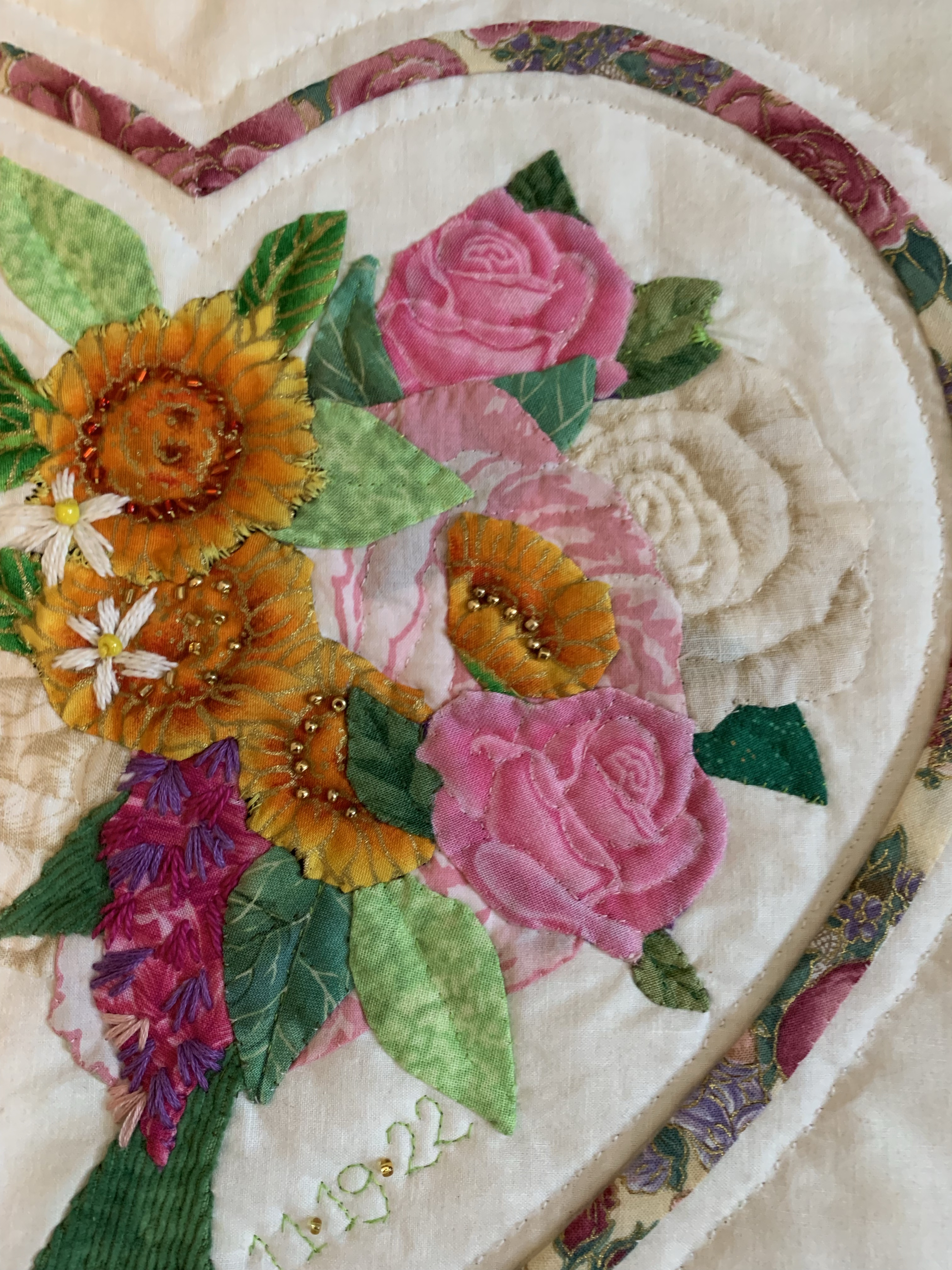
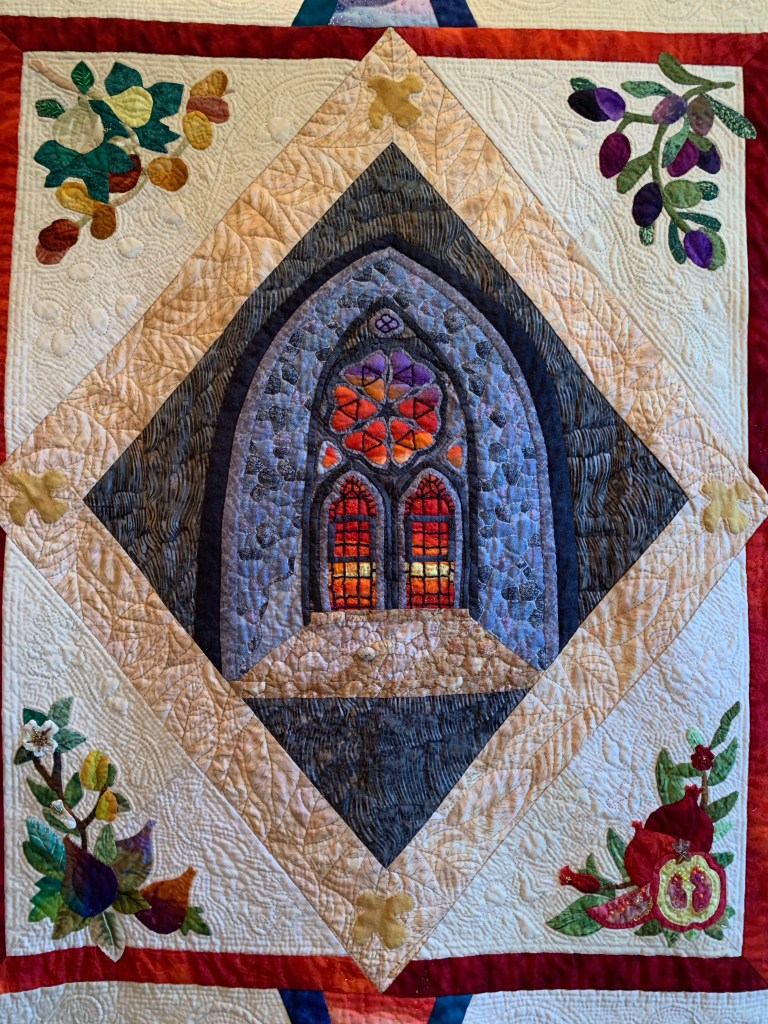
There is nothing that cannot be rendered in fabric. Feathers, fungi, planets, pomegranites with ruby glass “seeds.” The constellation Pleiades. Wedding bouquets. Biblical fruits and the stone-inset Rose Window at Iona Abbey, off Scotland’s western coast.

Quilts invite quiet, and are quintessentially comforting.

Almost without exception, each quilt I’ve pieced together has been a gift to someone–most often for a child or a wedding or Birthday of Significance. I’ve made memorial quilts for survivors of tragedies and sewn countless quilts for strangers.

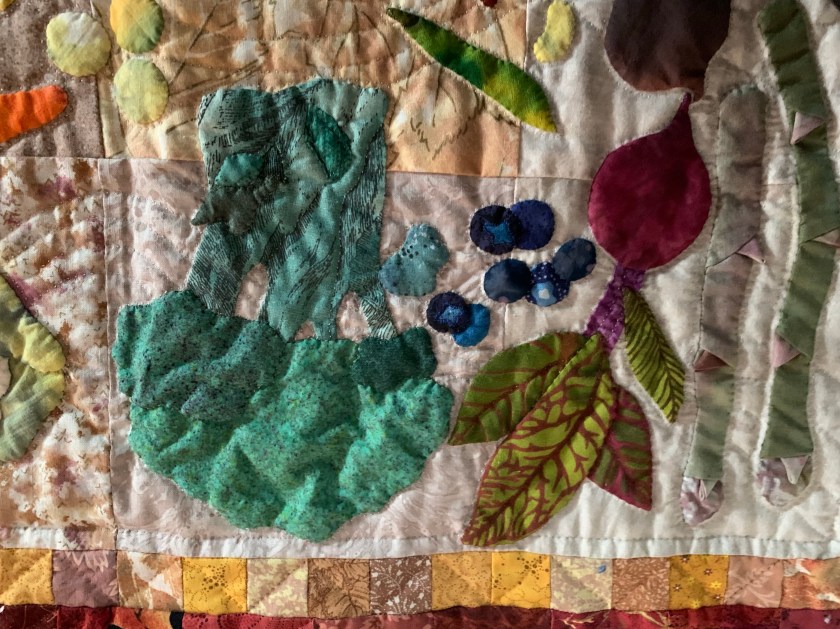
I worked on one quilt for a year, after, on his final ride home, my husband asked that I do something for our friend Dr. Bob, who was at our house preparing to shepard us through my husband’s last days here with us. At home, my husband was covered with the first quilt I made for him. His bed faced our daughter’s whimsical oil paintings and a wall quilt overflowing with an alphabet of fruits and vegetables he had grown in our New Hampshire garden.

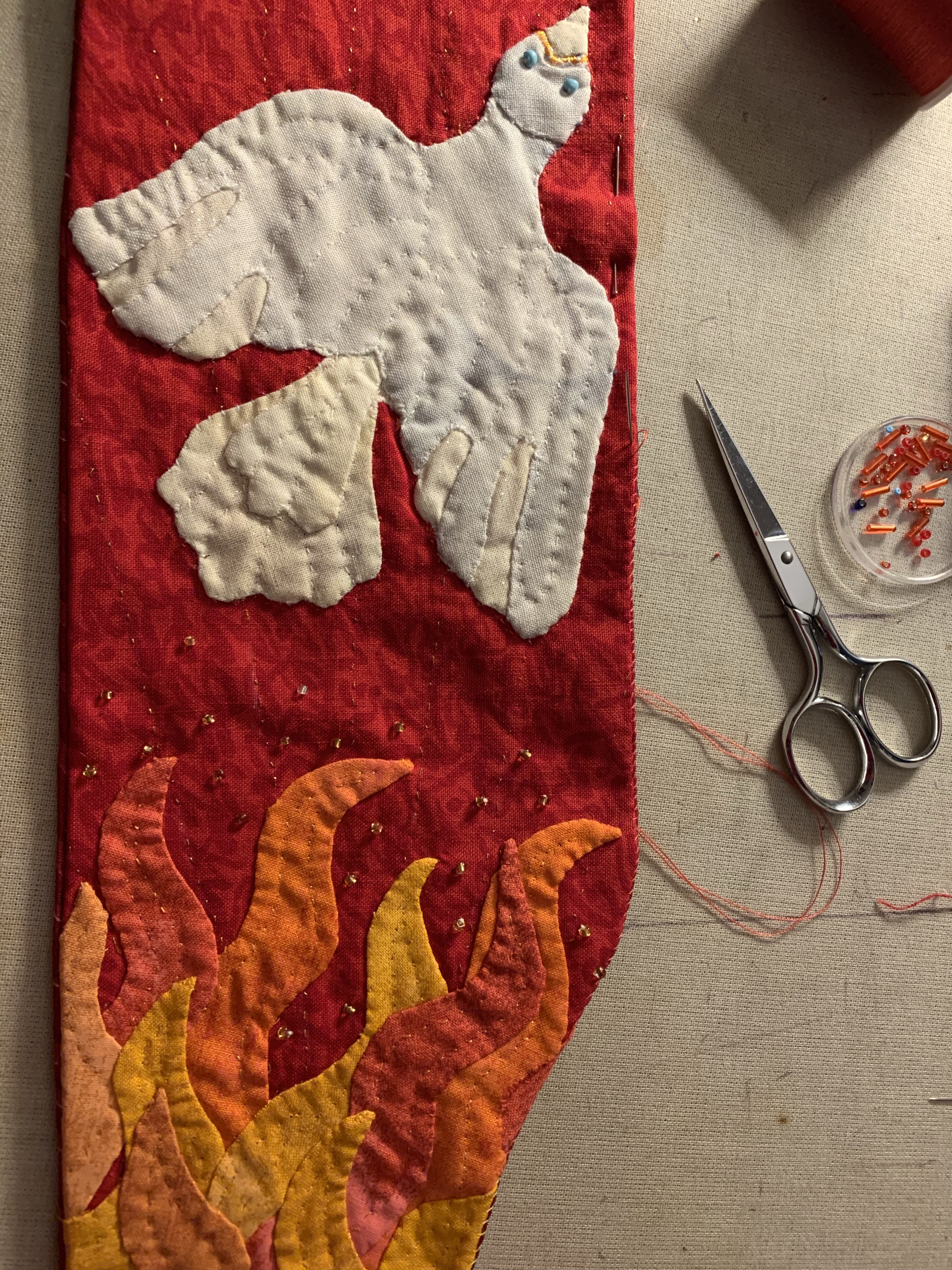
I design, applique, and quilt each one by hand; machines are not soothing. Even the repetitive physical motion of taking stitches is calming and brings me peace. One cannot sew for long without letting go of tension.

And every time I sew, I hope the finished gift will be a visual and tactile treat that will bring at least an equal measure of comfort for its recipient. Best of all is when love undoes the careful stitches, and a child eventually wears a beloved quilt back to pieces once again.