Tell me Why….

Aukerie, Iceland

“Tell me why….”

The generic three words appear in countless songs. Today, I happen to hear them in a (no-longer) boy band’s lyric. Improbably, that particular earworm began burrowing before the turn of this Century.

The tone and cadence in asking for an explanation of “why,” as with most communication, is important. It can be calmly delivered, or beseeching–even a crie de couer.

It can be inquisitive, and take us back to the wonders of the world as they begin to catch our young children’s attention outside infancy’s cocoon.

Why is the sky blue?

“Why do manta rays leap above the ocean?”

It can express the joyful wonder and bottomless despair of other unanswerable questions and pleas for explanation.

“How could I have been so lucky to spend this life with you?”

“Why him?”

I’ve taken on the task of picking out a portfolio of ten photographs I most want to share, and the more formidable challenge of explaining my choices. I realized after selecting them that I took most of them while I was alone, at least among humans. The few exceptions were taken in countries and on continents far from my assorted homes.

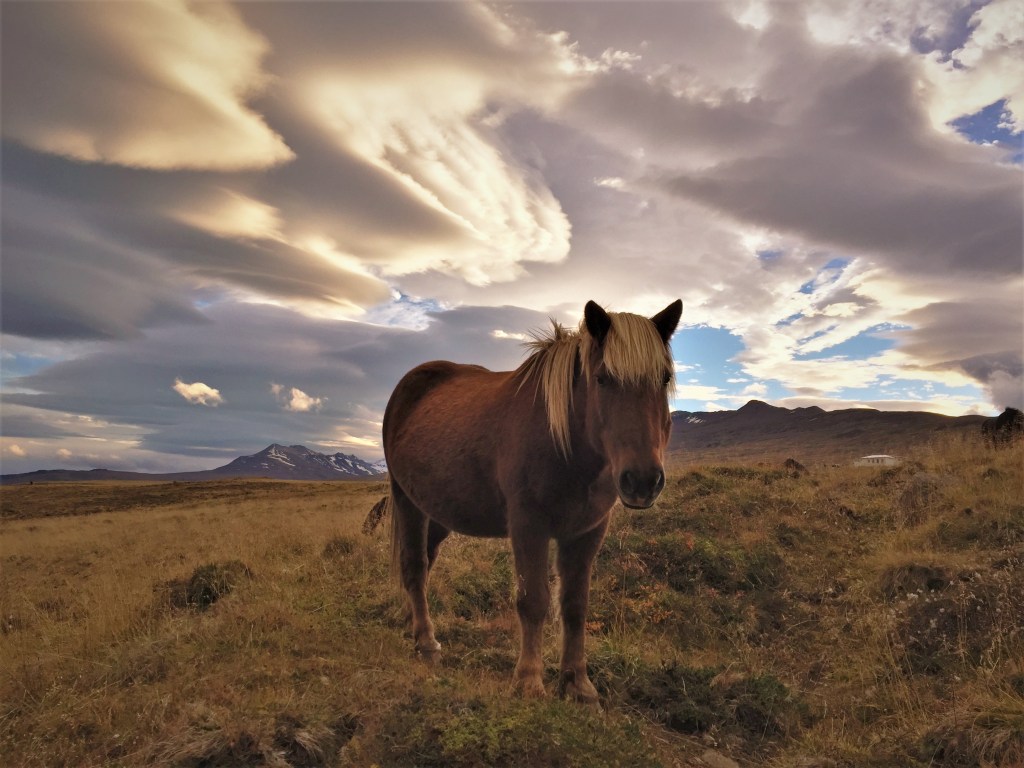
Above, an Icelandic pony was perfectly framed among lenticular clouds as the sun started to drop in Aukerie. I treasure revisiting the peace and beauty and even the pure air of that day.

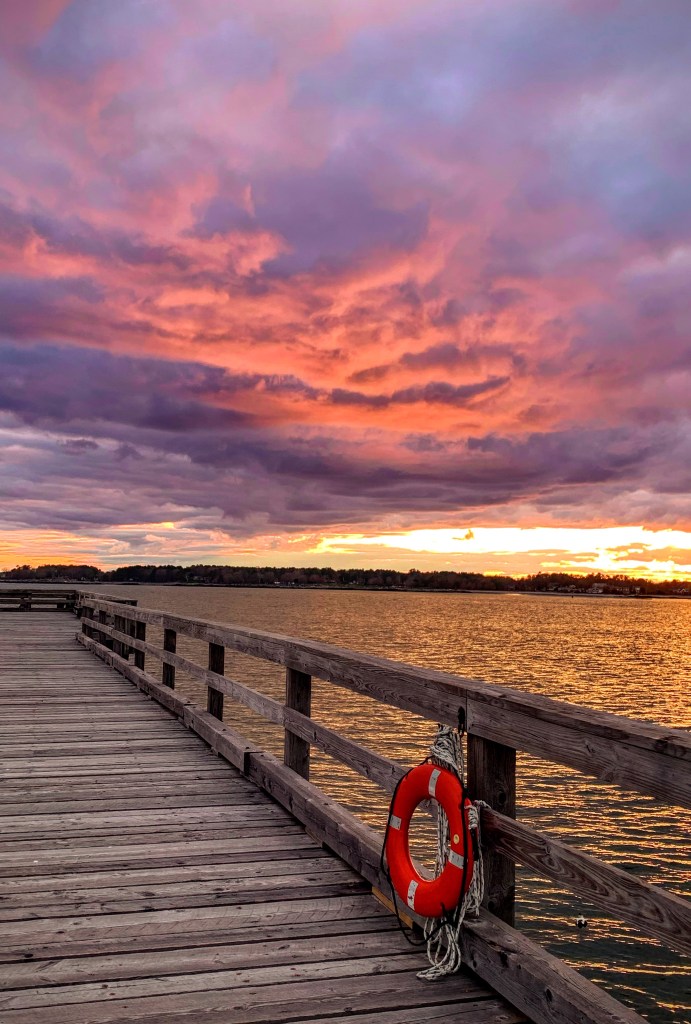
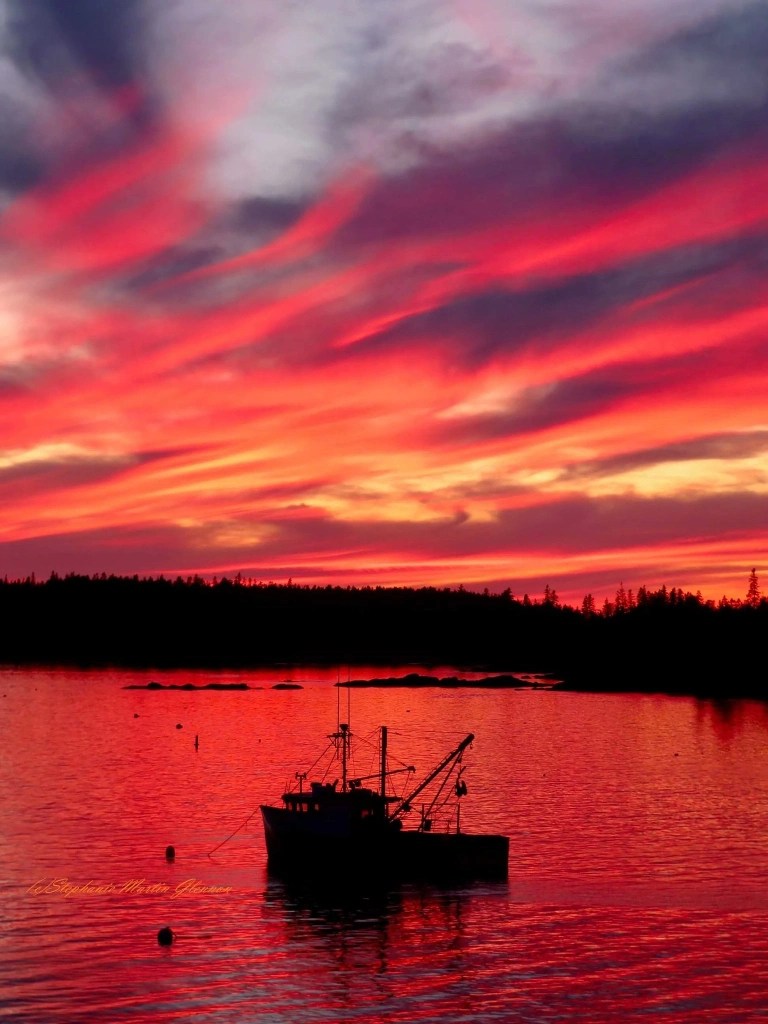
I was completely alone in Southwest Harbor for this astonishing sunset on Mount Desert Island. Acadia National Park was a very special place for my late husband and for our children as they grew. It took quite awhile for me to be able to travel by myself and be able to recapture more joy than melancholy there. I felt my husband’s presence as I took this picture, as I do every time I look at it.

An extraordinary ordinary palm frond towered above me, and calls me back to a cool night with regal birds milling all around. In the unseen background, the High Atlas Mountains formed ribbons of snow atop vivid blue peaks.

Each sunrise moment is an ephemeral work of art, there for us to keep and share and revisit in a photograph.

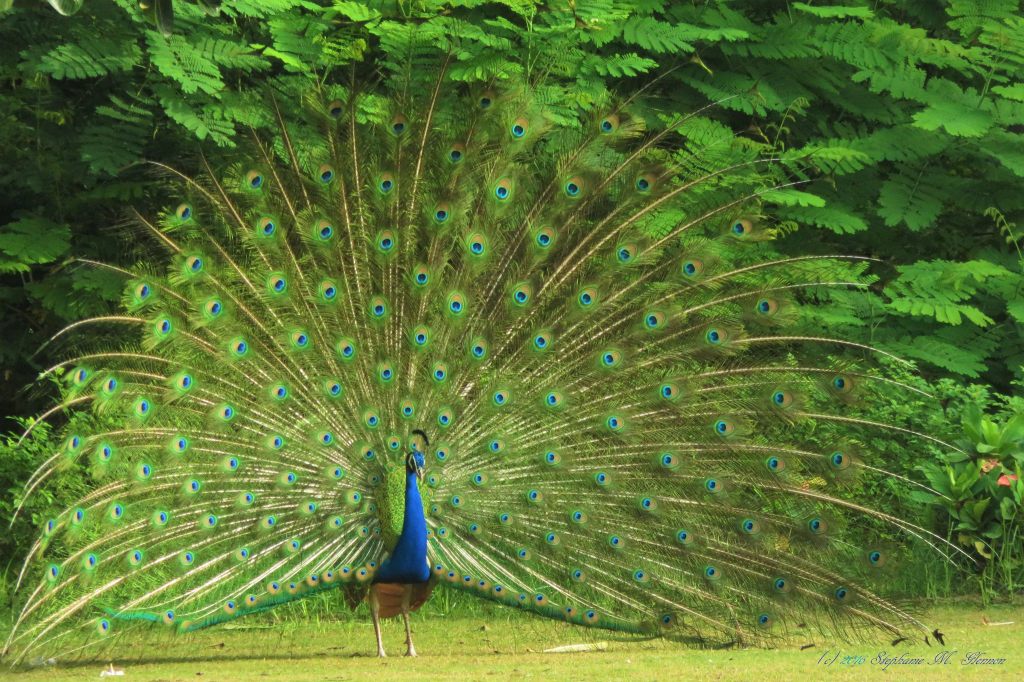
A return to deep greens and blues. . . . In New England’s coldest days, I can still feel the warmth and wonder of walking along a field filled with peacocks in Rajasthan, India.

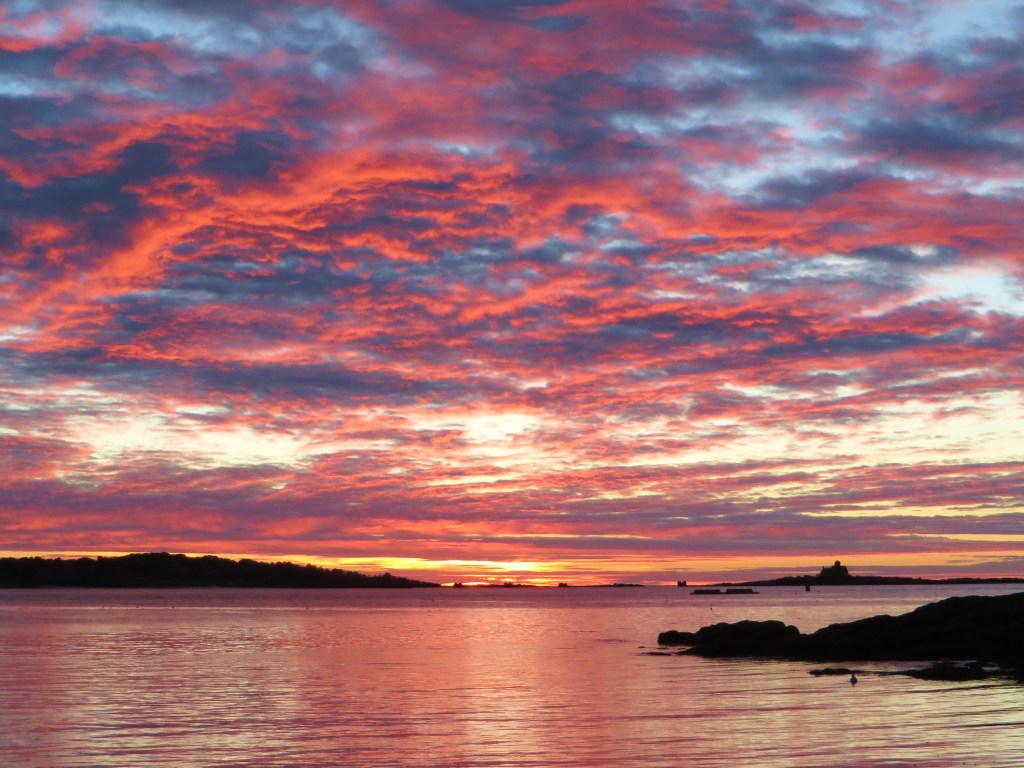
From the same spot in Newcastle, New Hampshire, one can see two lighthouses in two states, and endless permutations of light. This is one of my favorite glimpses of dawn.

A juvenile Kingfisher was my companion for sunset at the Artichoke Reservoir, a hidden jewel in Essex County, Massachusetts. The photo brings me peace; I remember how the sight helped me to breathe and settle my soul at a time of frantic medical issues in my family.

I’ve taken countless of Whaleback Lighthouse from two state’s shores. This one stands alone: without touching the picture’s natural color, it looks to me like a silkscreen print of sunrise.

A snapshot in a butterfly garden in Western Massachusetts preserved a butterfly taking flight, and the rich colors of a tropical forest in a distant part of the world.

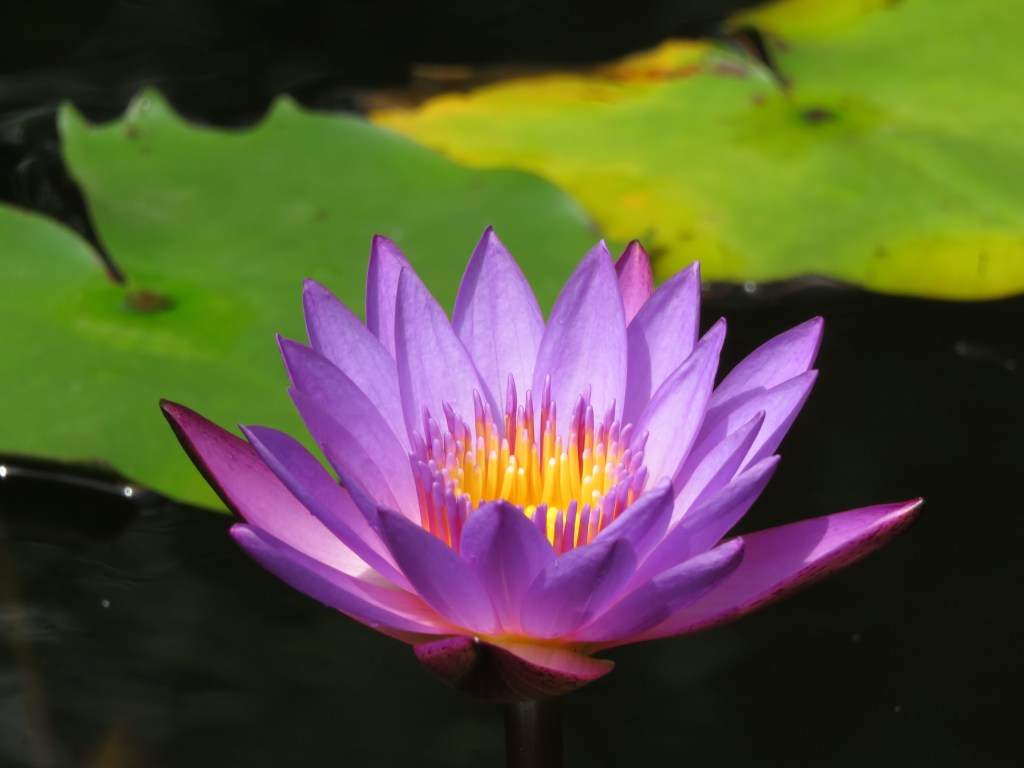
A single water lily… on a glorious day spent on another continent with one of my daughters. The simple shot carries me back to her, and to the sun and golden birds outside an ancient fort and museum in Jodhpur, the Blue City.

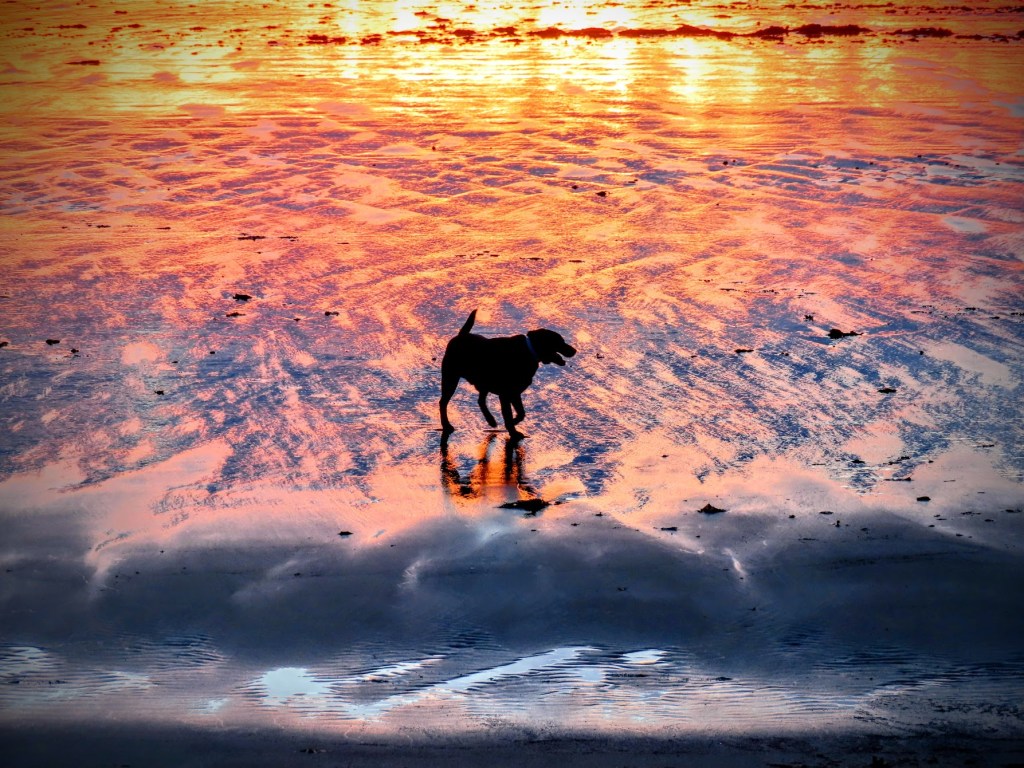
And I am sneaking in one more photo, the last I was able to take of the beloved and protective faithful companion of a sterling neighbor who contributed so much to every part of the world he occupied, and will be profoundly missed after leaving all too inexplicably soon. His handsome dog passed only weeks later, to join him in another view of such earthly wonders.

The Shadows Know

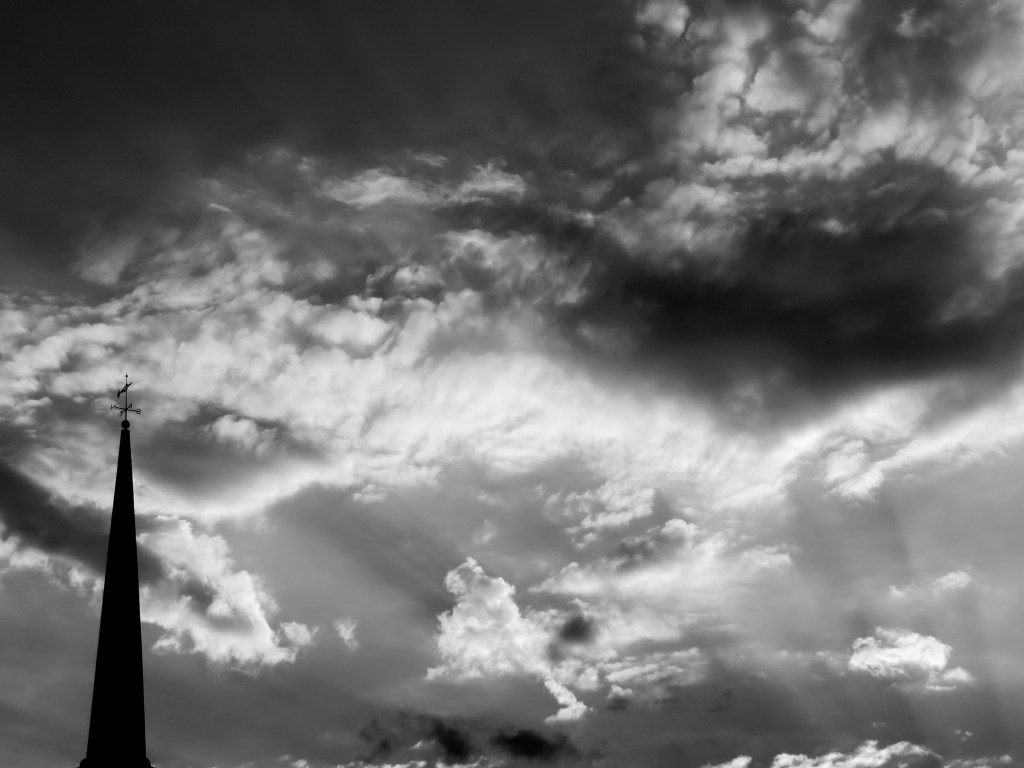
North Shore Spire (Massachusetts)

I almost always take photos of technicolor skies. The more outlandish the hues, the more likely I am to click away and hoard such images. But every once in a blue moon, I turn to black and white.

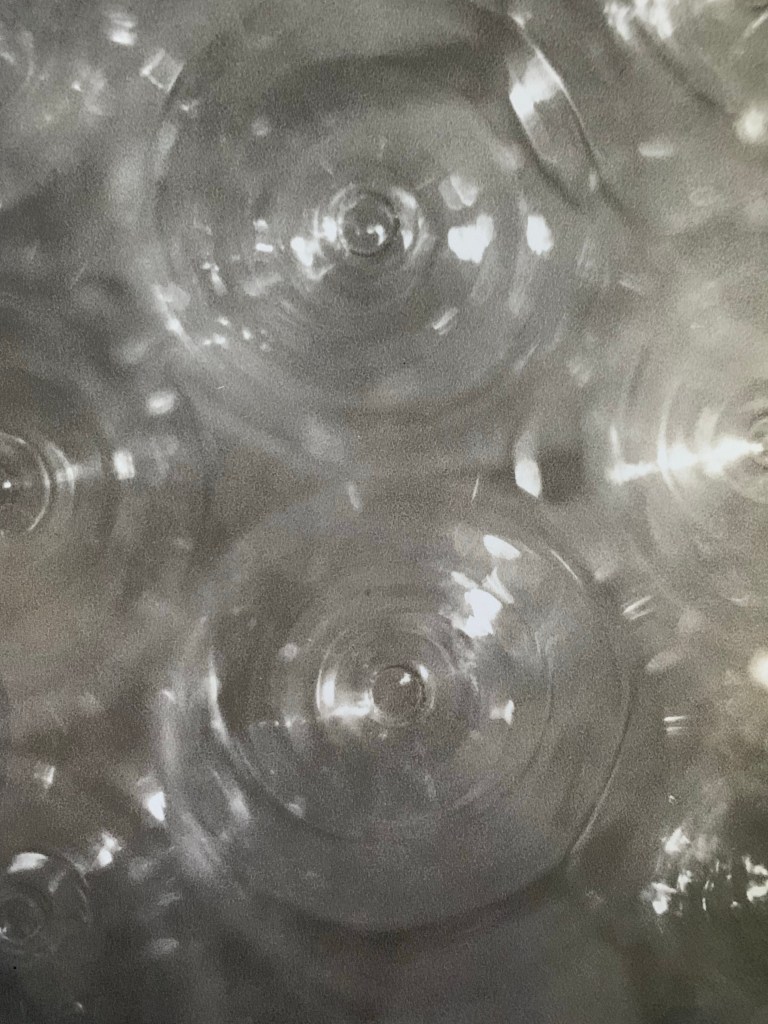
It has taken more than a decade for me to be able to face sorting out family belongings kept in sealed boxes as I have moved from place to place. I’ve only recently discovered some taxi-cab-yellow Kodak boxes my husband must have kept since taking a photography class as a teenager. I found contact sheets and black and white prints he must have developed himself. Color prints, at the time, were much more involved and costly than they are in the current Century.

Fittingly, his images are haunting.

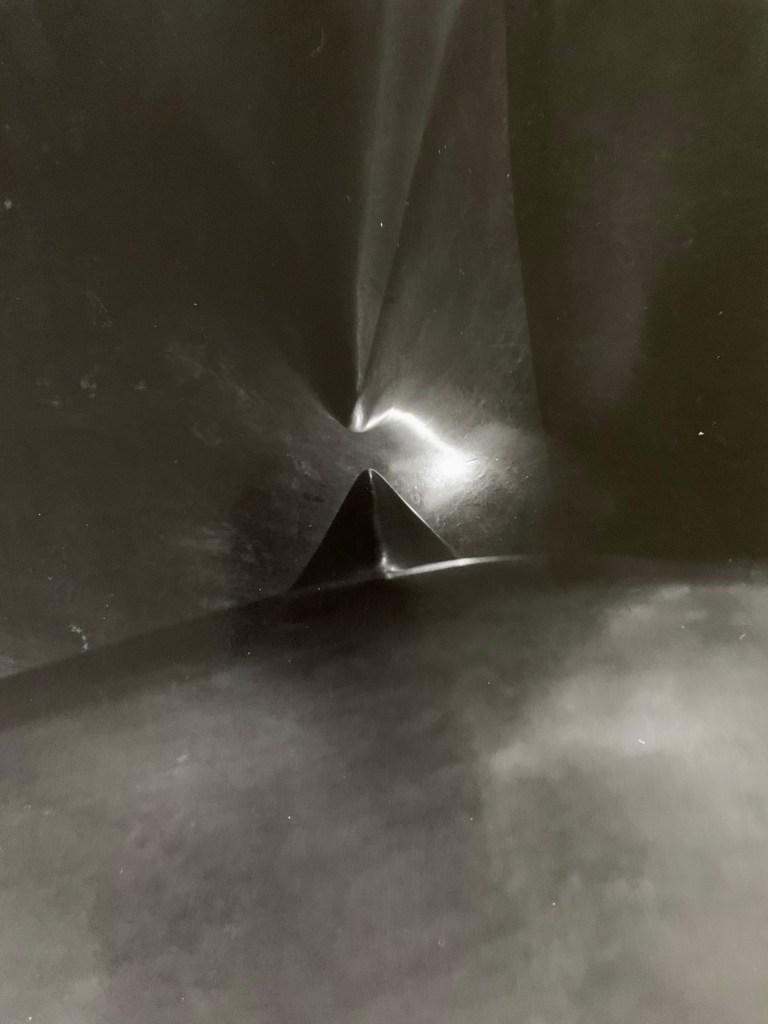
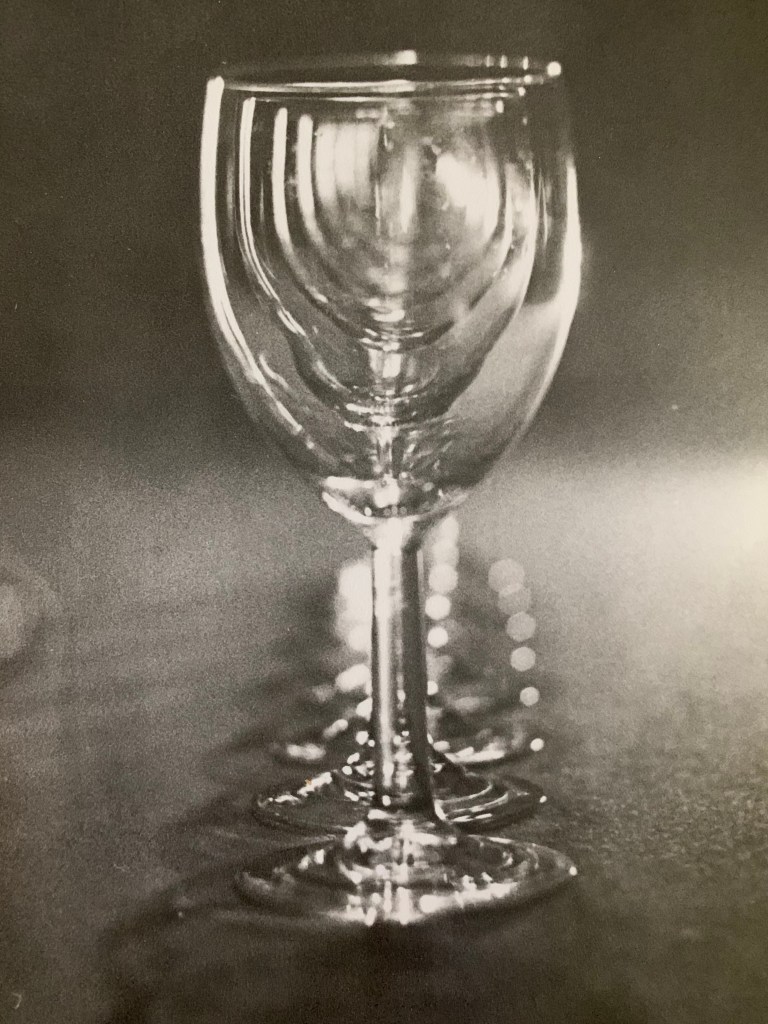
Almost of them, like mine, are of inanimate objects. Glass, and possibly metal, in sometimes unrecognizable detail. Between his photos of bullet glass and a row of wine glass sentinels is what looks like a section of a sheet metal sculpture. Or perhaps it was taken inside a Lilliputian circus tent? Or is that an alien’s shadow?

Because I have no idea what lay outside his frame, I can only guess.

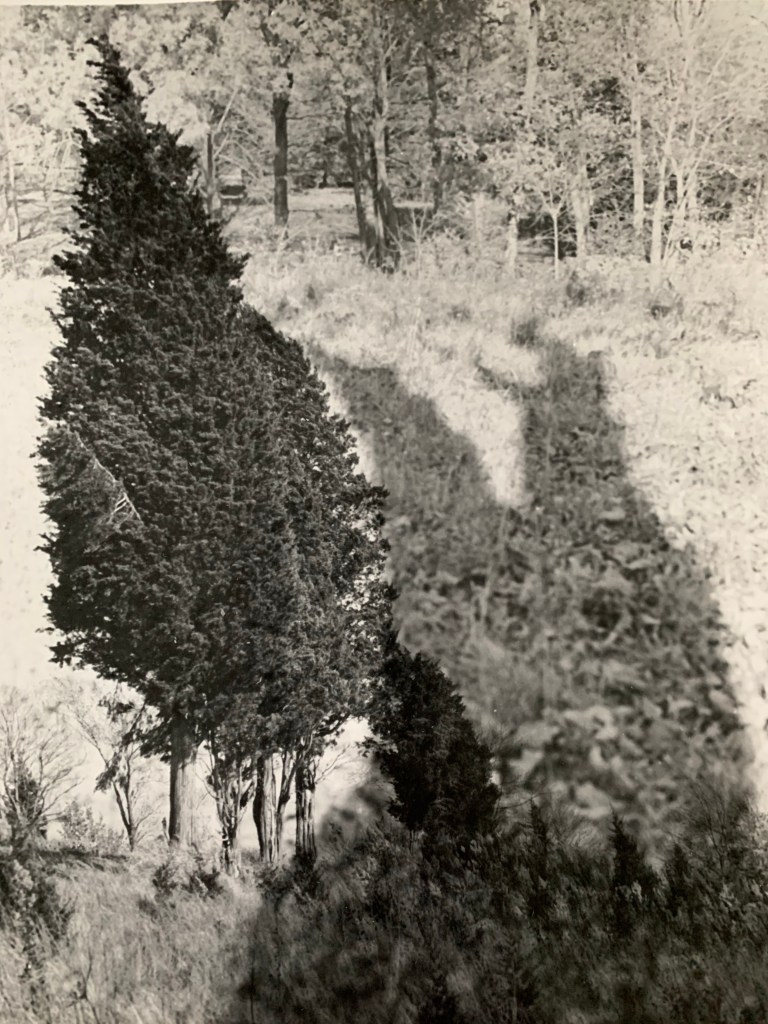
There were also many of his trademark photos of wide open spaces. I know some were taken at “World’s End,” in Hingham, Massachusetts. Another print features unusual shadows seeming to overwhelm old evergreens. As with most of my photographs, human beings do not intrude upon the sights he captured.

Two trees appear to list in complete synchronicity. The light appears layered, but no human shadow is cast where one would expect to find the photographer. It is a mystery what could have cast the twin-peaked shadow that encompasses the whole of the smaller tree. (Squint slightly, and we pareidoliacs can see the shadow of an enormous Monty Pythonesque angry rabbit eying that wee tree.)

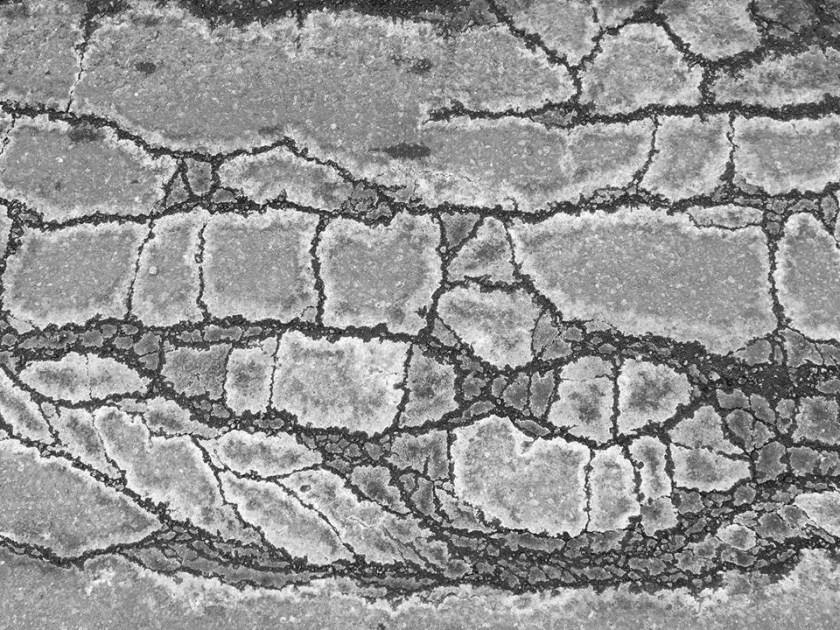
My very first phone photo was of the geometrically patched road beneath my feet in Portsmouth, New Hampshire.

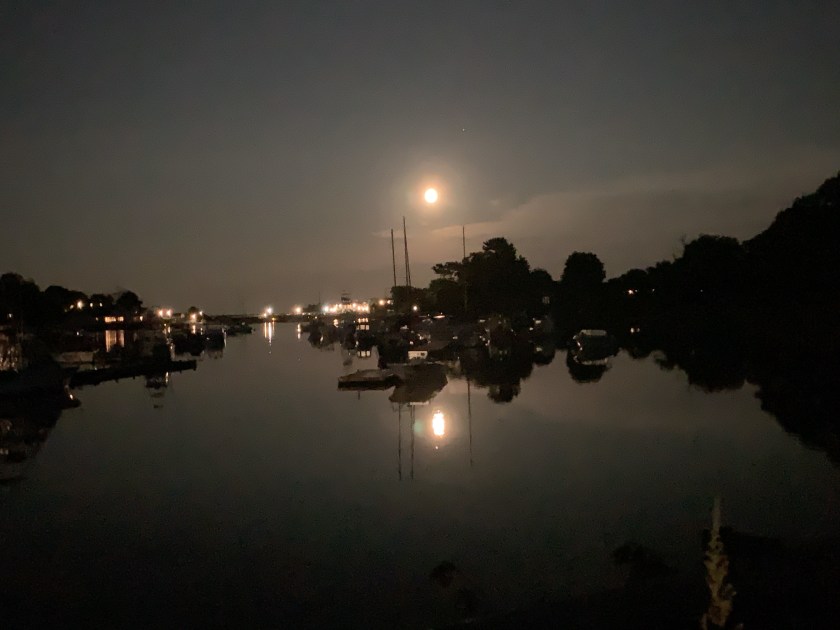
Earlier this week, a nearly full blue moon made itself known at dusk, rising through a thin, dense cloud bank. So my lastest photo, too, was both black and white and full-color, with its own subtle, quiet magic.

Primes of Life

I rarely photograph primary colors. I grew up in a household where paints were rigidly sequestered in their tubes and only sparingly dabbed onto precious watercolor paper. But outside, even primary colors are rarely static.

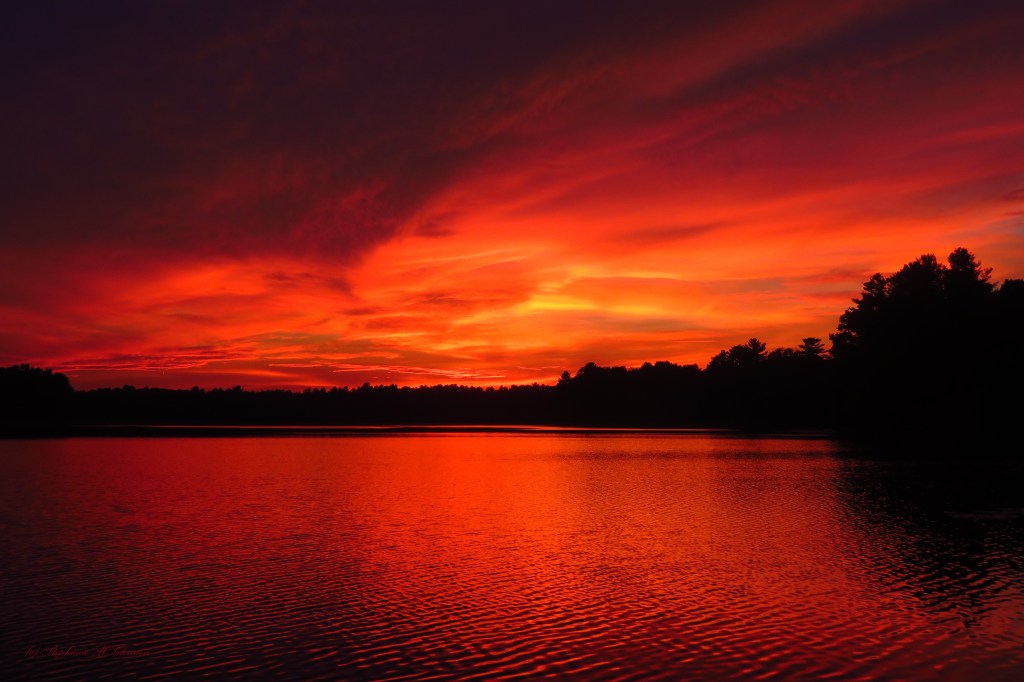
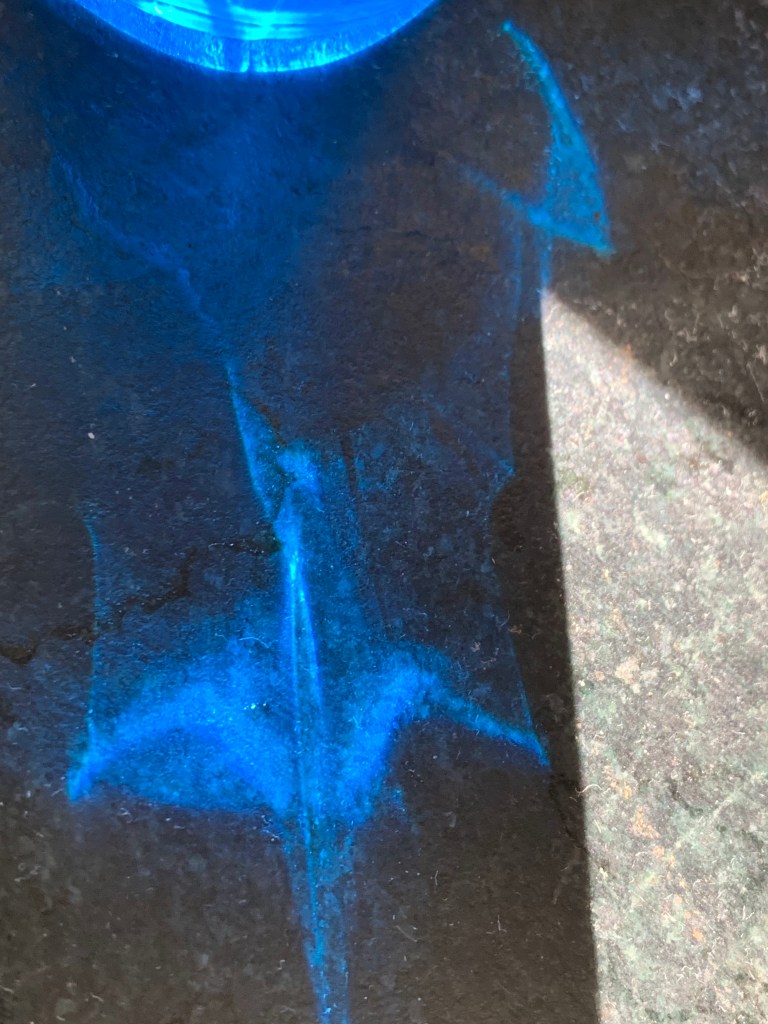
Of course, sometimes color itself is an illusion. Georgetown, Massachusetts’ reservoir is not filled with scarlet water. Portsmouth, New Hampshire’s colonial-era waterfront is not actually bathed in yellow. No ancient cobalt fish, nor any color at all, resides within the soapstone slab below; it is plebeian daylight refracted through dishwashing liquid.

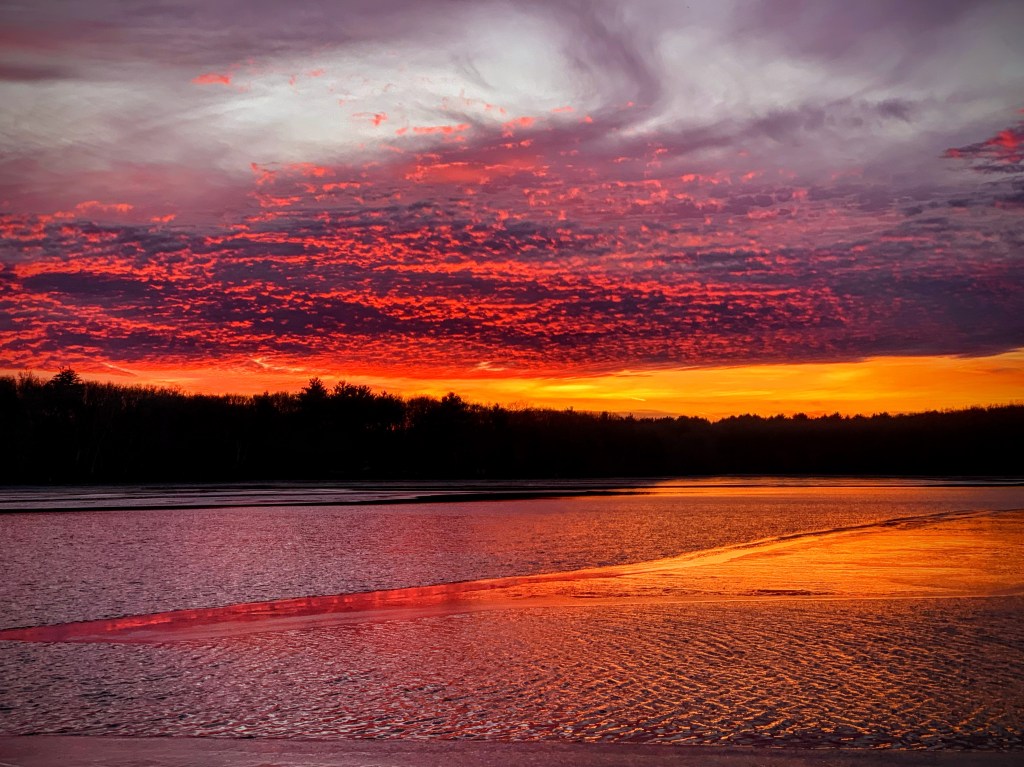
In general, I find pure and primary colors less interesting to capture. I’m drawn to gradations. To transfigured, quickly changing–even messy and decaying–colors all along each spectrum. One kind of magic happens as opposites on the color spectrum gather, in autumn leaves and gardens and water and sky.

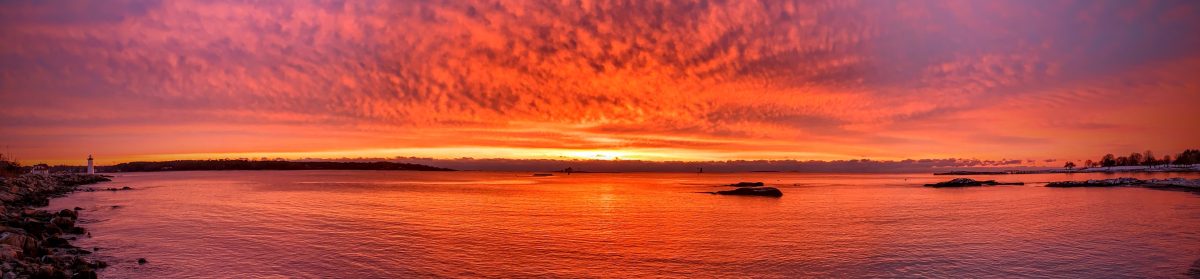
And the changes are always worth waiting for. The slightest disturbance to a pure red sunset over water may turn it into strings of rubies over rippled black velvet, and to violet dragon’s breath clouds.

Stupendous Serendipity

Water Buffalo, Varanasi, Uttar Pradesh

I didn’t catch his name, but will never forget his face and gaze. I saw him while navigating a human crowd in Varanasi. (The population density there, per square mile, is more than twice the average elsewhere in India.)

Greg Brown wrote many songs that stay with me, but a single lyric revisits me more than any other: “I could be to you, or you could be to me just another face in the crowd.

I realize that I do not take pictures of crowds, and rarely photograph individual humans. But I frequently photograph animals who stand out in crowds. A giant floof at a hopping brewery. Llamas at a Farmers’ Market. Flocks and murmurations of birds. Seagulls contemplating sunrise. Dogs walking themselves on congested city streets. Deer Park in Delhi. A young man tending to a gaggle of goats in Morocco. Camels surveying their kingdom.

These are all serendipitous encounters.

Indeed, I rarely take pictures of people, let alone crowds of them. When I find myself in a crowd, my camera seeks out the visible wonders above the fray or beneath my feet. I wonder if it is a product, or projection, of the high value I put on privacy, and against unvolunteered disclosure.

There are exceptions.

From any angle and distance, I can pick out one of my children gathering a diploma in a crowd of tens of thousands, or marching in rows of identically outfitted students in a dance troupe or marching band.

Serendipity tends to play a significant role in the most important decisions in our lives. My late husband would have been just a face in the crowd had he not spent a disappointing weekend with hard-drinking frat boys at the college he planned to attend, and instead ended up in New Jersey, where I met him in a laboratory course. I would not have been in that class had our undergraduate institution not required us liberal artsy types to take some solid science subjects. Or had I not visited that school in full-on cherry blossom season, while checking out otherwise tempting prospects in hip-high (at least for me) gray snowdrifts.

When we married and had a family of our own, one-of-a-kind faces were added to countless crowds, some in very distant places. Irreplacable faces I will always get lost in, as I continue to revisit and savor each face and phase preserved in pictures as they grew.

Had my future husband and I instead passed by one another as strangers, subsequent crowds would of course contain different humans than our children. Their friends and partners and partners’ families would not have come into, and become enduring important parts of, our lives.

I’ve only once regretted having someone serendipitously encountered come into our lives, a decent record, but still hard for a wary prosecutor who still clutches her belongings in any crowd to fathom. I have been so lucky to know the rest.

I treasure all the people who’ve stayed in our lives and could instead have been just faces in a crowd.