Looking Over

The more rarefied the vantage point, the rarer (and hence ordinarily overlooked) is the view.

I once followed waterfalls, hiking through woods to a mountaintop garden in New Hampshire’s Ossippee Mountain Range. The mountains were rendered in green at street level, but bathed in bright blue from on high.

This rose stretched exuberantly at the Castle in the Clouds that Father’s Day. Like an outgoing youngest child in a large family, it launched itself above its brethren and refused to be overlooked.

It was not so very far from Mt. Washington, which my husband and I had tried to climb on our 15th wedding anniversary. Ultimately we had to give up on seeing the sights from the highest vantage point in New Hamspshire available to mere mortals. I had insufficient ballast, and was no match for fierce winds across a broad open expanse of rock. It was too difficult to hold onto my steady spouse, and I was nearly swept off the mountain’s face.

(The nearby Mt. Washington Hotel is sometimes mistaken for a very different overlook: The Shining‘s Overlook Hotel; I can assure you the White Mountains’ version is far more serene).

Sometimes I have found myself in thinner air, overlooking a golden world as the sun sets. Or walking through seas of swirling pastel clouds atop Acadia’s Cadillac Mountain, taking in the Northeast’s crown view of a rising sun.
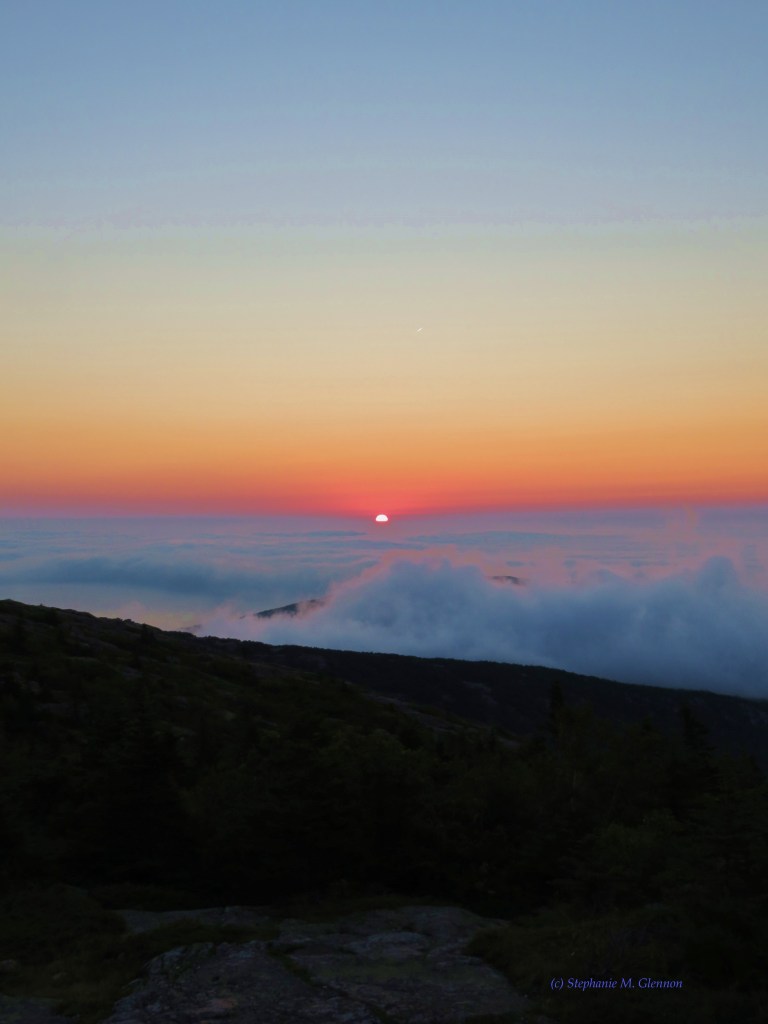
In more recent years, I’ve looked over land and sea and sandscapes from atop camels and towering dunes. From watchtowers and volcanic islands. I’ve surveyed ancient blue and pink cities and violet seas from slitted holes in stone castles and fortresses.
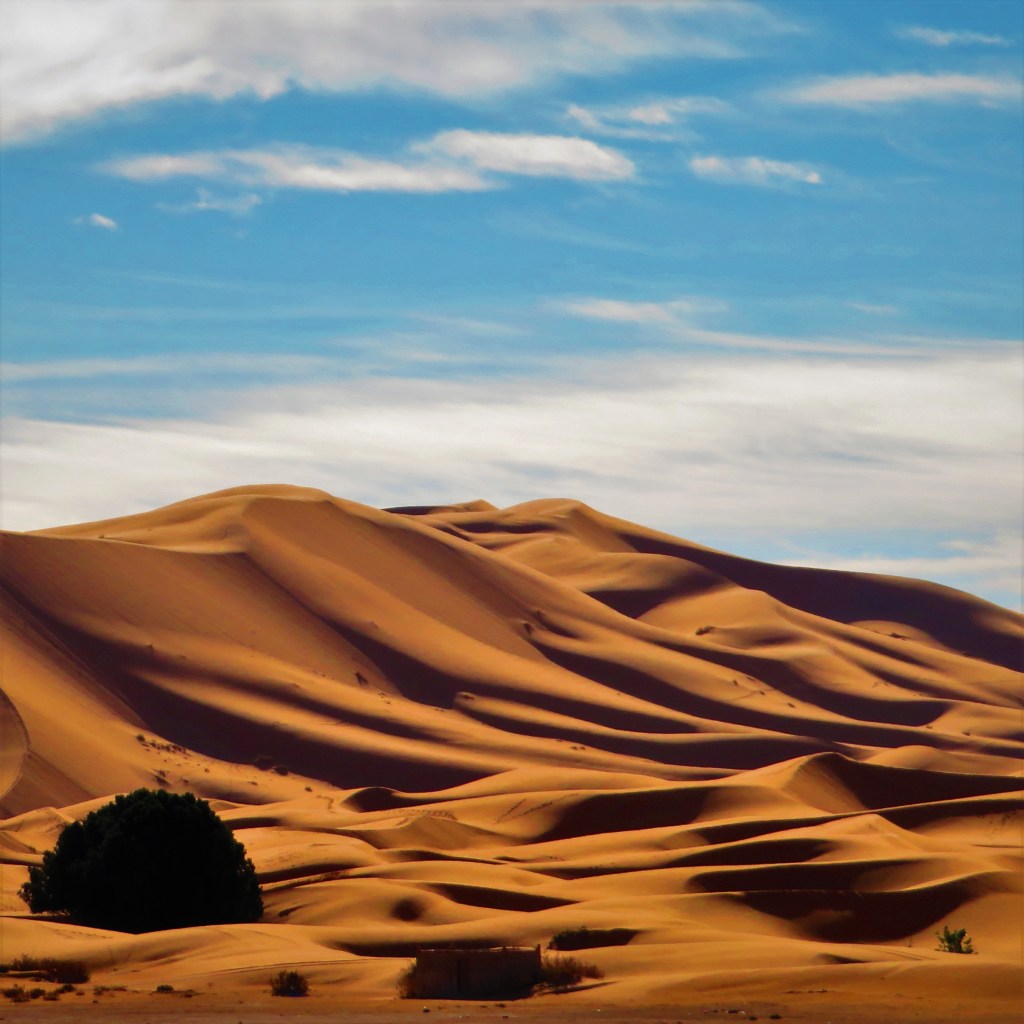
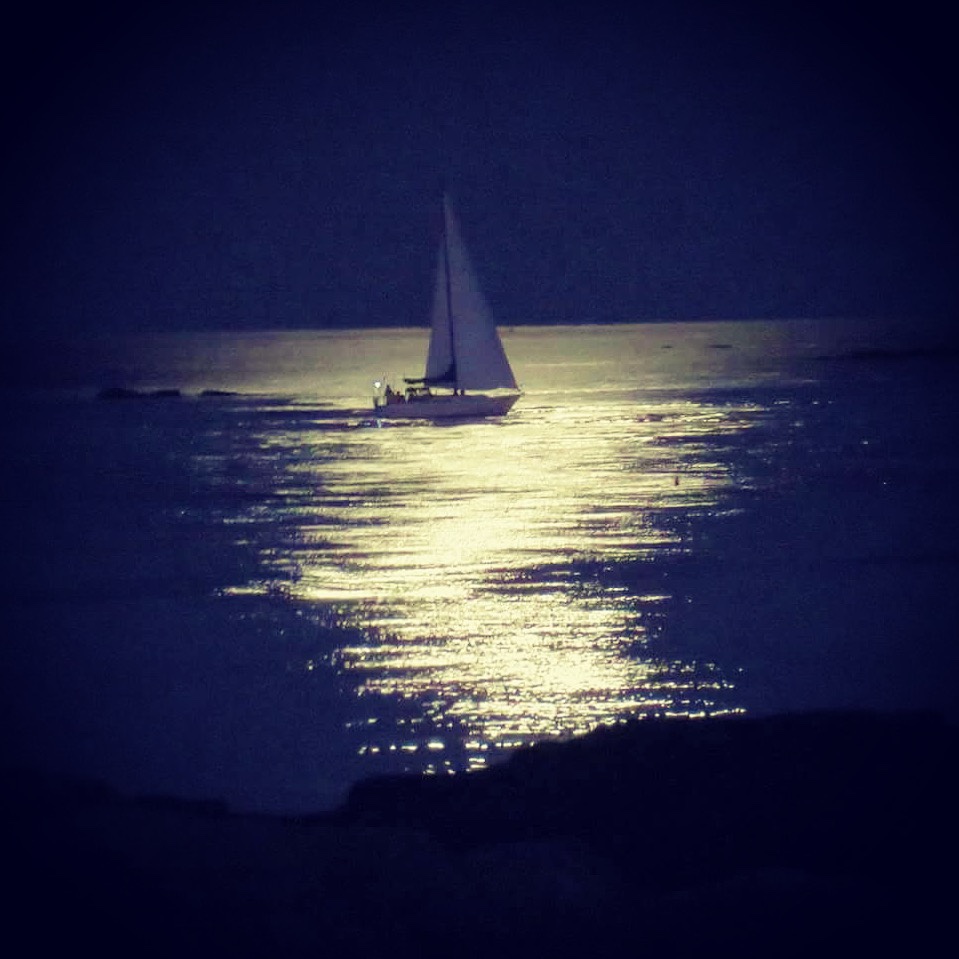
From a distance of many years, I realize I’ve found myself climbing ever-farther upwards on such days.

At dizzying heights, I feel closer to my missing piece. He frequently took photos from such spots when he was here with us, on “earth, our heaven, for a while.” Words I read from Mary Oliver’s “A Pretty Songat his service.

In some ways, we can best see what we’re missing from on high. Where the heady view is also heavenly.

A man looking out over the City of Lights with his daughters, not knowing it would be the last time. The same man on a Equatorial island cliff, knowing it was for the last time, and seeing the rarest of Pacific nesting birds.

One of my children recently told me of Sgùrr Dearg, where we earthbound folks may survey both very present Puffins and great swaths of the visible world from the Inaccessible Pinnacle.

If she climbs it someday, I hope she’ll send me a picture of what she overlooks.

Scarlet Skies

Southwest Harbor, Mt. Desert Island (c) SMG

Yesterday was the eleventh birthday my husband should have had here, with us, in the traditional way.

It has not become more comprehensible that he was not.

Yet somehow he is no more and no less present than he was, in our home, when his heart stopped beating.

If there has been a shift it may only be because I no longer live in that house. I am no longer viscerally confined within its spaces, and the suffering he endured before he finally came home from an emergency hospitalization for the last time.

On rare occasions, I still need to revisit now distant and still gut-roiling human-forged interior spaces–like the radiology department of his hospital. He emerged from it after weeks of fruitless radiation and spent hours with an equally quixotically hopeful colleague, looking intently at his films for any sign of reduction in a pancreatic tumor that had not even incrementally let go. It had in fact already dispatched is sinister envoys elsewhere. Those rooms and hallways–and even the tissue boxes in the waiting rooms–make the psychic pain of it instantly rise to the surface again.

But outdoor spaces have changed, for the good, without changing at all.

I have stopped desperately searching for signs from him, perhaps because I have settled in the knowledge that I am always surrounded by them when I am outside. I know he is not confined to any space, and does not revisit the same bleak places and memories I do.

One never knows where he will appear, or what will call to me or our children, wherever they find themselves.

As much as he loved his work, his soul always needed to be among the stars and out in the sun. In the same way I picked up the camera from him, once he no longer quietly waited for perfect shots of landscapes and the creatures traveling through them, I have now incorporated into my being the yearning to be outdoors. To see and feel its endless permutations–of weather and sky, of earth and its beings, no matter how small. And especially of salt water.

Years ago I finally made a trip back to Southwest Harbor, on Mt. Desert Island in Acadia National Park. Once our family had dwindled to five (not counting beagles, of which I had–clearly not rationally–by then accrued a third).

Already my heart had for years hurt too much to walk on the same paths and shores and mountains where all six of us had walked together. This time I had driven by myself, stopping only at a sprinkling of lighthouses along the way. I had hoped to make it to Bass Harbor Light’s scarlet Fresnel lens by sunset.

As it turned out, legions of less solitary others were entirely willing to brave the cold towards that same end. A dispiritingly long line of tourists in very substantial vehicles snaked far beyond my sight as I approached.

A change of plans.

Pre-pandemic, I was limber enough–and well enough shod–to swiftly backtrack toward the Harbor. I ran in what I hoped was a West-facing direction.

To my surprise, as I rushed to the first pier in sight, not only was the Harbor itself nearly empty, but only a dinner-bound dog and his human were in sight. They soon vanished beyond a gentle hill.

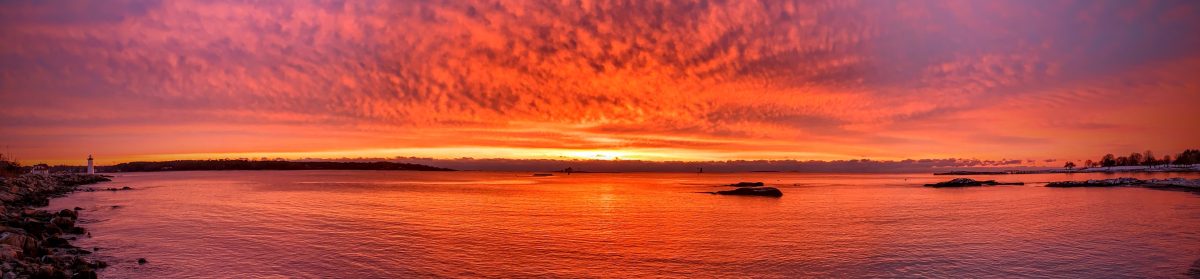
In a startlingly sudden blast, brilliant pink-orange tendrils, like silent fireworks, spilled down and over the densely gathered trees across the harbor. Sunset had arrived and I was alone.

The dropping sun slowed and impossibly lingered, patches of pure white light drifting in waves above reds even more vivid than that lighthouse lens. I could not have been more certain that Jim was there, too, and was glad I had made my way to this singular and eternal sight.

Still standing, in a a place of heaven and earth and sea not freighted with, but lifted up by, our past together.

So, yesterday was the eleventh birthday my husband should have had here, with us.

But it was also the first day the still-spinning world welcomed a new baby James, named for him, born on his birthday to the daughter-in-law and son of two beloved doctor friends who had been with us before and as my husband died.

They both were at his side to help soothe his tender passage out and away from pain and disease and into the luminous light beyond any doors. Into “the relief of space …outdoors, in the sunshine, under the gigantic sky.” A place, as Kiran Desai described in Hullabaloo in the Guava Orchard, where even “in the midst of chaos” one may find “an exquisite peace, an absorption in a world other than the one” into which we were born.

Fittingly, sweet baby James’ grandparents met their new grandson in an outdoor garden, on a coast where green still grows companionably among the rest of the color spectrum. Flowers and creatures flit and relentlessly gather pollen, during lives which seem so short only by our own inadequate measures. Where stalks never stop reaching towards sunlight, while generations of their buzzing and fluttering companions continue to fill the ever-changing skies.

Even in December.