I’d neither learned the techniques people use to frame shots with a “real” camera, nor ever heard of rabatment until now. It is but one way to capture a slice of the world with rectangles-within-rectangles.
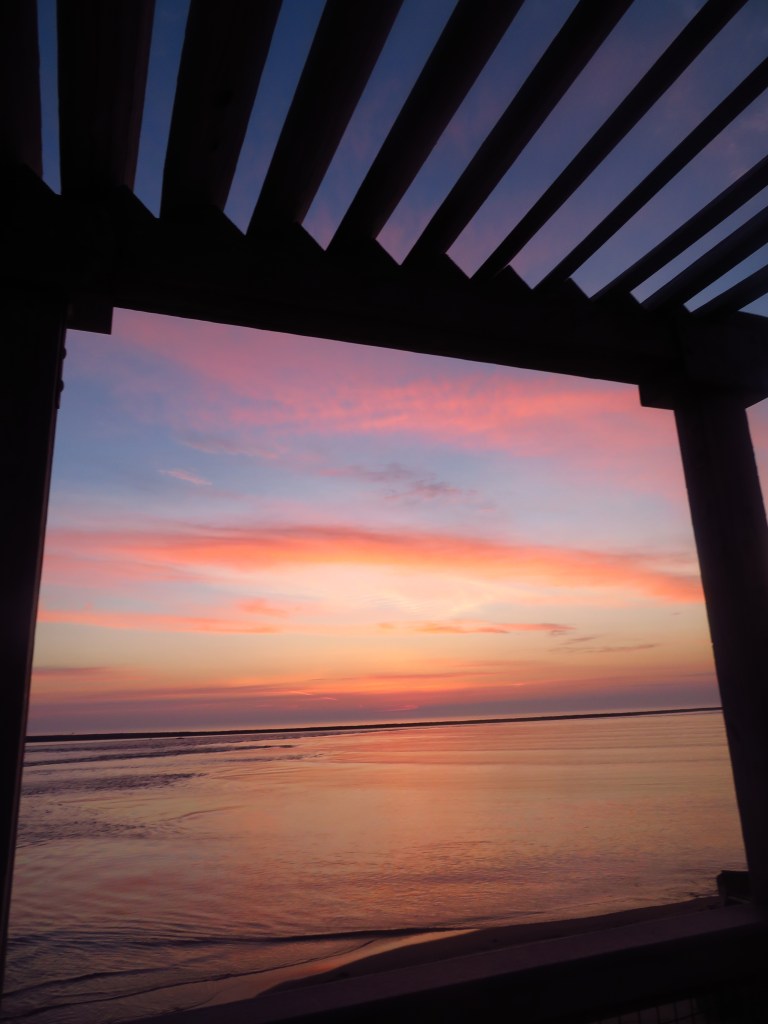
Consider all the lines one could draw to carve up the whole of a Plum Beach sunrise space into geometric planes. The cornflower sky becomes slatted air, as if one could reach up and gather sunrise’s starbursts into a morning monture.
Above, left to right: Salisbury bridge, Massachusetts; suspension bridge in Bowdoin, Maine; planes of wood and air in Salisbury, Massachusetts. below: Artichoke Reservoir in West Newbury, Massachusetts.
Light and air carve off rectangular planes from landscapes of still water and gusting sky.
The above photo was taken on an extraordinary sub-zero Massachusetts morning. It somehow packs in each separate category of cleaving and balance in a landscape: rabatment on the left, where a leafless island tree anchors the composition; sky sheared off at the lower third, where the Merrimack River flows East to the horizon and the Atlantic; and a trick of light and clouds that slices straight down the mid-seam.
And I could not possibly leave the subject of rectangular composition without sharing a bit of rabbatement–tricks of composition by means of color and light and segmented negative space in and around another Rabat. . . .
Not in the sense in which that characterization is made in my line of work, but in many other ways. Framed so he seems to pop out in bas-relief against a cloudless powder blue sky. His vivid, sharp-edged wintry colors seem to propel him towards the viewer as he bows away from a filmy floral bokeh. On closer inspection, one frond has broken clean through at its elbow: another hint of the season.
He’s frozen in time and space by a rectangle of sky so constrictive that he appears to be craning against and breaking free of its confines. Looking inquisitively down and out of the frame in which he was forever captured.
Only I can tell you who was on tip-toes on a Maine oceanside path on that long-ago morning. Chin tilted up to return this wee Flying Wallenda’s side-eyed glance as he balanced on a crimson frond.
My fingers were so cold they felt welded to my camera. My winter shots tend to be far sparer than the unending rectangular frames which entomb other seasons’ scenes.
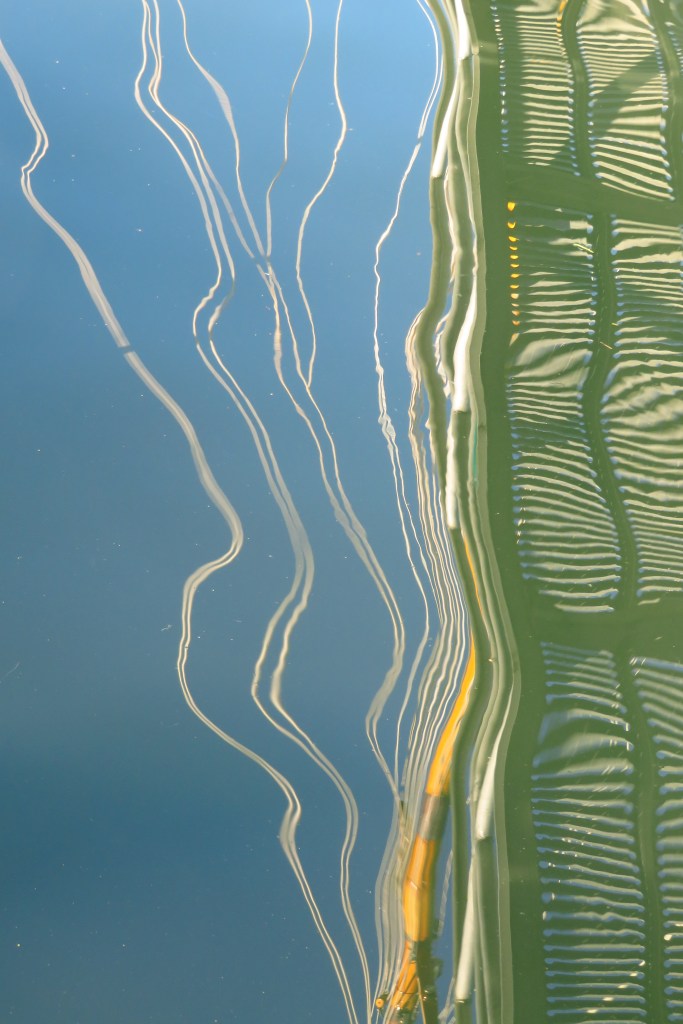
In every season, each image’s framing allows viewers to fill in the blanks, based on contextual clues. These may be as concrete as deducing the months in which a given bloom is likely to erupt and flourish in New England. Or as abstract as interpreting a wavering pattern reflected in slightly rippled water on a cloudless day.
Strangely, I’ve written about absent lens artists’ frames more than once before:
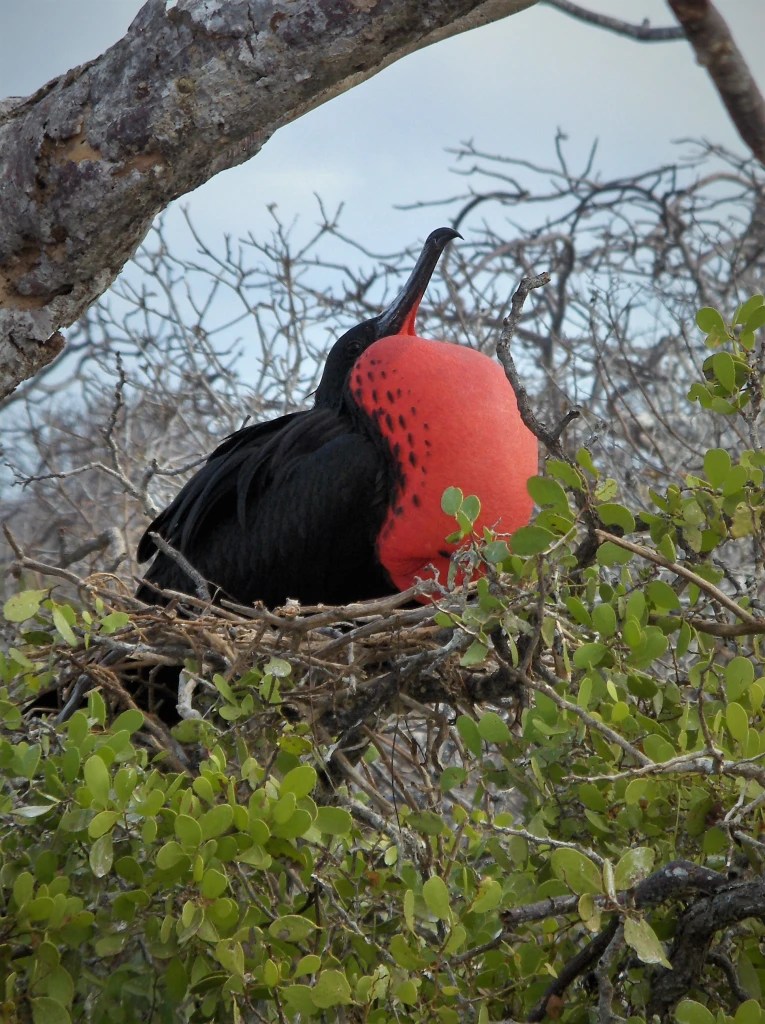
Both within and outside the frames [my husband] Jim created each time he sparingly clicked his camera’s shutter, there was love. This was not anthropomorphism–although the scene as female frigates gathered around a scarlet-throated male echoed what I understand to be the premise of a reality show involving the distribution of a limited number of roses.
Inside each frame is something Jim loved and preserved about his window on this world: its brilliant colors and creatures, plants and geological formations, and the spectacular beauty of sights he had never seen before and never would again–at least from this earthly vantage point–on all that grows and erodes and decays and grows again around us.
On the other side of the lens was a man relishing everything about a trip he knew would be his last, with the family he loved and will forever love him. Each of his photos can transport us back to the warmth of that sun, the sounds of sea lions, the feeling of being able to reach out and touch his arm or the back of his shirt as he found himself among winged and earthbound creatures near the end of the visible world and his time in it.
The artist’s frame allows the viewer to recapture the world it holds. It also allows us to see the artist outside of each preserved moment, whether capturing something real or imagined, aspirational, or merely magical . . . .
Art travels in time, sometimes even more readily than we do.
But he’s also still framed here for you to see and imagine this once present soul, engaging with another being on an icy winter morning.
In the penultimate scene of a five-season show centered on a family mortuary (avert your eyes if you don’t want a spoiler), an artistic daughter takes a photo of older family members seeing her off as she leaves home for the opposite coast. She is a true photographer, and is deliberate in what she seeks to capture in each frame.
Her older brother appears at her side, from his side of the veil, and gently tells her: “You can’t take a picture of this. It’s already gone.”
And it is.
But it’s also still with her, and anyone who truly studies the way she filled her frame.
The generic three words appear in countless songs. Today, I happen to hear them in a (no-longer) boy band’s lyric. Improbably, that particular earworm began burrowing before the turn of this Century.
The tone and cadence in asking for an explanation of “why,” as with most communication, is important. It can be calmly delivered, or beseeching–even a crie de couer.
It can be inquisitive, and take us back to the wonders of the world as they begin to catch our young children’s attention outside infancy’s cocoon.
“Why is the sky blue?“
“Why do manta rays leap above the ocean?”
It can express the joyful wonder and bottomless despair of other unanswerable questions and pleas for explanation.
“How could I have been so lucky to spend this life with you?”
“Why him?”
I’ve taken on the task of picking out a portfolio of ten photographs I most want to share, and the more formidable challenge of explaining my choices. I realized after selecting them that I took most of them while I was alone, at least among humans. The few exceptions were taken in countries and on continents far from my assorted homes.
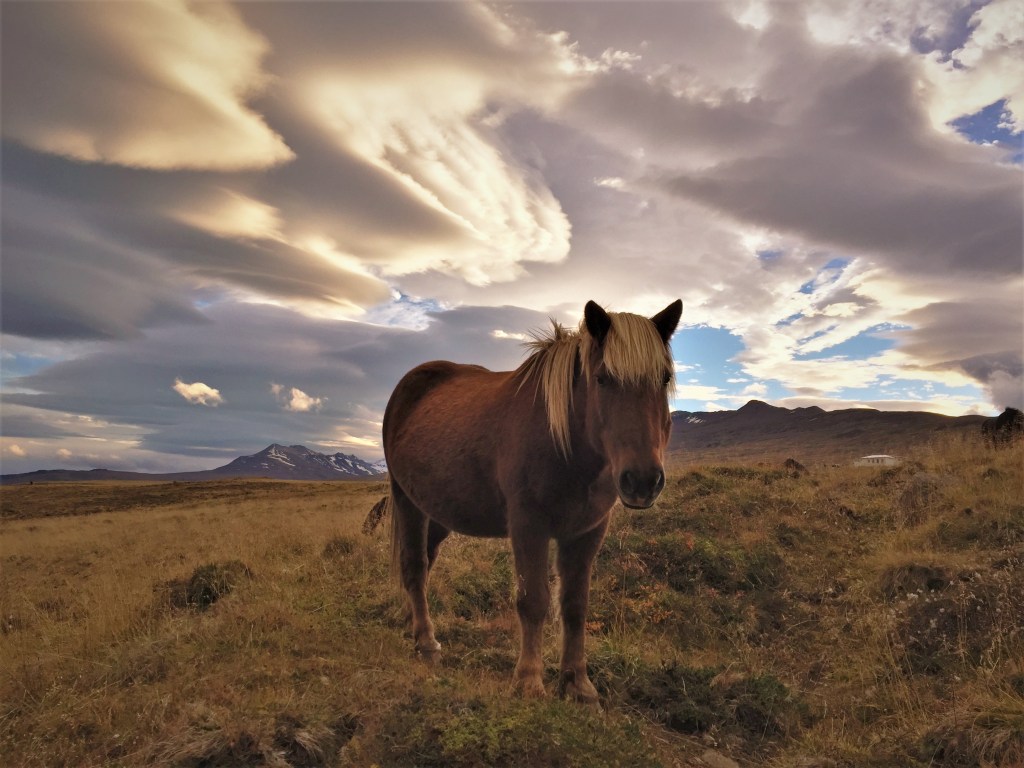
Above, an Icelandic pony was perfectly framed among lenticular clouds as the sun started to drop in Aukerie. I treasure revisiting the peace and beauty and even the pure air of that day.
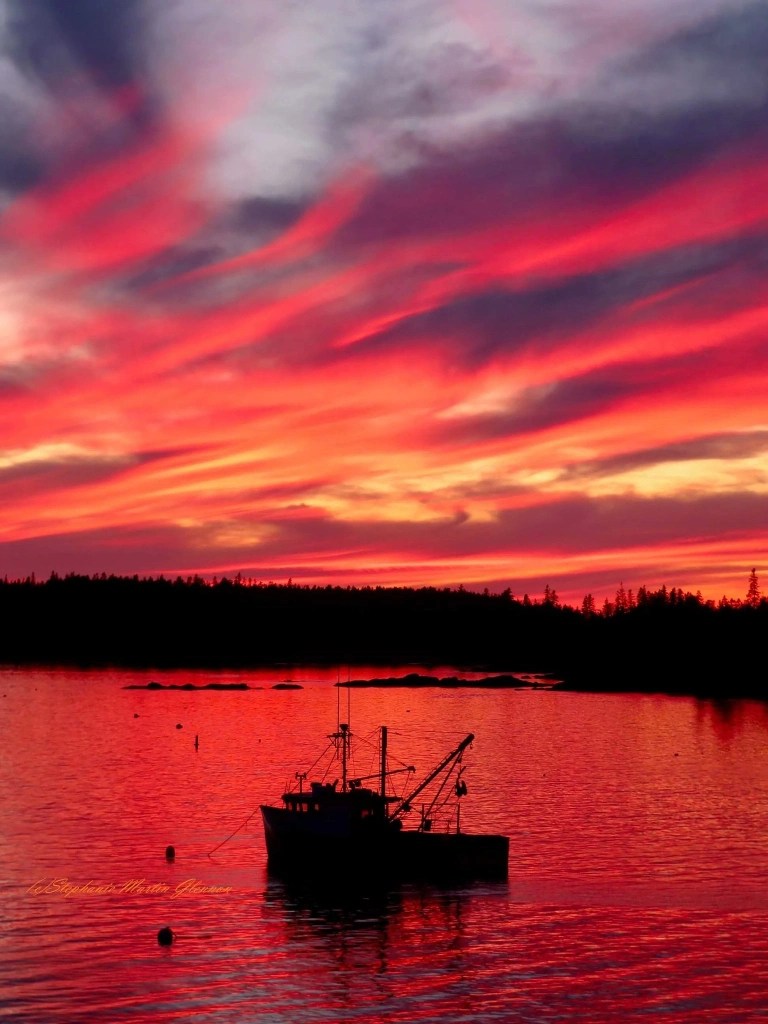
I was completely alone in Southwest Harbor for this astonishing sunset on Mount Desert Island. Acadia National Park was a very special place for my late husband and for our children as they grew. It took quite awhile for me to be able to travel by myself and be able to recapture more joy than melancholy there. I felt my husband’s presence as I took this picture, as I do every time I look at it.
An extraordinary ordinary palm frond towered above me, and calls me back to a cool night with regal birds milling all around. In the unseen background, the High Atlas Mountains formed ribbons of snow atop vivid blue peaks.
Each sunrise moment is an ephemeral work of art, there for us to keep and share and revisit in a photograph.
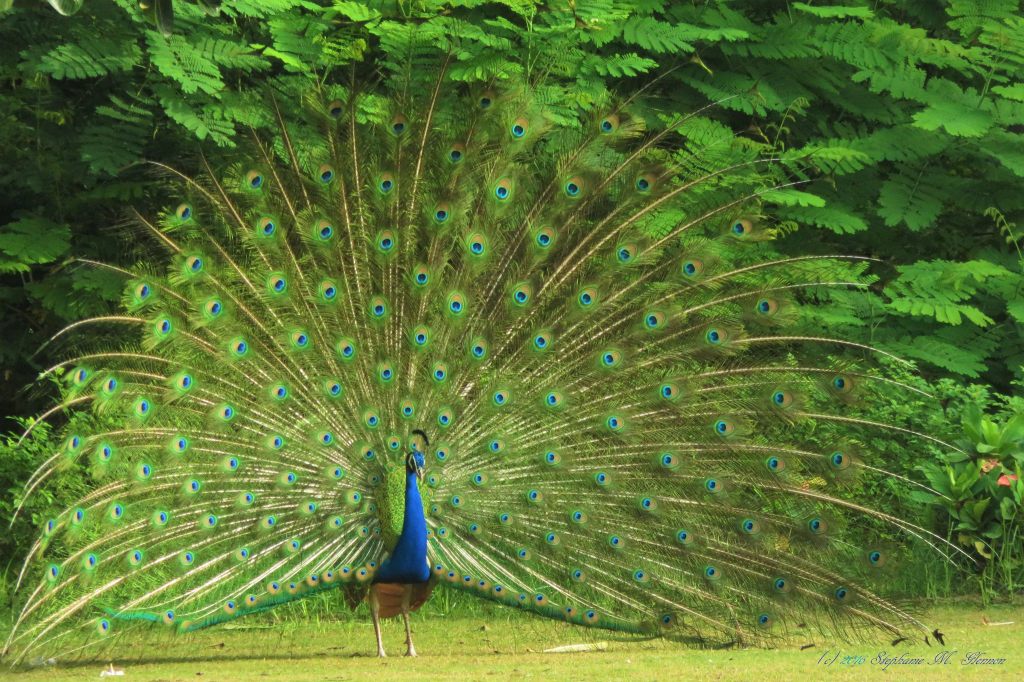
A return to deep greens and blues. . . . In New England’s coldest days, I can still feel the warmth and wonder of walking along a field filled with peacocks in Rajasthan, India.
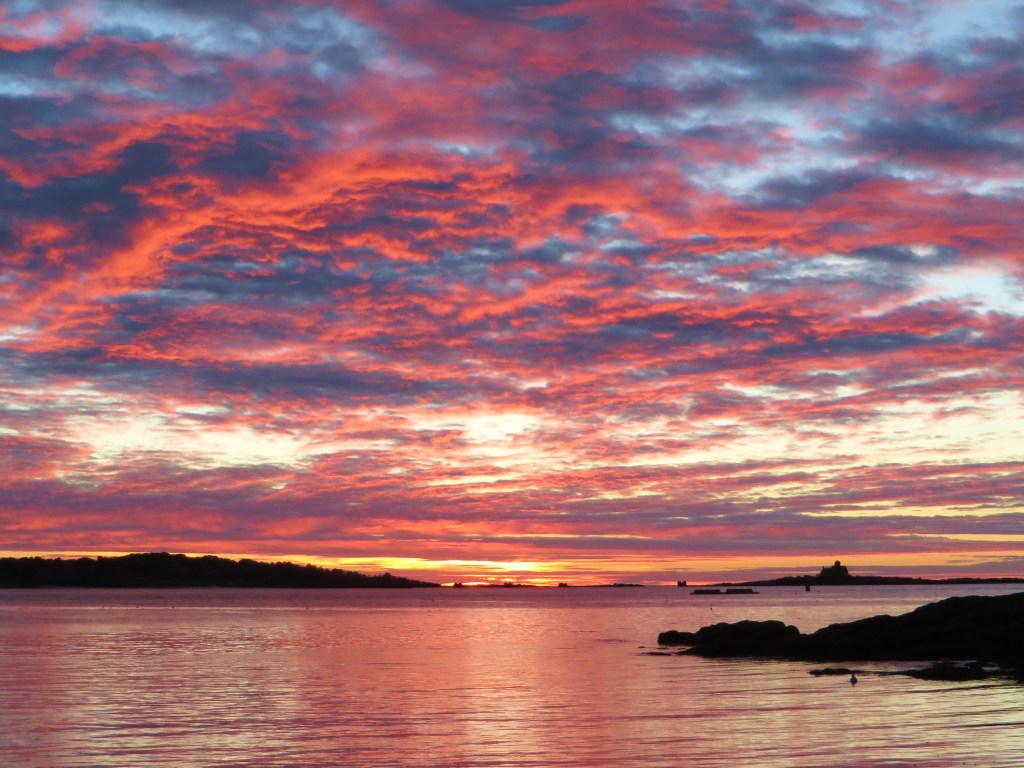
From the same spot in Newcastle, New Hampshire, one can see two lighthouses in two states, and endless permutations of light. This is one of my favorite glimpses of dawn.
A juvenile Kingfisher was my companion for sunset at the Artichoke Reservoir, a hidden jewel in Essex County, Massachusetts. The photo brings me peace; I remember how the sight helped me to breathe and settle my soul at a time of frantic medical issues in my family.
I’ve taken countless of Whaleback Lighthouse from two state’s shores. This one stands alone: without touching the picture’s natural color, it looks to me like a silkscreen print of sunrise.
A snapshot in a butterfly garden in Western Massachusetts preserved a butterfly taking flight, and the rich colors of a tropical forest in a distant part of the world.
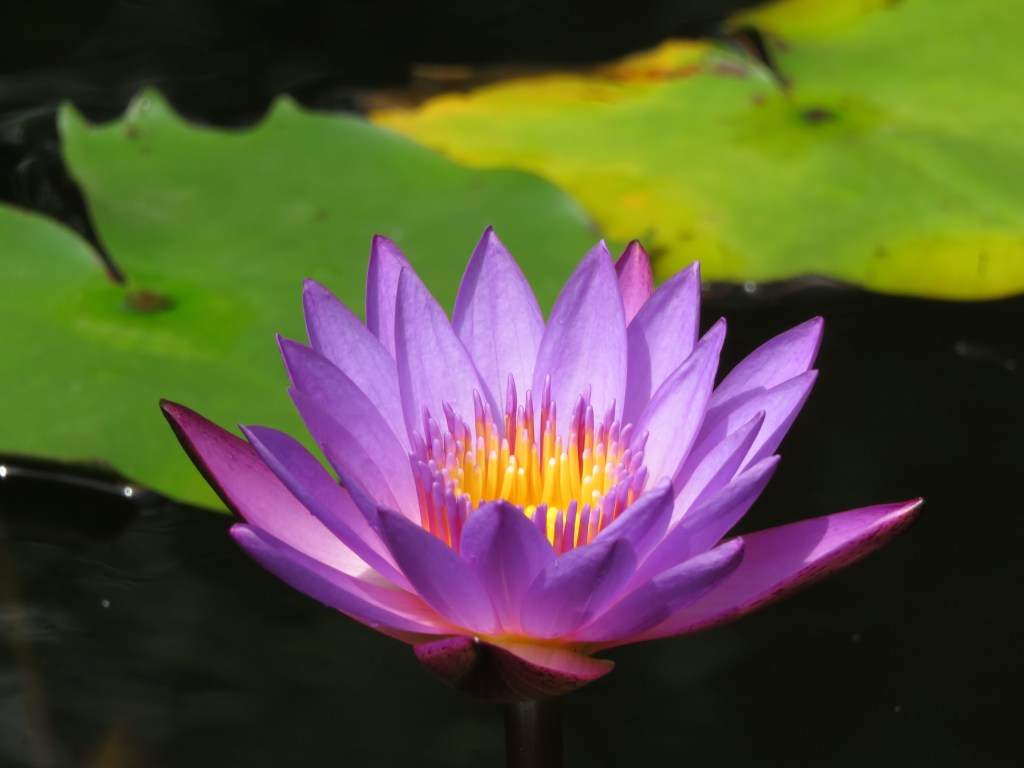
A single water lily… on a glorious day spent on another continent with one of my daughters. The simple shot carries me back to her, and to the sun and golden birds outside an ancient fort and museum in Jodhpur, the Blue City.
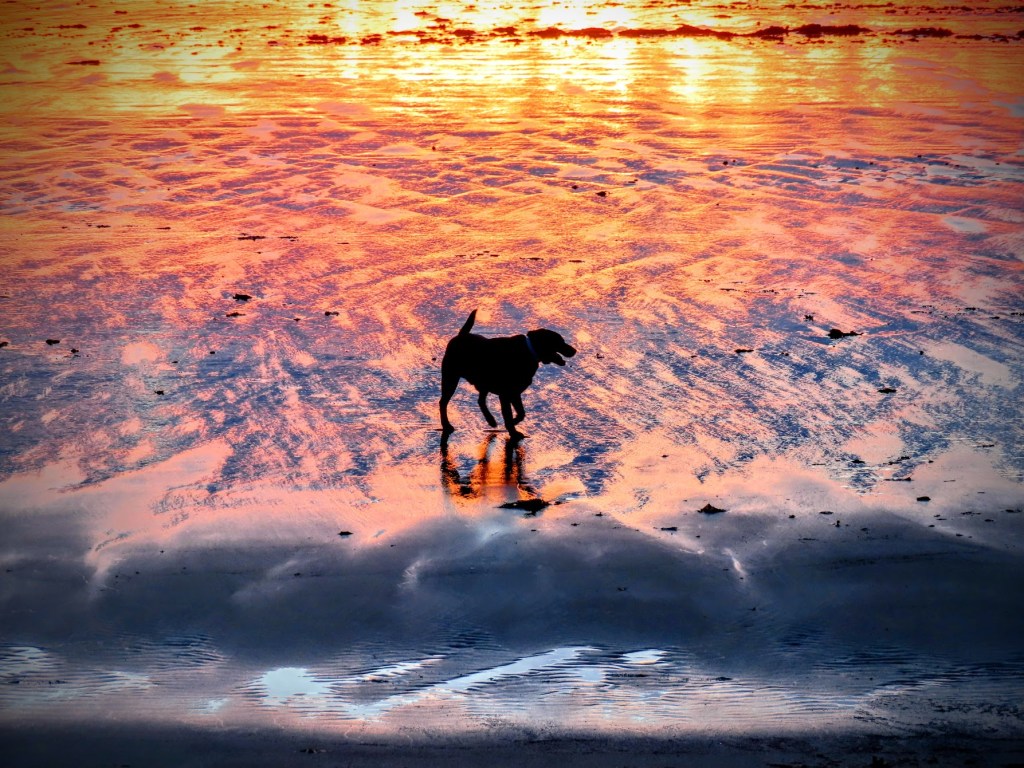
And I am sneaking in one more photo, the last I was able to take of the beloved and protective faithful companion of a sterling neighbor who contributed so much to every part of the world he occupied, and will be profoundly missed after leaving all too inexplicably soon. His handsome dog passed only weeks later, to join him in another view of such earthly wonders.
I rarely photograph primary colors. I grew up in a household where paints were rigidly sequestered in their tubes and only sparingly dabbed onto precious watercolor paper. But outside, even primary colors are rarely static.
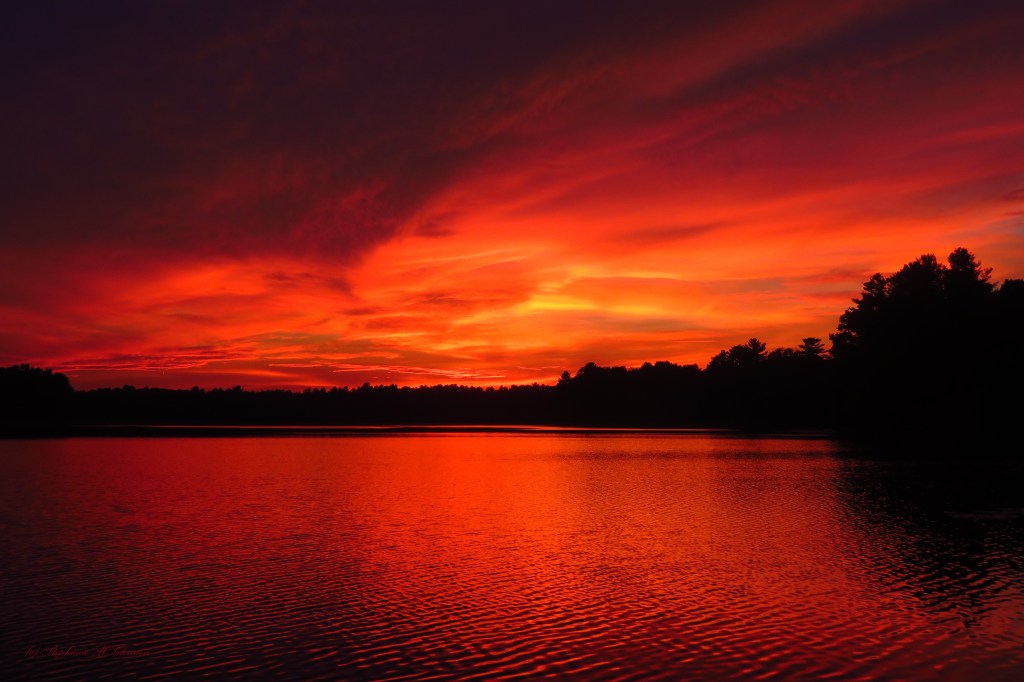
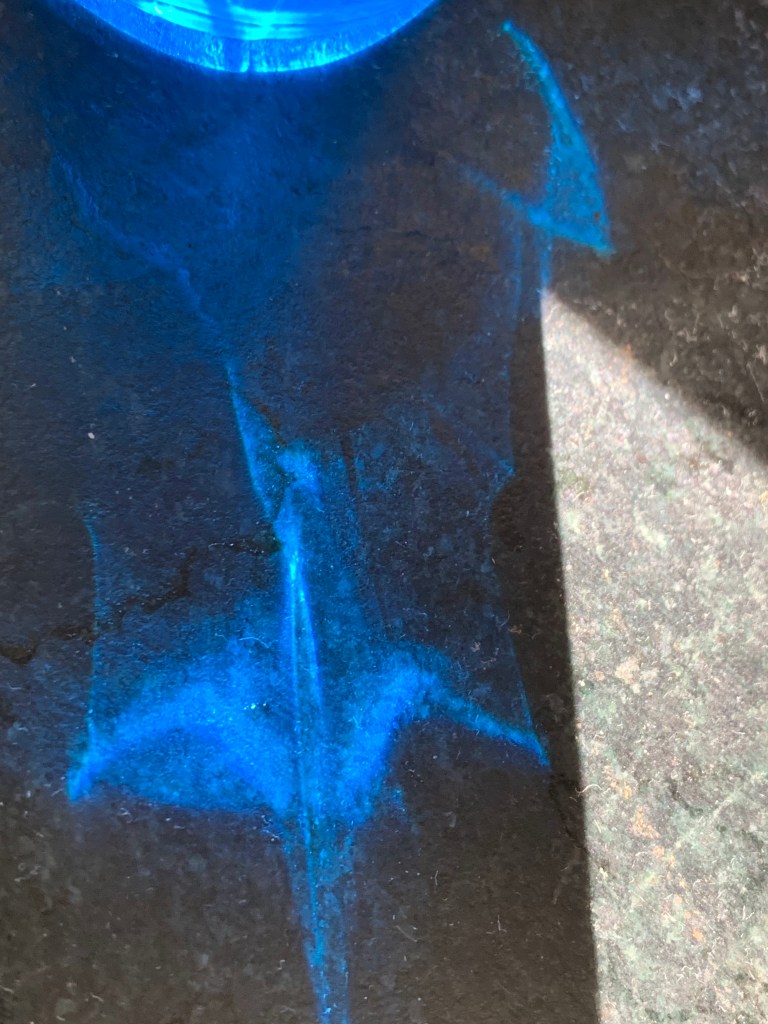
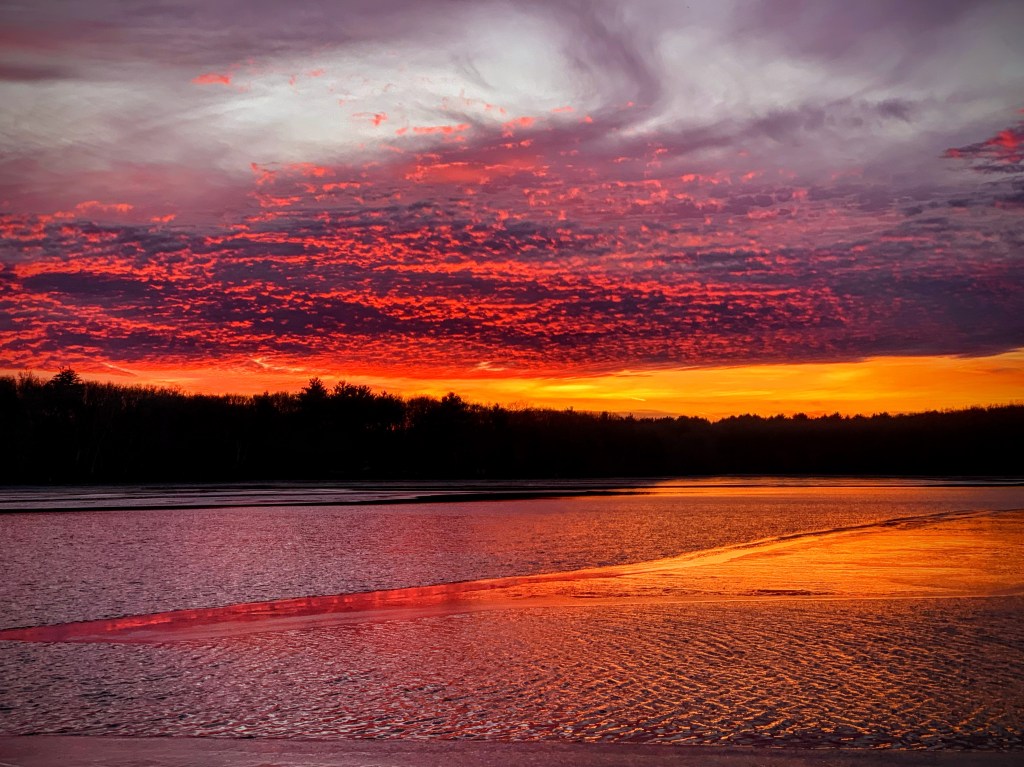
Of course, sometimes color itself is an illusion. Georgetown, Massachusetts’ reservoir is not filled with scarlet water. Portsmouth, New Hampshire’s colonial-era waterfront is not actually bathed in yellow. No ancient cobalt fish, nor any color at all, resides within the soapstone slab below; it is plebeian daylight refracted through dishwashing liquid.
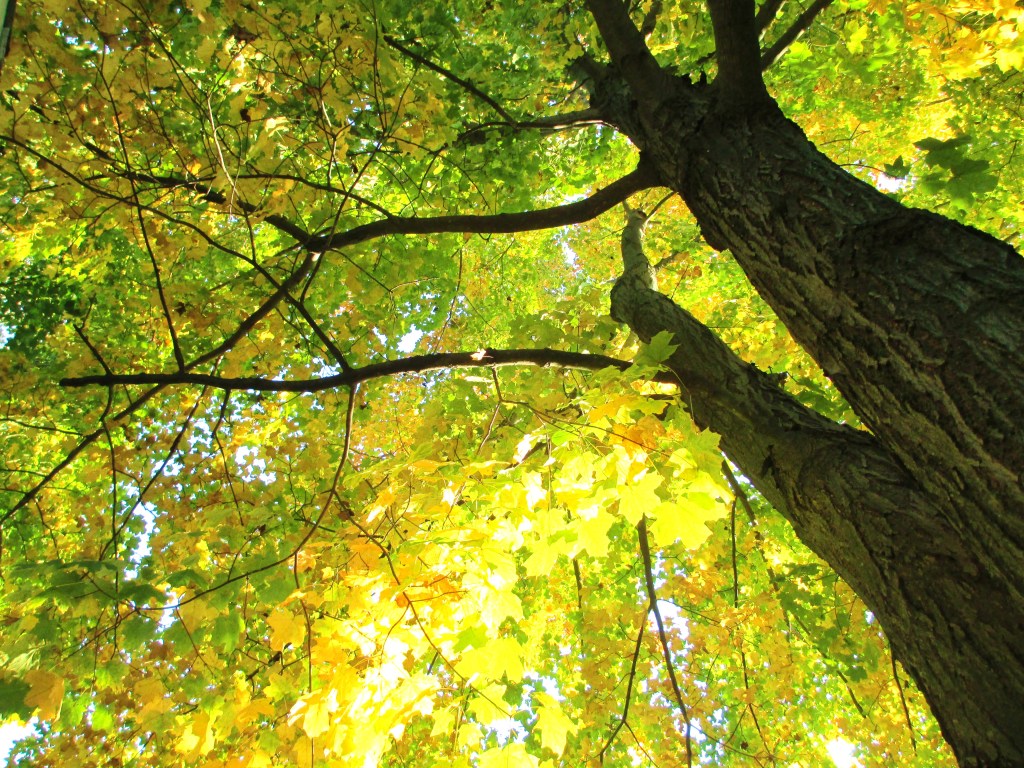
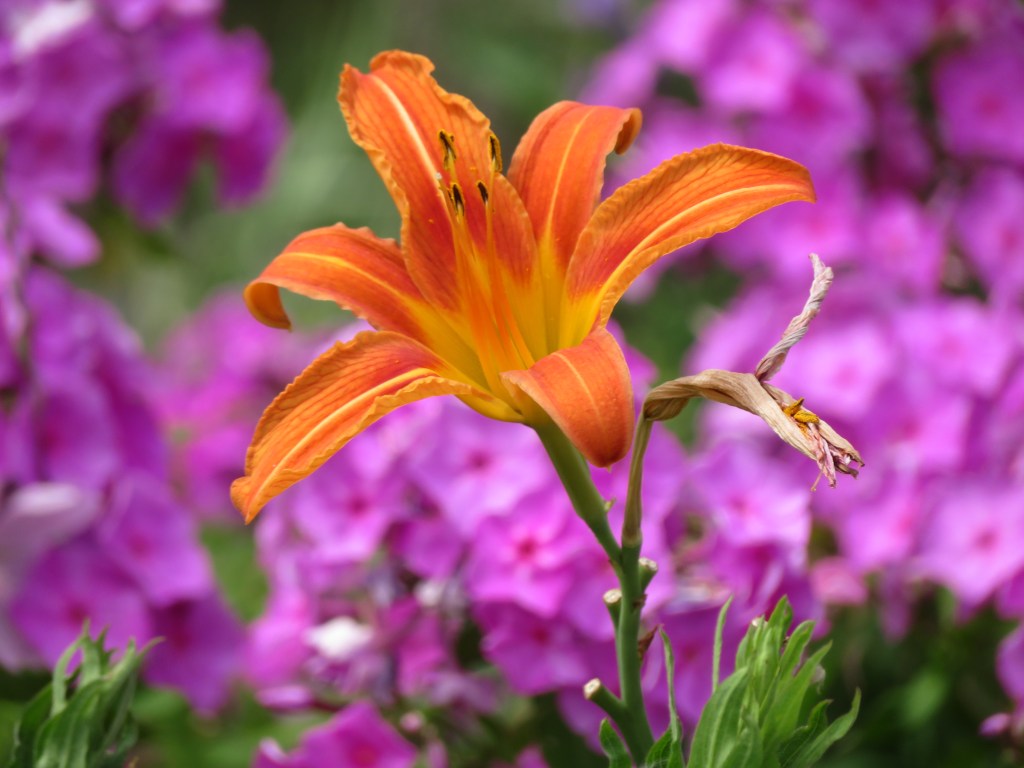
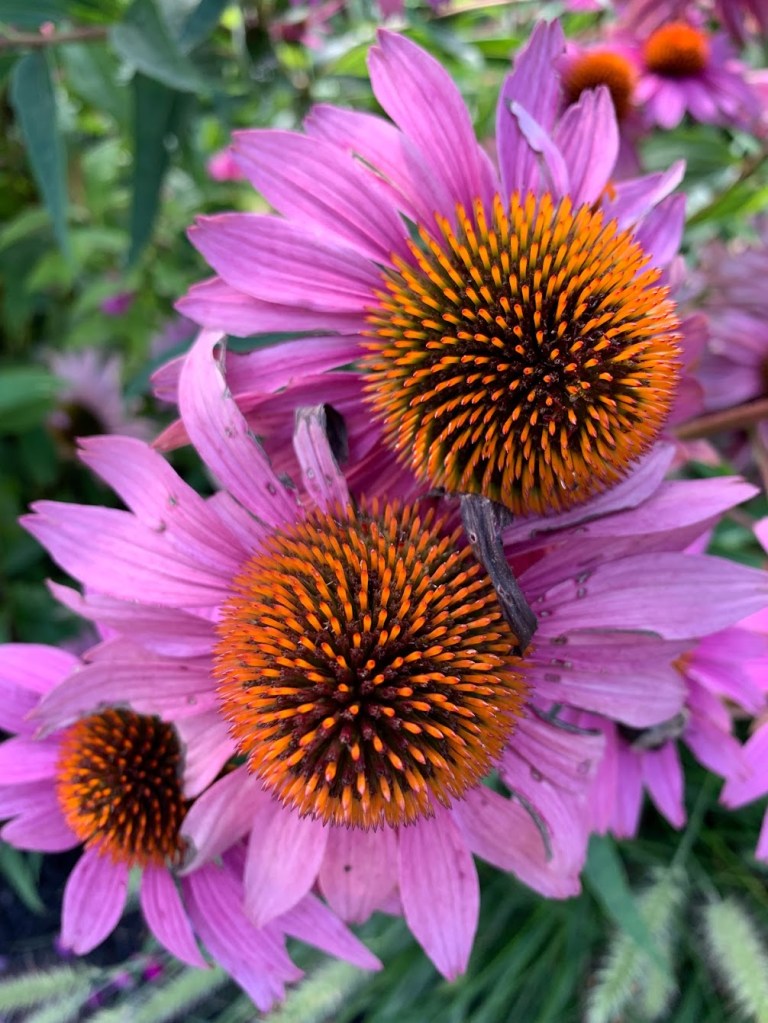
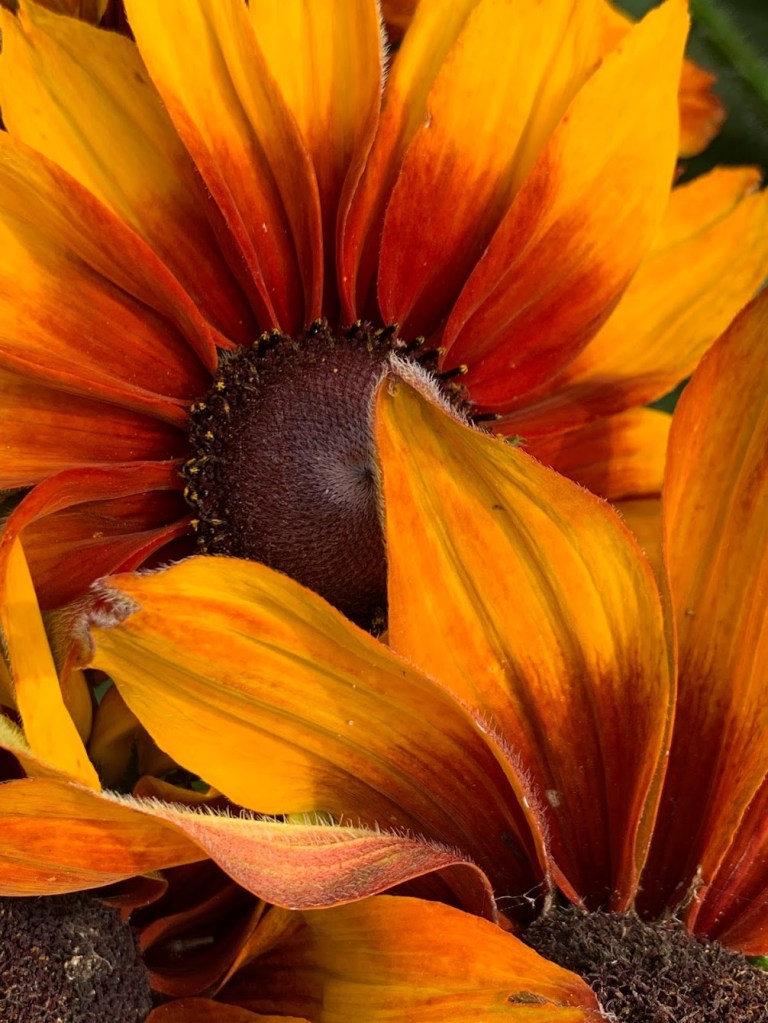
In general, I find pure and primary colors less interesting to capture. I’m drawn to gradations. To transfigured, quickly changing–even messy and decaying–colors all along each spectrum. One kind of magic happens as opposites on the color spectrum gather, in autumn leaves and gardens and water and sky.
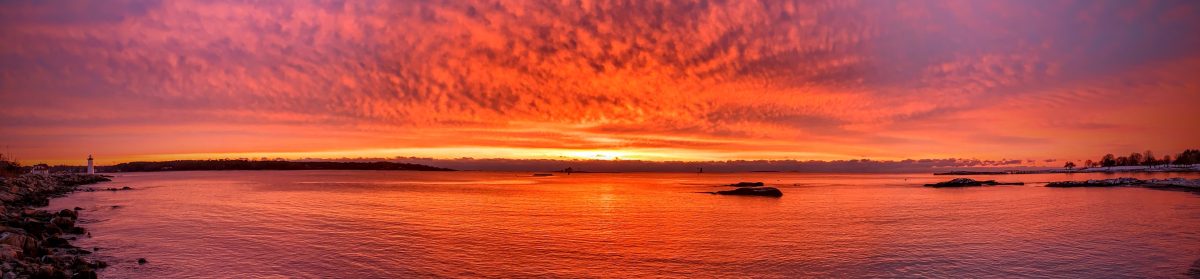
And the changes are always worth waiting for. The slightest disturbance to a pure red sunset over water may turn it into strings of rubies over rippled black velvet, and to violet dragon’s breath clouds.

















 Love in the Spaces