Done and Undusted

Every living and growing thing is a work in progress, as are most inanimate and many unseeable things. Tulip bulbs and time-smoothed rocks. Reflections, both visible and internal. A trip by land or sea or sky. Quilts , from the sketching to the sewing process. Sunrise. Anger. Taste in art and novels. Betrayal and trust, both in the building and in the breach.

Landscapes and visitors to them. Altitude and attitude.

Hope and regret and resignation.

Memories. Love.

Lunch.

Even when something’s done and dusted–including long after I’ve pressed “publish”–everything I write remains a work in progress. When I revisit an old post, or a brief I filed decades ago, I often wince at something that could have been better said.

Each post I’ve made in the past many months has required a scandalous number of revisions–not because of a change in the way I write, but because of changes in me. (Although I suspect that is a chicken-and-egg construct for most people who write).

The writer I am in the moment is never the writer I was in the past. Sometimes, for better and worse, I hardly recognize prose as mine. I’m occasionally pleasantly surprised. (More often, I think, “How could I have missed that mistake when I read my draft aloud . . . four times?”)

Every living and growing thing is a work in progress, as are most inanimate and many unseeable things. Tulip bulbs and time-smoothed rocks. Reflections, both visible and internal. A trip by land or sea or sky. Quilts , from the sketching to the sewing process. Sunrise. Anger. Taste in art and novels. Betrayal and trust, both in the building and in the breach.

The quilts I’ve sewn since I was ten are, by their nature, works in often reductive progress. The better loved a baby quilt, the more it tends to emerge from its recipient’s childhood in a very different and diminished physical state (not unlike its seamstress). It begins and ends in pieces.

The process of handmaking a quilt, followed by a child’s enthusiastic use of it, is like a Riddle of the Sphinx writ in 100% cotton prints. The binding at the quilt’s edges–always the final touch when making it–is almost always the first to go. Its tightly woven threads are worn away by tiny hands grasping it for comfort. Entire brightly-colored applique shapes sometimes follow suit, fading and letting go like petals once they have been loved back to exhausted pieces. The hand-stitched threads that secured them can only take so much love and laundering.

This goes for my photographs, too, in a way. I now take photos in somewhat less absurd quantities than I acquire fabric. My early landscape and seascape photos were . . . not good. I tended to emulate my longtime Deering camp friends’ band motto–“Quality through volume.” But along the way, I grew from sheer practice to be able to frame shots. To catch the ephemeral when it was willing to be caught. To wait patiently, no matter what was buzzing and slithering and stinging nearby . To appreciate what was temporarily in my sight, and that a rushed shot would not enhance my chances of preserving something special.

This morning was summer-steamed, shrouded in deep gray mist. But I thought I spotted a visitor to a darkened house just off a very busy main road. From a distance, I quietly zoomed in and took a single photo.

I may still have work to do, but the fawn posed perfectly before loping away.

I couldn’t have improved on it.

En Guard!

Fences are said to make good neighbors, but they provide many other services, including considerable photographic opportunities. They help keep our beagles from escaping while chasing scents. My husband once forwarded me an account of an undoubtedly well-meaning beagle who was recovered–in Indiana–after more than two years on the lam and 850 miles from his fence-free home. My husband’s header: “I wonder how far the rabbit got?”

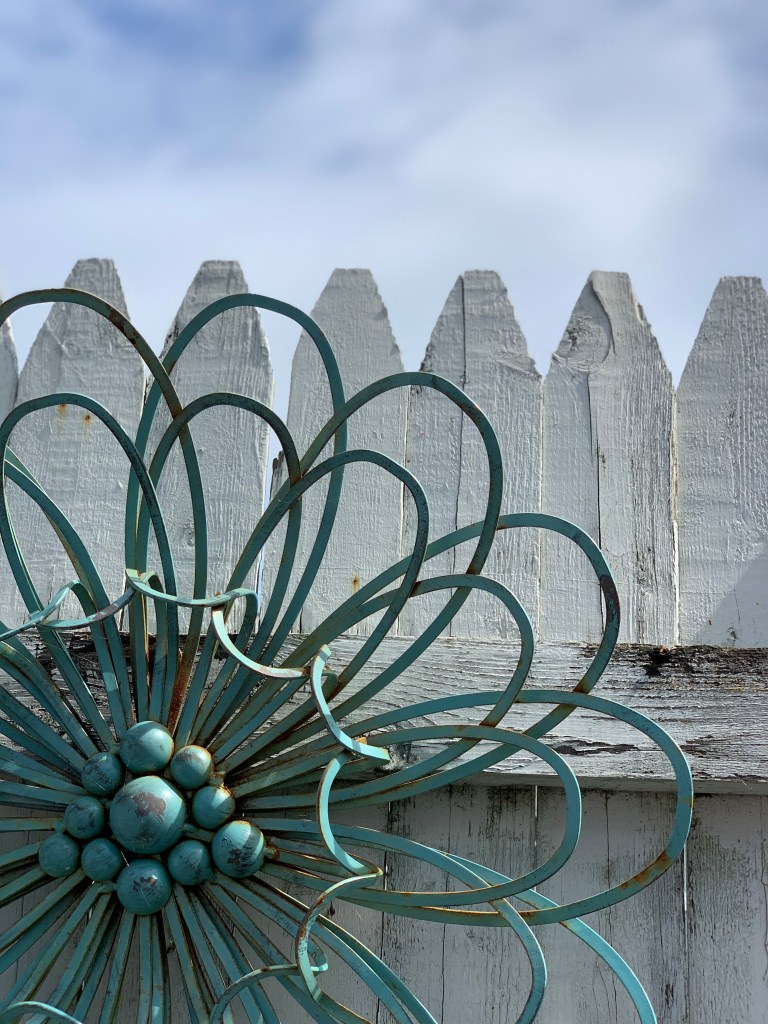
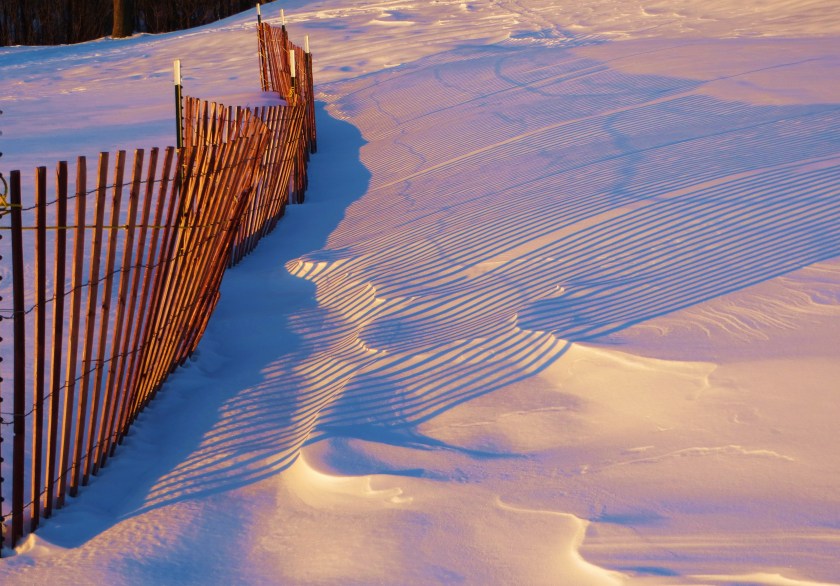
“En guard” is spoken to alert fencers to take their defensive positions, but fences themselves need not be uninviting. They lend scale to and break up the vastness of landscapes. They mark paths and house buoys and tchotchkes and seasonal displays. They are backdrops for posters and banners, and display political sentiments and commercial enticements.

While birds frequently situate themselves comfortably on fences, a fence-sitting human tends to be one unwilling to commit to one side of an issue or another.

For the attentive, an unusual fence can identify the particular place in the world of an otherwise undifferentiated seascape or skyscape.

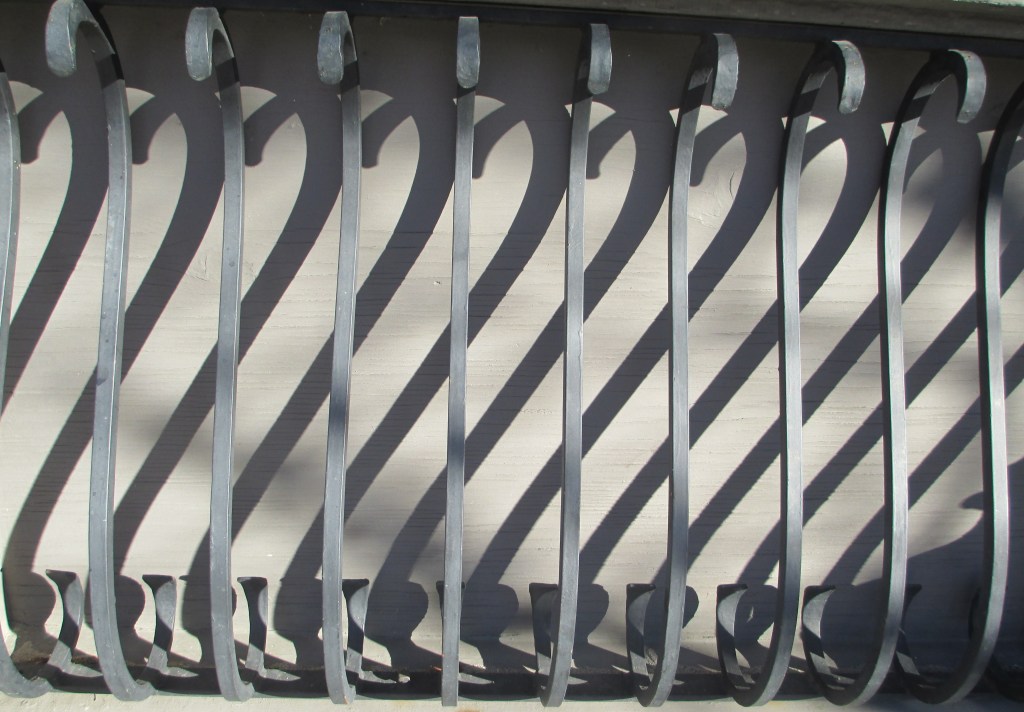
They may be whole or broken, winding or at strict high alert. Antique or modern. Functional or decorative. Enduring or flimsy, or somewhere in between. Sometimes they completely block one’s view. Others are so porous as to be nearly invisible, wrought of wire that melts into its surroundings. Lush summer flowers may exuberantly burst through their grids.

Sometimes, fences are so perfectly situated within their surroundings that they seem to echo the sky.

At least for awhile.

Tricks and Treats of Light

It’s tricky out there.

I took all these photos years ago, always looking for the way light alters what I see.

A viewer may recognize a foreground flower, and therefore be able to approximate the season in which it appears in my corner of the world. But only I know what makes up the background, and therefore the story of a given moment.

Is that a polished slab of stone in the background, high noon light glinting off mirrored granite particles? A nubbled glass window pane? A fountain, or perhaps a body of water? Is that flower still growing, or part of a bouquet? In my sight or in my hand? Am I zooming in, or can I breathe in its scent when I preserve the image?

All photos are a form of trickery, not least in stilling and preserving a fraction in time. This one brings me back to surrounding flowering beach plum, with this lone exuberant bud phototropically reaching for heaven on a hot summer day. It drew my attention not only because of its elegant extension, but also the glittering silver bokeh provided by Portsmouth, New Hampshire’s Mill Pond.

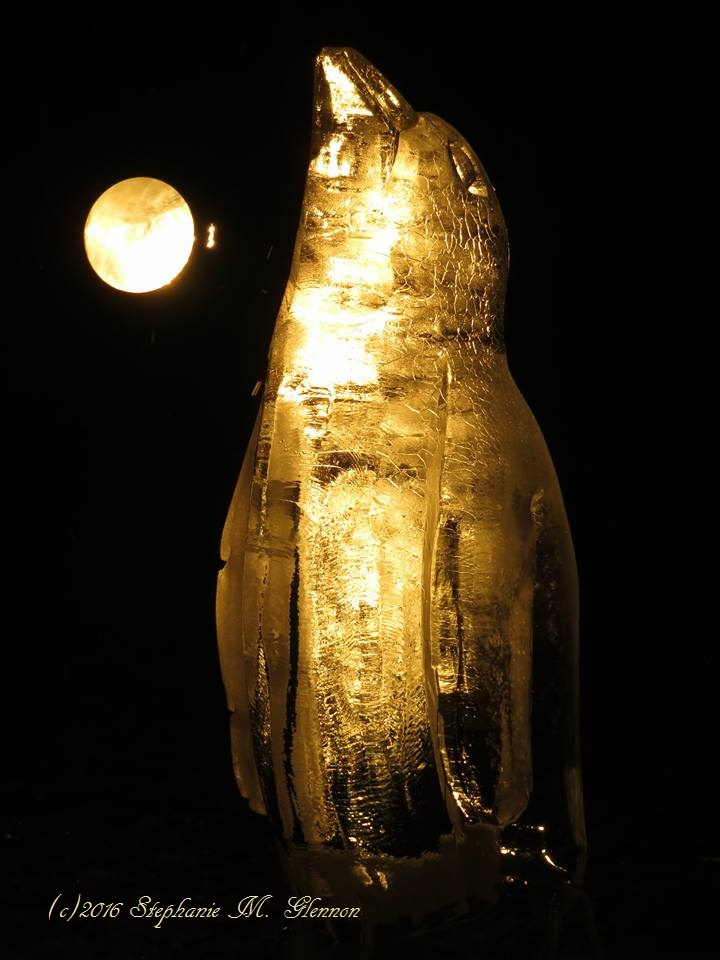
I love a little bit of mystery–some might even call it trickery–in a shot. Ephemeral colors and shapes which were never truly there. Blazing neon fleetingly painting itself upon sand and water and sky. Cotton candy and raspberry cloud berets touching down on bare winter branches at sunset. A stormfront cleaving and seeping through glowing daylight. A traffic light that becomes a perigee moon and transforms a penguin ice sculpture into molten gold.

And what do you suppose was happening here?

I welcome your guesses below….

Perpetual Spring

Spring ordinarily is death’s antithesis, as surely as it is winter’s.

At the end of our family’s harshest winter, my dying husband’s heart improbably would not let go of us. It refused to take its last beats until, at least by the calendar, winter had at last elided into the season of growing green that he had always tended to.

Just four days later, the snow had melted entirely away. That afternoon, in a sun-soaked Spring service at her school, one of our daughters read “A Man,” written by poet Louis Untermeyer after his father’s death: “I thought of you…. / And it was like a great wind blowing / Over confused and poisonous places. / It was like sterile spaces / Crowded with birds and grasses, soaked clear through / With sunlight, quiet and vast and clean. / And it was forests growing, / And it was black things turning green.”

One of her brothers read Amy Gerstler’s “In Perpetual Spring,” which ends with an expression of “the faith that for every hurt / there is a leaf to cure it.”  

Spring was my husband’s season–although all seasons were, in their way and his. He would rotate his birdfeeders’ weekly specials to accommodate anticipated guests, and make sure our porch was off limits to humans when robins began building their nests in a favorite corner of the 1805 ornamental molding atop its pillars.

The fruit trees he had planted would begin to bloom. His vegetables and fruits would soon make their way into the world. Armored khaki orbs of quince would drink in April showers and grow so heavy that they bowed the thick branches which hosted them. At their greatest girth, they often settled together on the ground, still attached at their stems to their sturdy trees. They congregated there like meditating buddhas, to be sniffed at by our perplexed beagles. Sour bruised blue-black grapes and fuzzed raspberries and peaches would cluster.

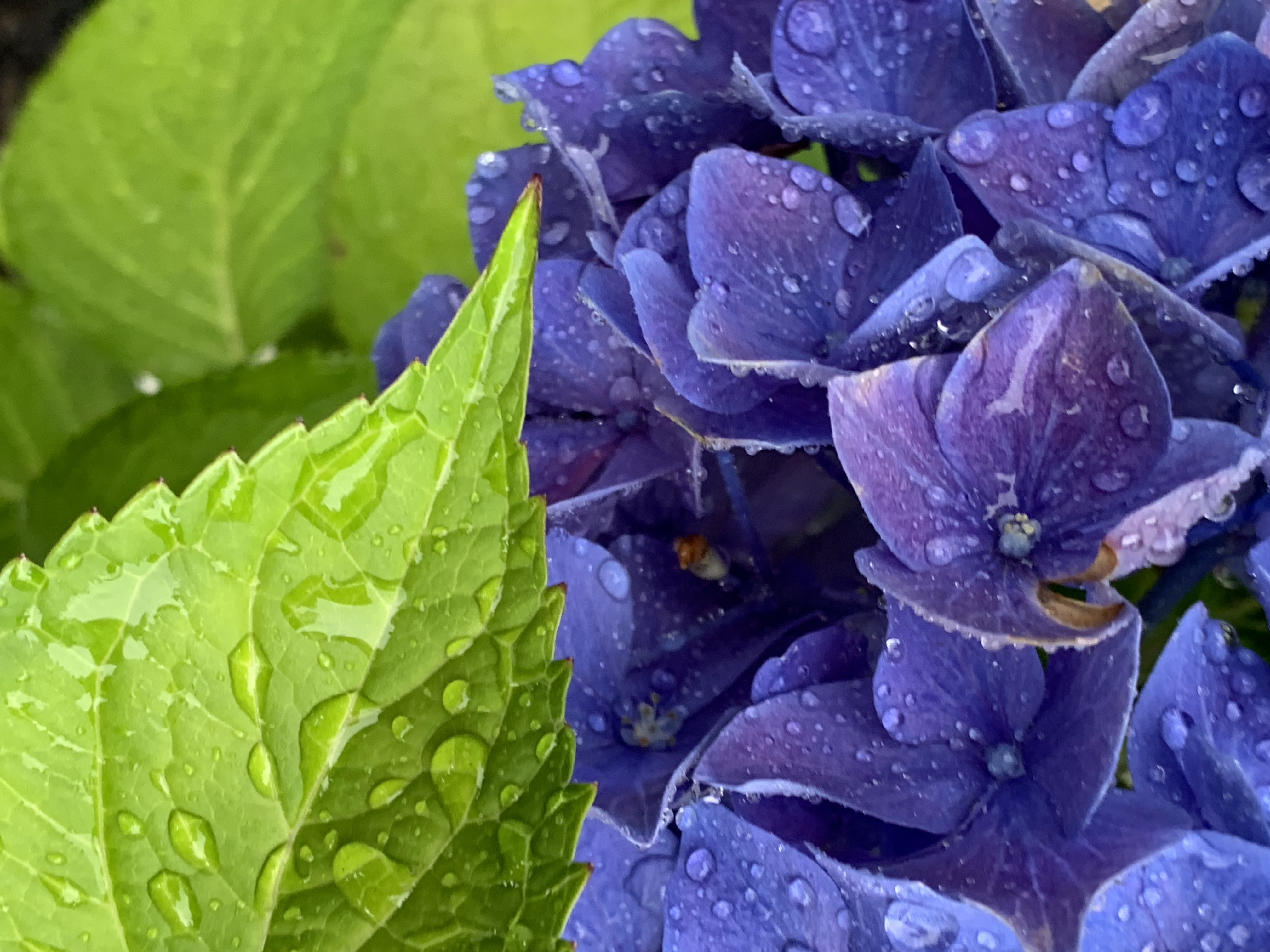
In true winter I would survey once colorful leaves entombed under ice, and headless bush branches and empty trees and abandoned robins’ nests. I would be certain none of them could be brought to life again, to bear peaches and sour apples and cartoonishly colorful hydrangea and rhododendrons. But in Spring they somehow still do.

Even that Spring.

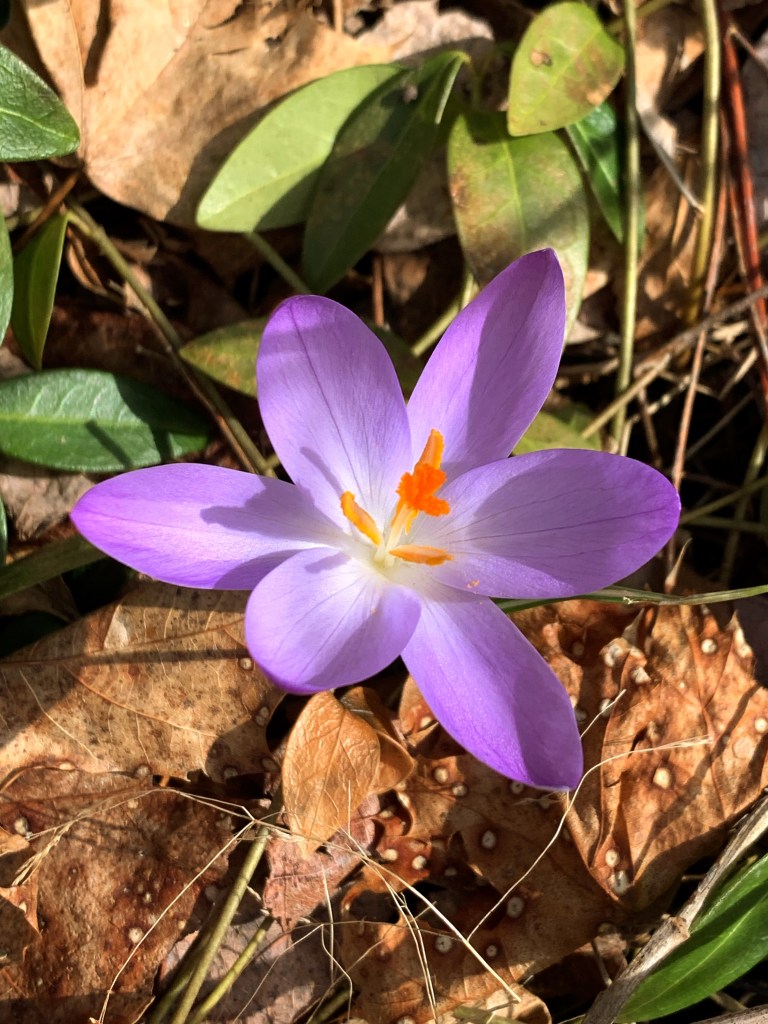
Since that singular March day twelve years ago, true Spring arrives for me not on the designated calendar date, but whenever I spot the first fully-bloomed flower. In New England, that has invariably been a crocus.

I picture it gingerly poking its way through richly layered leaves glossy with melting snow, as if doubting whether it truly is time to be visible and vulnerable. But once it peeks out above the dense autumn detritus, its lavender or buttered white soup-ladle petals relax, and it theatrically basks in the sun. A Fantasia character come to life, for as long as the light lasts.

Spring came a few days early this year.