Bittersweet Valentines

This week’s writing challenge asked us for a Valentine’s Day story.  Once again I shall travel back in time to a not-so-distant day when our family was whole but knew it was soon to be missing its core. . . .


Just before Valentine’s Day we were visited by two young nieces.  Jim rested up so he could spend time with them.  He gamely assisted with Valentine’s Day crafts, posing with a pair of blue eyeglasses one niece had adorned with sparkling beads and feathers.

He died the following month.

******

I had to stop at a drug store in which all the pharmacists know and likely pity me by sight.

To look at the cheerful carnation pink and red of Valentine’s Day displays is almost as sobering as it was to walk into a stationery store in June and come face-to-face with the Father’s Day cards.

I wheeled around and hastened back out the door as if the cards might swoop down and attack like Alfred Hitchcock fowl–a murder of crows, an unkindness of ravens, a sedge of bitterns.  (I am quite the fan of “terms of venery.”)

I do realize this “woe-is-me” me is not my most attractive self, but there you have it.

******

On the last Valentine’s Day he spent on earth, Jim handed me a box wrapped in shiny Boston Celtics green.  It matched the boxes I had seen and which I knew contained necklaces he carefully had chosen as birthday gifts for our two winter-born daughters.

First, I had presented him with humble and transient treasures: a heart-shaped cookie and some soap he had requested.  He gave me a diamond necklace.  We gave each other cards in which we had both included variations on the phrase that we did not know where to begin.

He had printed out a picture of the two of us on our last family vacation.  Because he chose it, it will forever be my favorite of us.  It remains propped up against the reading lamp next to where I try to sleep, and usually instead take in a great deal of good literature (and some so-so books).

He had adorned it with foam letters from the box of random craft supplies we had used with his nieces a few days earlier, noting that neither crafts nor Valentine’s Day was really his thing, but the circumstances were special.

******

Jim was frugal only with money.  Perhaps that was an artifact of his family’s reaction to the swift dissipation of the first substantial sum he, the oldest of five children, ever possessed—the amount with which he had been entrusted for both necessities and incidentals during his first year in college.  He was neither a traditionally demonstrative nor a lavishly-spending person.

Since his freshman year, when he blew two entire semesters’ allotted fortune ($500 in 1977 money) on a stereo system (kids: ask your parents), Jim had not spent large sums of money on himself or others–except on the exceedingly rare occasions when he would buy a house, which he excused as more of an investment (even though our timing, market-wise, was notoriously bad).  Our growing family did, after all, require a place to put all of those books, and all of my fabric.

It was a rarity when my husband would spend enough money that it was worth mentioning to me . . . although there was the time I was startled that a man showed up on the doorstep of our new home, asking me for a check because he had “my tractor.”  Jim forgot to mention the purchase.  He had always wanted to be a gentleman farmer in his spare time.

We spent my very first Mother’s Day, with our eight-month-old son, at the Jersey Shore (which then carried somewhat classier connotations in popular culture, due to no fault of the area itself; it was lovely) with friends from Jim’s residency.

All of us went to a diner for breakfast, heavily encumbered by our baby and our friends’  toddlers.  Swirling around us like the cloud of dirt around Pigpen in the Charlie Brown comic strip was a circle of enthusiastic juice-box wielding children (at least one of them sneezing wildly, having planted a direct hit on her birthday cake the evening before), folding strollers, clacking colorful plastic teething toys, diaper bags and assorted baby paraphernalia.

We sat at a long table and the children all experimented, in a Jackson Pollock sort of way, with scattered Cheerios and bits of buttered pancake and streaks of sticky condiments on paper mats.

Other families with less detritus and better-dressed moms (or, at least, moms not adorned with viscous, vivid strained food splotches) shrunk away from our table.

Later that day Jim gave me a lovely silver filigree bracelet with a pale blue gemstone and earnestly told me that the gift was because it was my first Mother’s Day.  I duly mentally noted that I should not expect similarly over-the-top treatment every May.

******

Years later–five weeks and forever before the surgeon said “This is your tumor,” but within the time when I later realized Jim was first feeling his peculiar upper quadrant pain—Jim again gave me unusually lavish Mother’s Day gifts.  They were not on the order of a diamond necklace, but still gave me pause.

It was so unlike Jim that I wondered, but did not ask him, if there was something special about that Mother’s Day.

******

I wonder now if he somehow knew–before he knew–that it would be the last with me, with us.  Did his condition register at some level?  Had he, like an Andre Dubus character, “simply known, as a person with a disease may know without giving it a name or even notice, long before its actual symptoms and detection”?

Many friends of ours began their lives as parents much later than Jim and I did.  They all have had fewer children, and most an only child.  More than one of them has told me of making a decision not to have more, given their ages when commencing the adventure of parenthood: “I’d be in my sixties by the time she graduated high school.”

It does not seem to occur to anyone, even when parenthood begins later in life, that he or she will not be around for high school graduation.

It did not occur to us until Jim’s diagnosis that either of us would not be around when one of our children graduated from high school, or that one of us would not be there for the first college graduation, let alone the next birthday or Mother’s Day.

*********

By Valentine’s Day, of course, we all knew.

When I saw the necklace and read his card, I swallowed but couldn’t speak.

Jim said, “It’s also for your birthday of significance,” as if to excuse his lapse in frugality.

I could feel my eyes fill.  Because he knew he would not be here when I actually had my next birthday of significance, or for any other birthdays, and wanted to give me something for all of them.

This One Goes Out to the Ones I Love

I see them on the pavement and in the sky.  They spring up on fresh green stems and are forged from frozen sea foam.  Some beckon in perfect symmetry among mismatched brethren on a rocky shore.

One is formed fleetingly in the illusion of intertwined, gracefully curved necks as two swans silently float past one another.

An unusual tomato slice poses for me before meeting its fate at lunch.

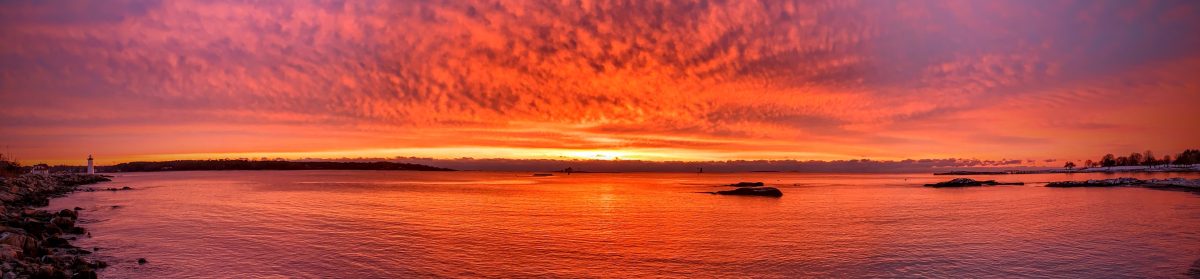
I peer sideways at a sunset’s golden reflection in frigid marsh water and see a charmingly irregular heart.

This Valentine’s Day, may your hearts be healed and whole, and may you find love in unusual spaces.

All The Windows in New York City

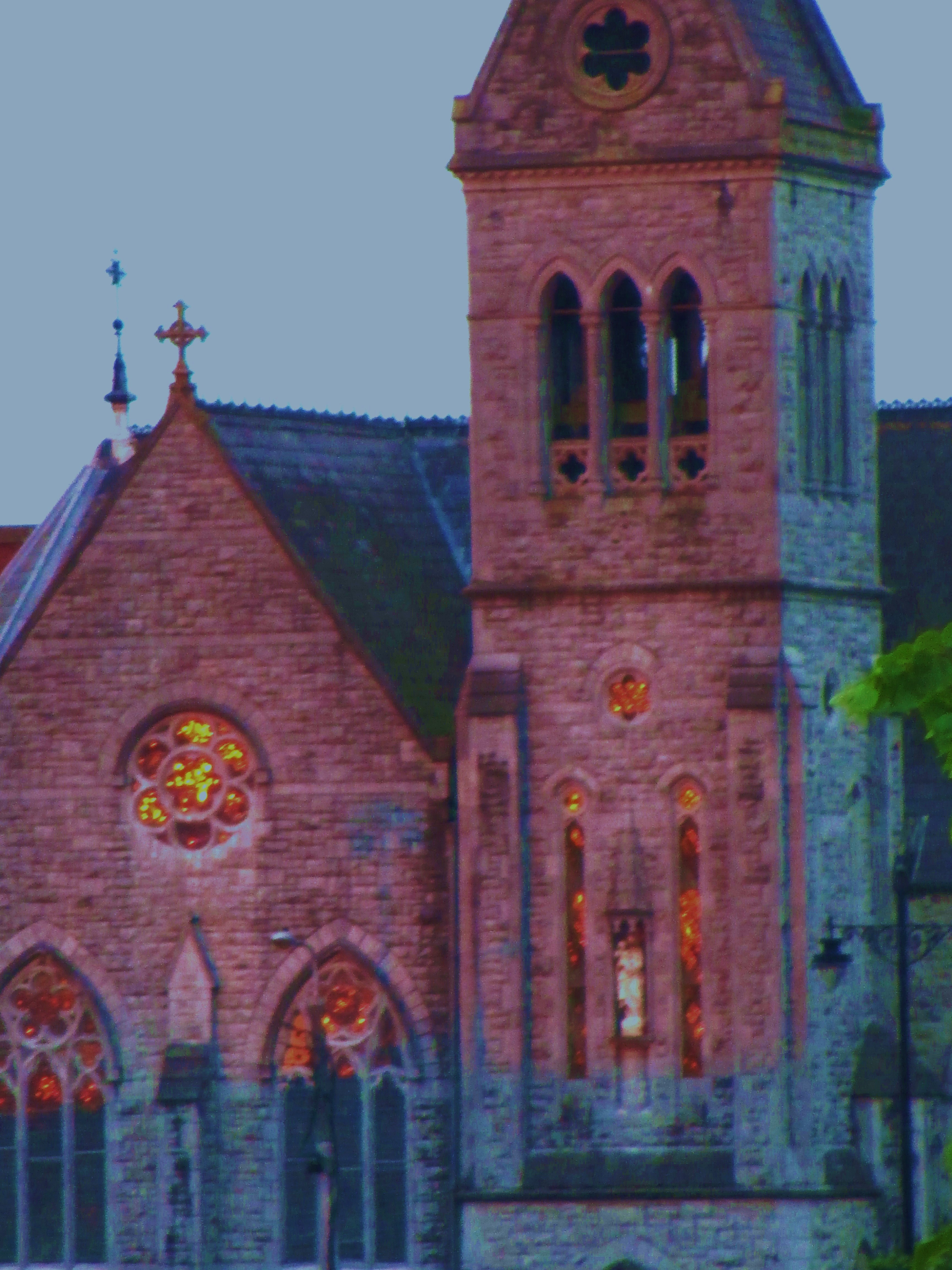
Ireland 1034
Drogheda, Ireland


I have seen them from inside and outside.

Modern and ancient; clean-lined and ornate; translucent and opaque; smooth and mottled; wood and stone; blindingly clean, sealed and soundless.  Noisily battered with rain or softly thunked by quarter-sized flakes of soft snow, plastered by high winds with soaked brown leaves.  In large geometric planes and swirling leaded glass; clear, colorless, and bursting with every hue.  Still and empty and alive with interior light and celebration.  Below ground and at dizzying heights.  Midnight black reflecting licks of sunset’s roaring, angry yellow and vermilion, and casting grey stone into magenta, as if a city is burning not far away.

584

I’ve seen my own ghost reflected in them, my skin outlined in orange and my hair sun-tipped bright copper as I contemplated the outdoors nearly every day, in every season.

I have pressed a febrile forehead against their cool glass in winter, watching a bright cardinal at the birdfeeder whose tender was gone.

I’ve looked through openings in ancient castles and beheld the same framed views as did people centuries ago, and as will people hundreds of years from now.

I’ve taken photographs out the windows of planes, trains, automobiles, and boats–and even a football-shaped capsule in one city’s towering “Eye.”

I once shattered one with a stapler.

In three seasons looked out through hermetically-sealed hospital windows while post-surgically cradling four newborns swathed in soft cotton. I saw and felt winter from similar windows inside four different hospital rooms during their father’s last weeks.

In front of our babies’ windows, sills held pastel cards and baskets of bright color: coral and yellow roses, wildflowers, plants with blue bows.  The wide white sills inside the other hospital’s rooms, outside of which I can only remember snow and rain, held books, yellow legal pads and pencils, and paperwork indented from being clenched in my hands during each emergency admission: advance directives, instructions for anatomical donation.

I believe in Shakespeare’s poetic characterization of eyes as “the windows of the soul, and by extension the soul itself.”  But my favorite metaphorical windows are found in a poem about New York City.

Poet Jessica Greenbaum used a city’s windows as a metaphor for the vastness of immeasurable love.  In  “I Love You More Than All the Windows in New York City,” she wrote:

                                                       The day turned into the city
and the city turned into the mind
and the moving trucks trumbled along . . .
“. . .  no matter the day, we tend towards
remaking parts of it—what we said
or did, or how we looked—
and the buildings were like faces
lining the banks of a parade
obstructing and highlighting each other
defining height and width for each other
offsetting grace and function . . . .”
I shall borrow the sentiment for those I love and the husband I lost: I love you more than all the windows of the world.

The Rusty Nail

Galapagos_101221_225

It is Jim’s birthday.   The last birthday he spent with us fell one month, to the day, after the November afternoon when we learned my husband’s illness was incurable.

It has been said that by one’s 50th birthday, one has the face one deserves.  Jim, barely into his 50s when diagnosed with pancreatic cancer, had a classically handsome, serene face.  Gentle humor, occasionally with a devilish edge, was always there.

This was the face he always will have, the way I believe I’ll always remember it, with uncanny precision.

He did not reach–not nearly–the old age that Simone de Beauvoir described as “life’s parody.” His story walking with us ended with the “[d]eath [that] does away with time,” that “transforms life into a destiny: in a way it preserves it by giving it the absolute dimension.”

(Nor did he live to see the face I would have at fifty–although he would have loved me even if it proved an artistic disappointment.)

Every day is an anniversary of something meaningful to our family, but there seems something extra fraught about the anniversary of a birth and of a death.

The day his beloved parent died, and from which his life unwound, the character who voices The Goldfinch noted “used to be a perfectly ordinary day but now it sticks up on the calendar like a rusty nail.” The author revived the simile 749 miraculous pages later, musing about the multitudinous kinds of beauty which will become leitmotifs in different lives: “The pieces that occur and recur.  Maybe for someone else. . . it wouldn’t be an object.  It’d be a city, a color, a time of day.  The nail where your fate is liable to catch and snag.”

(In the novel, at least two lives become derailed by one painting of a small bird.  Is it a coincidence that its provenance is absolutely settled by two small nail holes visible only from the back of–and only by one who possesses and handles, out of its frame–the eponymous masterpiece?)

Another character understands that “beauty alters the grain of reality,” and the protagonist sees some acuity in “the more conventional wisdom: namely, that the pursuit of pure beauty is a trap, a fast track to bitterness and sorrow, that beauty has to be wedded to something more meaningful.”

What does any of this have to do with a birthday?

It began with a bird.  (And, to be fair, I’m taking some decent medication; this post may make absolutely no sense when I re-read it.)

For Jim’s birthday post, out of all the photos in all the gin joints in the world, I picked one of a Galapagos dove.  My picture is blurry, but it captures one of the most beautiful things I have ever seen.  Just three Decembers ago I was with Jim and our children when we saw it; he took his own stunning, clear photographs and I am smitten with those, too.

The dove moves across time, taking me back to that moment when every sense absorbed this creature’s beauty in its equatorial setting, when neither I nor even Jim–despite what he already had endured and what was soon to come–felt any pressing physical burden. The dove also somehow springs forward in time, as if it were in my line of vision right now, instead of today’s icy reality of a winter storm and a wracking muscle spasm.

I have realized since taking this picture that, especially after Jim’s death, I began looking for birds everywhere.  Apart from our children, little seems as artful, as beautiful, as alive for the ages.  I sought and still seek out these fleeting, singing, sailing creatures.

As The Goldfinch’s narrator discovered, “between ‘reality’ on the one hand, and the point where the mind strikes reality, there’s a middle zone, a rainbow edge where beauty comes into being, where two different surfaces mingle and blur to provide what life does not: and this is the space where all art exists, and all magic.”  He continues: “And–I would argue as well–all love.”

Our lives become caught on assorted nails . (In Jim’s voice, I hear, “You say that like it’s a bad thing.”)

Zooming in on a memento, or on the pixels or painting or other rendering of an original, we see the stunning color, the patterns, the movement, the life that existed as of one moment in time; “Step away, and the illusion snaps in again: life-more-than-life, never-dying.” From a distance, in time or space, we see the unseeable: layers underneath protective or careless coverings, beauty of one kind, preserved or worn away.  Even when something has deteriorated or completely changed shape, we can see stories and history, life and love in what’s no longer to be found or seen in the traditional way.  

In flesh, feather, and delicate bone, my dove likely has long soared from this mortal coil. But there he is.  A blur from purposeful forward movement on black-tipped coral feet; a dab of yellow and a streak of vivid magenta above earth-toned wings, as if he has brushed against a freshly painted canvas; animated open eyes.

Pulling back, he is part of the landscape where our family took its last trip, part of an enduring species found only in such warmth and isolation, a majestic messenger among the creatures whose sounds I listen for every day.

A year ago on Jim’s birthday I spoke aloud to our beautiful beagles.  They listened.  I did that a little bit today.  But just after midnight, when the calendar called up December 10th and frozen rain tapped like weakened woodpeckers against black windows, I spoke aloud to the magical intersection between past and present.   It’s your birthday, I began. . . .

Perhaps I was revisited by that narrator who understood how our lives become entangled with some enduring facet of beauty and love and never let it go.

“Whatever teaches us to talk to ourselves is important: whatever teaches us to sing ourselves out of despair.”

sunset 013