
It is Jim’s birthday. The last birthday he spent with us fell one month, to the day, after the November afternoon when we learned my husband’s illness was incurable.
It has been said that by one’s 50th birthday, one has the face one deserves. Jim, barely into his 50s when diagnosed with pancreatic cancer, had a classically handsome, serene face. Gentle humor, occasionally with a devilish edge, was always there.
This was the face he always will have, the way I believe I’ll always remember it, with uncanny precision.
He did not reach–not nearly–the old age that Simone de Beauvoir described as “life’s parody.” His story walking with us ended with the “[d]eath [that] does away with time,” that “transforms life into a destiny: in a way it preserves it by giving it the absolute dimension.”
(Nor did he live to see the face I would have at fifty–although he would have loved me even if it proved an artistic disappointment.)
Every day is an anniversary of something meaningful to our family, but there seems something extra fraught about the anniversary of a birth and of a death.
The day his beloved parent died, and from which his life unwound, the character who voices The Goldfinch noted “used to be a perfectly ordinary day but now it sticks up on the calendar like a rusty nail.” The author revived the simile 749 miraculous pages later, musing about the multitudinous kinds of beauty which will become leitmotifs in different lives: “The pieces that occur and recur. Maybe for someone else. . . it wouldn’t be an object. It’d be a city, a color, a time of day. The nail where your fate is liable to catch and snag.”
(In the novel, at least two lives become derailed by one painting of a small bird. Is it a coincidence that its provenance is absolutely settled by two small nail holes visible only from the back of–and only by one who possesses and handles, out of its frame–the eponymous masterpiece?)
Another character understands that “beauty alters the grain of reality,” and the protagonist sees some acuity in “the more conventional wisdom: namely, that the pursuit of pure beauty is a trap, a fast track to bitterness and sorrow, that beauty has to be wedded to something more meaningful.”
What does any of this have to do with a birthday?
It began with a bird. (And, to be fair, I’m taking some decent medication; this post may make absolutely no sense when I re-read it.)
For Jim’s birthday post, out of all the photos in all the gin joints in the world, I picked one of a Galapagos dove. My picture is blurry, but it captures one of the most beautiful things I have ever seen. Just three Decembers ago I was with Jim and our children when we saw it; he took his own stunning, clear photographs and I am smitten with those, too.
The dove moves across time, taking me back to that moment when every sense absorbed this creature’s beauty in its equatorial setting, when neither I nor even Jim–despite what he already had endured and what was soon to come–felt any pressing physical burden. The dove also somehow springs forward in time, as if it were in my line of vision right now, instead of today’s icy reality of a winter storm and a wracking muscle spasm.
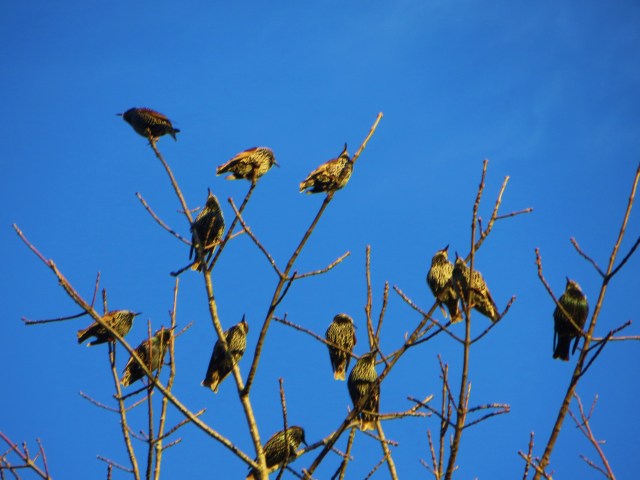
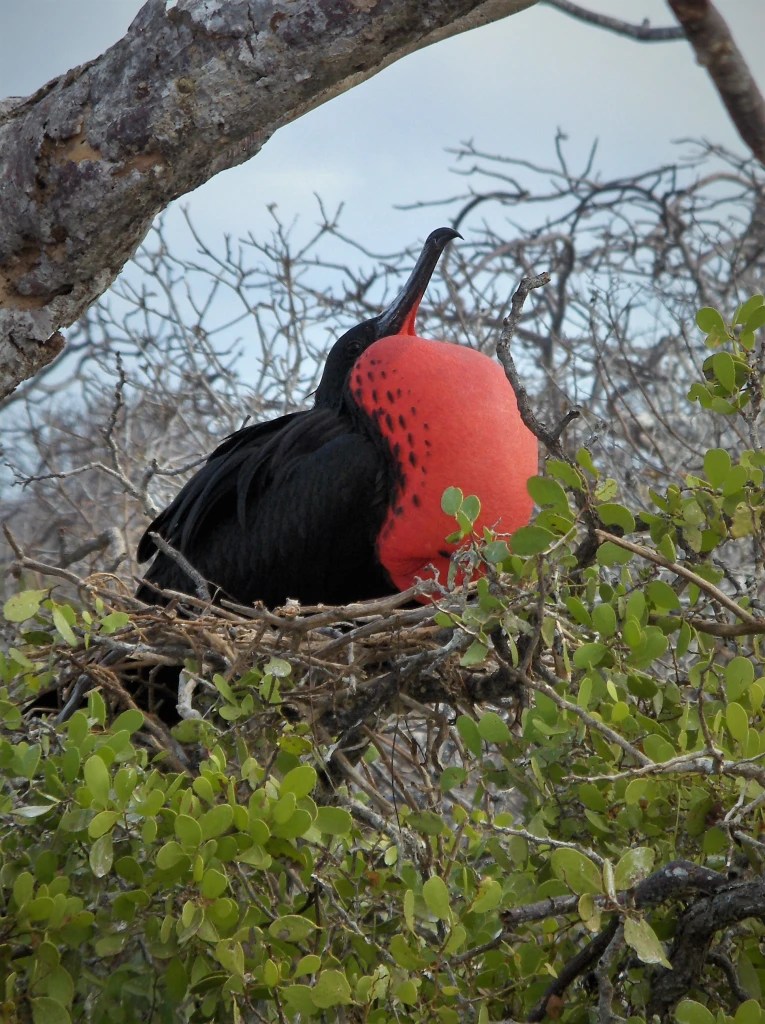
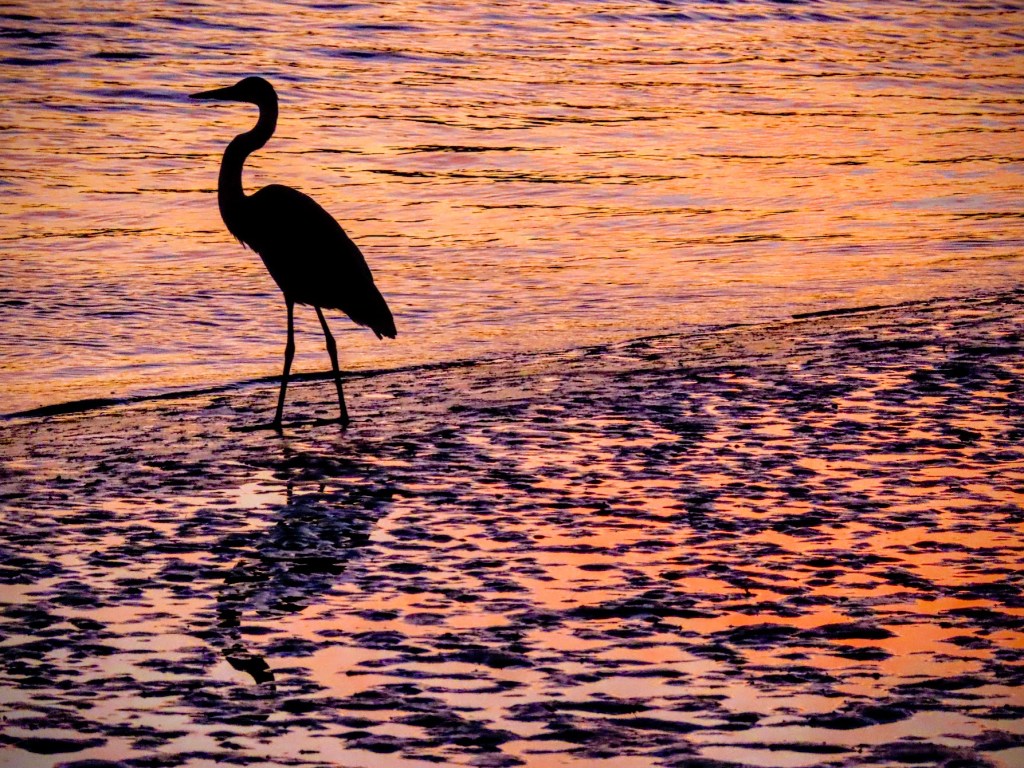
I have realized since taking this picture that, especially after Jim’s death, I began looking for birds everywhere. Apart from our children, little seems as artful, as beautiful, as alive for the ages. I sought and still seek out these fleeting, singing, sailing creatures.
As The Goldfinch’s narrator discovered, “between ‘reality’ on the one hand, and the point where the mind strikes reality, there’s a middle zone, a rainbow edge where beauty comes into being, where two different surfaces mingle and blur to provide what life does not: and this is the space where all art exists, and all magic.” He continues: “And–I would argue as well–all love.”
Our lives become caught on assorted nails . (In Jim’s voice, I hear, “You say that like it’s a bad thing.”)
Zooming in on a memento, or on the pixels or painting or other rendering of an original, we see the stunning color, the patterns, the movement, the life that existed as of one moment in time; “Step away, and the illusion snaps in again: life-more-than-life, never-dying.” From a distance, in time or space, we see the unseeable: layers underneath protective or careless coverings, beauty of one kind, preserved or worn away. Even when something has deteriorated or completely changed shape, we can see stories and history, life and love in what’s no longer to be found or seen in the traditional way.
In flesh, feather, and delicate bone, my dove likely has long soared from this mortal coil. But there he is. A blur from purposeful forward movement on black-tipped coral feet; a dab of yellow and a streak of vivid magenta above earth-toned wings, as if he has brushed against a freshly painted canvas; animated open eyes.
Pulling back, he is part of the landscape where our family took its last trip, part of an enduring species found only in such warmth and isolation, a majestic messenger among the creatures whose sounds I listen for every day.
A year ago on Jim’s birthday I spoke aloud to our beautiful beagles. They listened. I did that a little bit today. But just after midnight, when the calendar called up December 10th and frozen rain tapped like weakened woodpeckers against black windows, I spoke aloud to the magical intersection between past and present. It’s your birthday, I began. . . .
Perhaps I was revisited by that narrator who understood how our lives become entangled with some enduring facet of beauty and love and never let it go.
“Whatever teaches us to talk to ourselves is important: whatever teaches us to sing ourselves out of despair.”




 Love in the Spaces