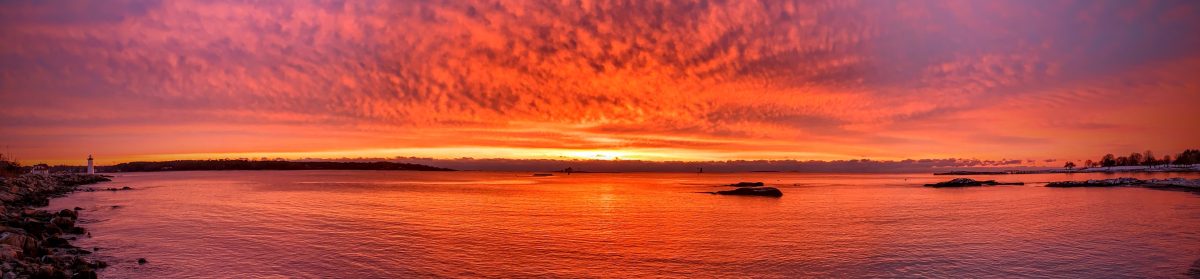
Simple Gifts

“‘Tis the gift to be simple, ‘Tis the gift to be free, ”Tis the gift to come down where we ought to be…”

When we are lucky enough to choose and be able to navigate our paths, we will always find simple gifts there. A single starling or bud. A cove of cairns. Storm-fallen leaves gathering themselves into a tree formation. A cluster of burnished yellow leaves shaped like a lone heron in a field of pure green.

Glowing lilac petals on two continents and a tiny balletic figure trying to dance out and away from a July flower’s sodden plum-yellow skirt. Reflections rendered in brass ribbons by a dropping sun. Sunny buds singing from limestone seams.

Weathered wood. A slumbering canvas sail about to be unfurled to catch the wind. Each of the infinite time-rounded stones beneath my feet.

Such gifts can be gathered almost everywhere.

Every time I consciously think of the simple gifts around us, I hear a single verse in Alison Kraus’s voice, accompanied by Yo-Yo Ma. And an undertone of Raffi, from a time when my children were young and safe with my husband and me during some of the best days of our lives. Woven into those glorious days, for me alone now, is the lacerating beauty of the music Yo-Yo Ma played at my son’s graduation, two months to the day after his father’s death. The first of so many graduations, including one only weeks ago, which my husband ought to have been able to attend in the more traditional way.

Such Tralfamadorian layering is not only part of each simple earthly gift, but is its essence.

In his introduction to the time traversed and gifts lost and regained in TransAtlantic, the late, great Colum McCann quoted Eduardo Galeano’s exquiste observation about the give-and-take among and melding of memories and moments and movements: “the time that was continues to tick inside the time that is.”

And so it does.

Life Among Roman Ruins (Volubilis)

McCann’s novel has ties to New England, particularly the state of Maine. Perhaps it is not a coincidence that Simple Gifts originated there, too, in a mid-coastal Shaker community where it was thought to have been written by Elder Joseph Brackett of Alfred, who was called to the ministry in 1848.

Almost a century later, Aaron Copland used it in scoring a 1944 ballet, Appalachian Spring, and in 1950 he repurposed it among his Old American Songs. From there, it was a hop, skip, and a few generational jumps to the embedded memories of the parents and children who raptly listened again and again to the old-school Raffi cassette tapes and CDs which carried us into the next century.

When true simplicity is gained,
To bow and to bend we shan’t be ashamed,
To turn, turn will be our delight,
Till by turning, turning we come ’round right
.”

McCann wrote a lesser-known TransAtlantic in the same year he published his historical fiction: the lyrics to the eponymous song in Clannad’s album Nádúr. In it the singer describes walking among the ordinary sights along the roads of her home country, in whose “shadows, a light of” someone absent “flared.” Across the Atlantic again, she walks along the water where “dreams were calling out/ Of sky and stone.”

Simple elements and offerings in complicated and transformative layers and combinations.

From Cóbh to New York, blood and shadows and dreams and memory, water and stone and sky, regrouping and reshaping themselves and us for as long as we are here.

And perhaps long afterwards.

An Eye from the Past to the Present (Delhi)

Spring Forward, Fall Back Down

IMG_8249 (2)
Frozen in Time (c) Stephanie M. Glennon


Spring forward, fall back down…”

I know, I know: it couldn’t be much more wintry in New England.

It’s a balmy -6 degrees, enhanced by an order of magnitude for those who dally with windchill.  Boston had its highest recorded tide, sweeping an icy gray lagoon into waterfront streets.

My big boy beagle gazes at me with recrimination when I am compelled to turn around and whisk him back toward home.  He clearly has places to be, but unknowingly relies upon my limited capacity to exhibit adult common sense.  My less than-scientific measure of when I have ventured half as far as we safely can go is the loss of  sensation in triple-gloved hands.  The outermost layer belonged to Jim: enormous blue-green knitted wool  gloves into which Rufus still pauses to press his snow-dusted nose, retrieving scents of his puppyhood.  I am violently allergic to wool. Angry winter welts encircle my right wrist, which one over-sized glove accidentally touched as I struggled to shovel a path through blizzard remnants.

Even my camera is too cold to do its job.  I dare not risk its delicate inner mechanisms’ life for a picture–even of wavering sea-smoke etched in bright gold across the horizon, or planes of dazzling white which migrate across eye-level snowdrifts, or tree branches encased in ice glittering under a super moon.

Other than at sunrise and sunset, which in winter tend to take place during work days, when they rarely can both be seen, bright color has disappeared from the landscape.  It may visit in the form of  a scarlet cardinal or blue jay, or a burst of berries holding fast for them to find.

But this lyric spanning the other seasons has taken its place as resident ear-worm.

I first heard the Weakerthans’ song on the radio while driving back from a solo trip to Bar Harbor.

My city’s still breathing (but barely, it’s true)
Through buildings gone missing like teeth
The sidewalks are watching me think about you,
Sparkled with broken glass
I’m back with scars to show.
Back with the streets I know
Will never take me anywhere but here

My status could be the answer to a riddle: I occupy a new old home in my old home state, having left our old old home in a new home state.

But I am back with streets I know.  In a place I never before lived, I feel I am back home.

Wait for the year to drown
Spring forward, fall back down
I’m trying not to wonder where you are

One daughter came to my new old home for Christmas, bearing a discrete tattoo she explained to me is based on Slaughterhouse Five.

Spring forward, fall back.  I realized it’s not just a handy trick to set clocks to mark time in the seasons that bookend winter’s essence, but a Tralfamadorian progression through life–including waxing and waning grief and hope.  A (Billy) Pilgrim’s progress, if you will (HT Mr. Vonnegut).

I shall try to seize on those glimmers, bright traces which foretell spring or commemorate fall, even when blanketed by colorlessness–the orange fish which glided underneath inches of pond ice as we skated at the old home we shared, the leaf  whose lime stem tilted toward the sun as if it still could absorb light when my beagle’s front paw sank ever-so-slightly into a frozen puddle’s surface, leaving in uneven colonial bricks’ lacuna a ghostly misshapen cameo, a reminder of our presence there made possible by a New England winter.