I hear music everywhere, especially in the quietest places.
In the then-present of this photo from Ireland, three of my children and I looked out from darkness to the vivid light of day beyond the window. I didn’t consciously hear music at the time, but I hear the soundtrack when I look at the picture.
The trip was in honor of their father, on the second Father’s Day without him here with us in the traditional way. In the picture, I hear music. I travel back in time to Phillips Church and hear the Rev singing the words to Thaxted, from Jupiter in Gustav Holst’s The Planets Suite.
All of that afternoon’s music floods back. It comforts me. The sibilance of Sweet Baby James sung by hundreds. Becca’s For Good.
Lilting notes and words of light and love and fellowship floating above an empty black plane nothing escapes.
I wish everyone could hear it.
Photos somehow press “play” and I hear songs my daughter sang and music she and her siblings played. Papa Dick singing a customized song for each of fifteen grandchildren he bounced on his knee on countless Sundays. I listen to tuneful and argumentative birds I watched years ago. Satiated crowds chattering around a mirrored sculpture in Salem just after Thanksgiving. Blue Angels roaring overhead. A John Philip Sousa sound track to July fireworks, and I cycle back to countless marching band and Percussion Ensemble performances and practices. Beloved beagles synchronously snoring and baying. The sounds of silence at sunrise.
Some might look at this photo and see a single glowing peacock. Pavo cristatus. I can’t speak for the muster of peahens who paused to watch him that August day in Jodhpur, but it’s the countless circles which mesmerized me.
The magician’s swoosh as he vogues, a whisper of downcast bright blue irises. The multi-eyed lifting wave he’s created with closely spaced smaller circles at his display’s bottom layer: a Cupid’s bow being drawn from the straight edge of shadow underneath, or a garden snake? I see the deep greens and blues in which I’ll always feel my missing piece still soaking in the sun.
Maybe I’m drawn to the circle’s immortality. Or that’s it’s unbroken. A wedding ring. Gold-dusted green eyes echoed in a child. The planetesque orb formerly known as Pluto.
Offerings in Udaipur. Stars within circles among the wares in Marrakesh. Concentric mosaic circles at St. Mary’s Church in Dublin, Ireland.
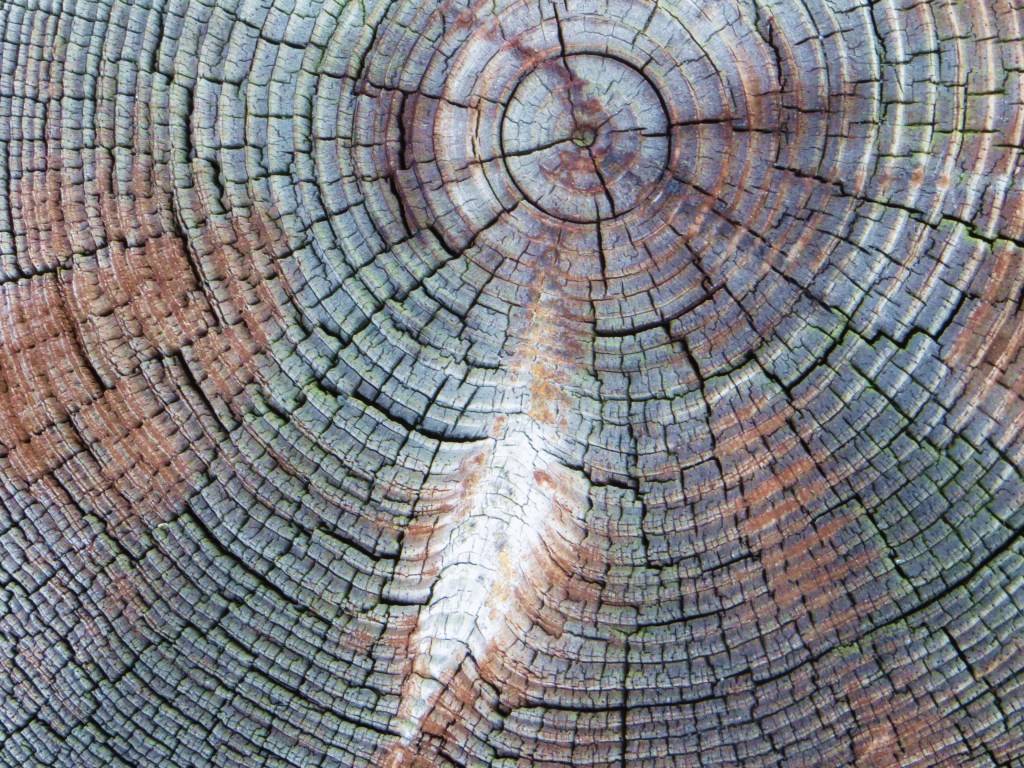
Slightly off-center rings around a tree’s perfectly-shaped young core; the algebraic drama of a bright lemon flower’s singular souls. The gentle hills and valleys in bullet glass.
Half of a perfect circle reflected against a hull at sunset. The bumpy segmented layers which peel away to an onion’s solid spherical center. Trees reflecting inside a cylindrical silver tube at high noon.
Harry Chapin’s All my Life’s a Circle and Joni Mitchell’s The Circle Game were among the first songs my guitar teacher taught me. She leaned far more towards folk than blues. So did I, back then. Before I found John Hiatt and Circle Back. When I had much less to circle back to, and before I fully understood that much circling back is neither smoothly accomplished nor voluntary. Before I realized how easily it can involve degrees of descent into nightmare. The algos of pain more than the nostos of yearning to come home again.
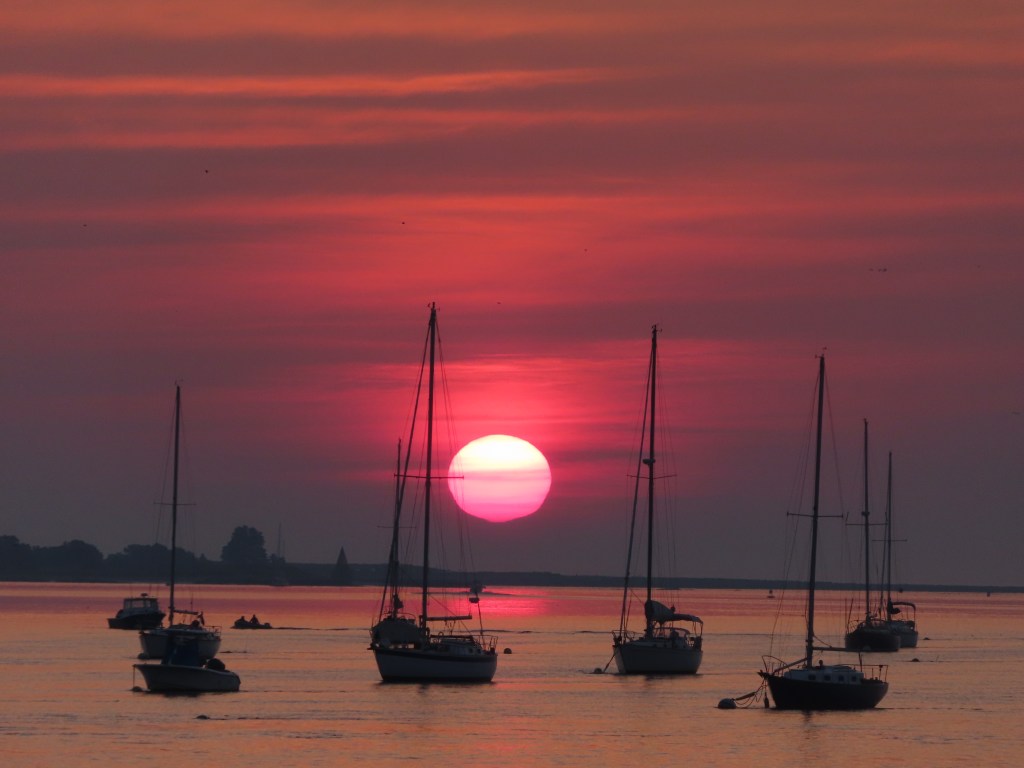
Practically speaking, I can’t turn back time. But lens artists have the power to tame the boundless circles which demarcate our days and nights: the impossibly bright orbs of fire and flares which we gaze directly upon at our peril. For now, we flatten them into gentle white-gold circles coaxing our skies in and out of peacock blue on this side of Paradise.
There’s a certain thrill in clenching a fist at a poker table, before opening it to reveal one chip, two chips, or an empty hand.
Are you betting against the high hands or the low hands? Or are you betting it all on winning both by extracting five of seven cards for the high and a different group of five for the lowest low?
Will you take the whole pot, or nothing?
The possible highs and lows are limited by face-down cards you have not seen, and there’s no reward for anything in-between.
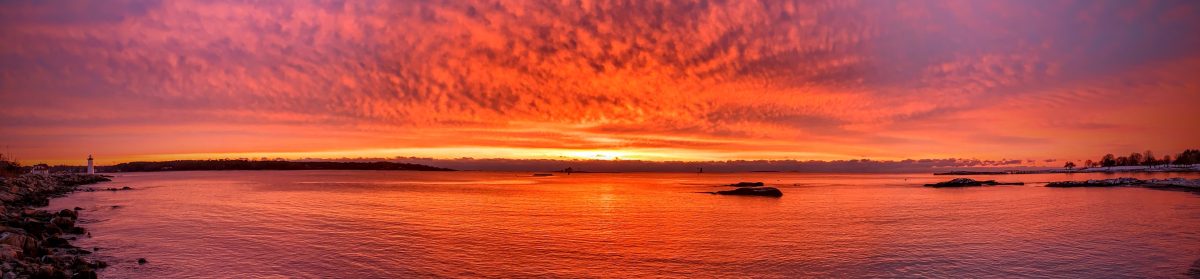
Wherever I’ve found myself in the world, my camera has been poised for the landscape shot. Extended into a panorama, my phone camera actively protests if I do not continuously anchor my shot at the exact midline of whatever’s before me.
The line where there is no up and no down, but just a steady line from West to East.
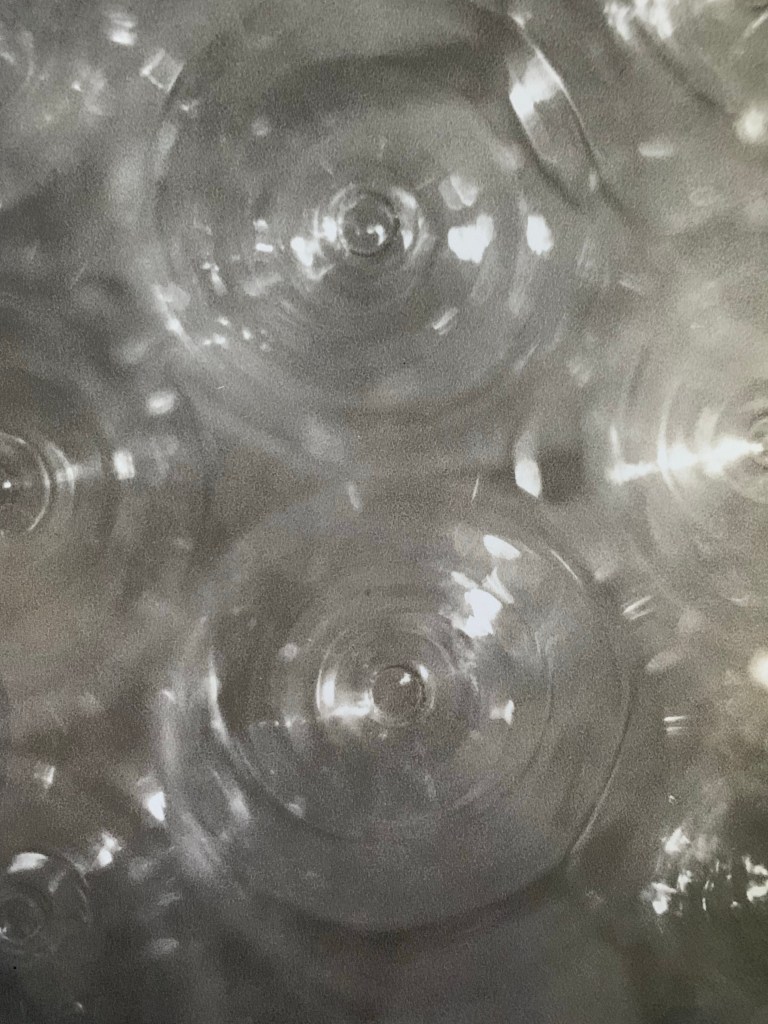
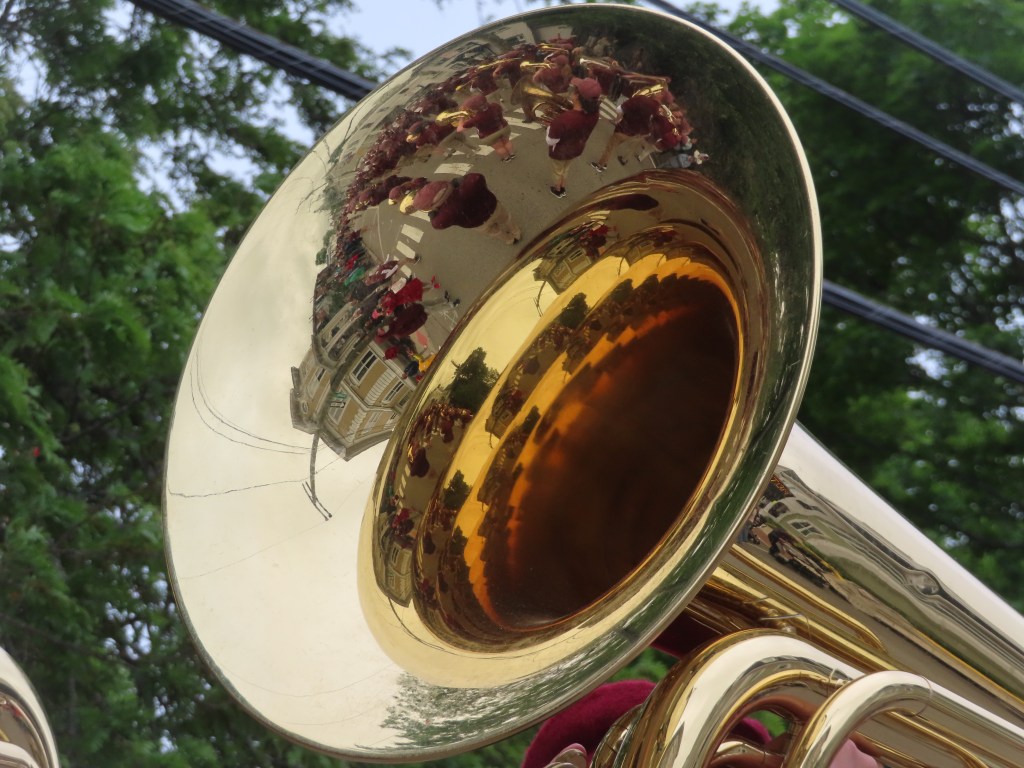
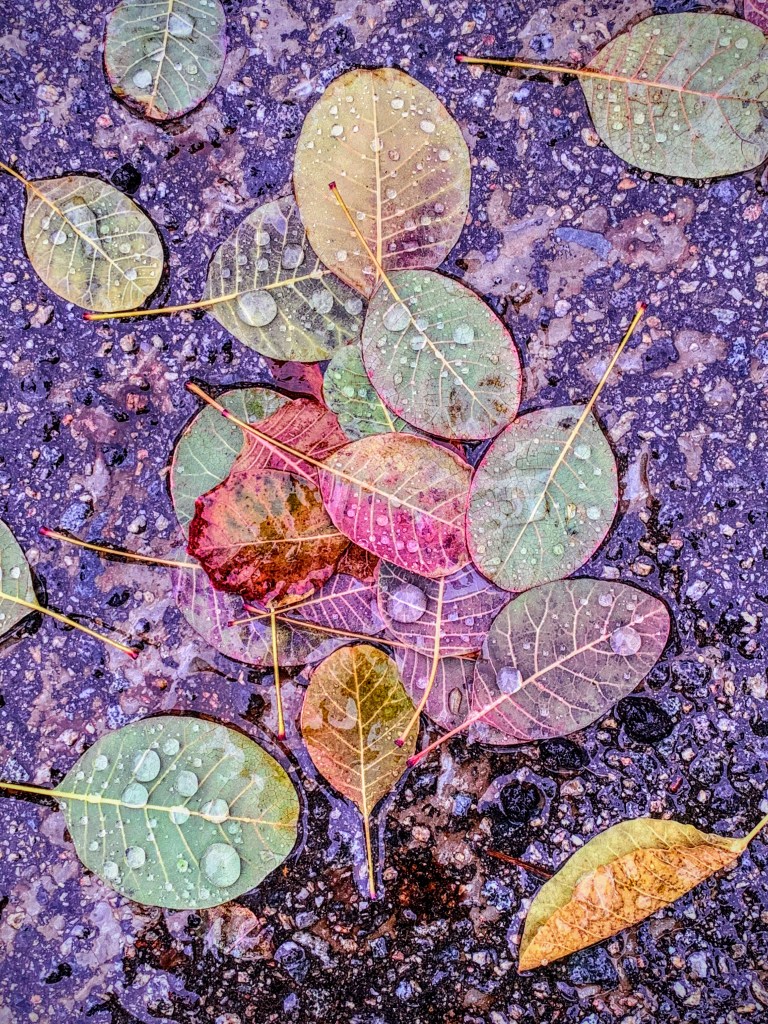
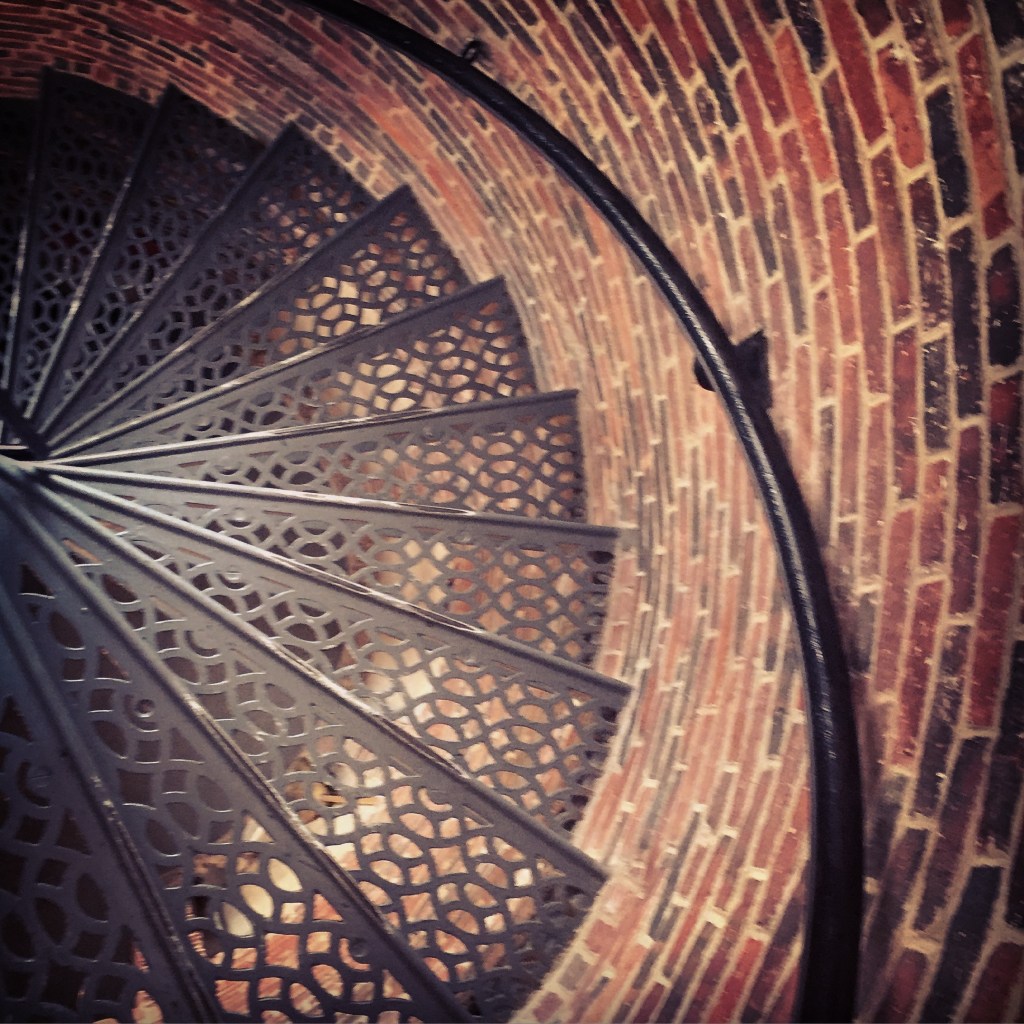
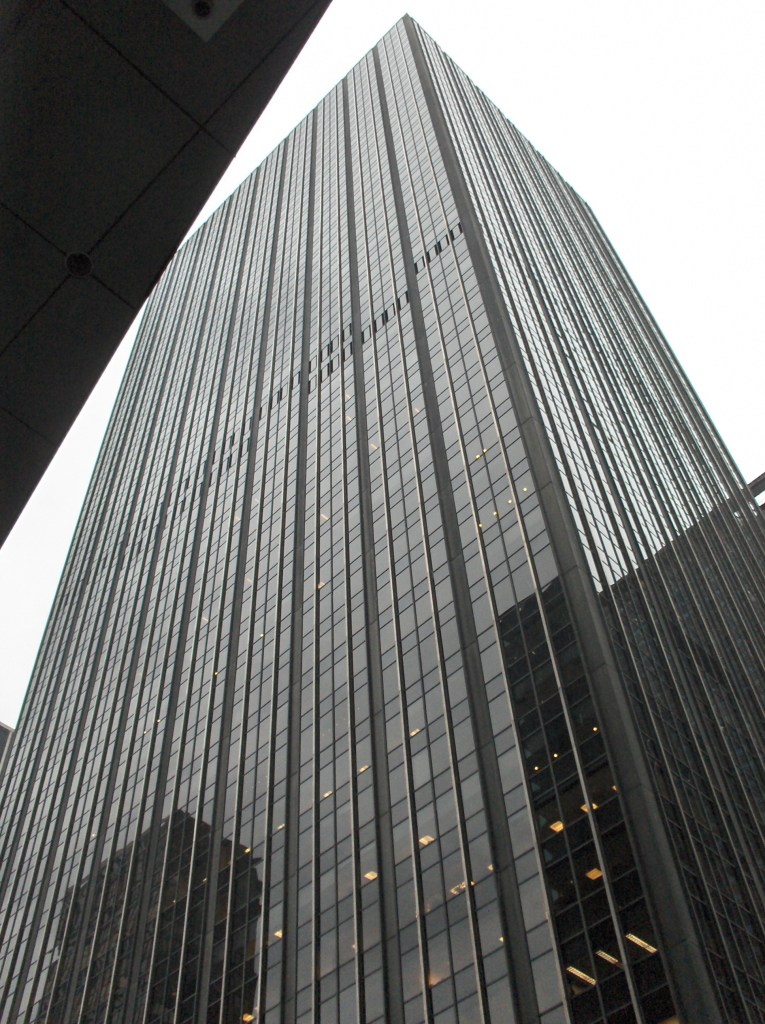
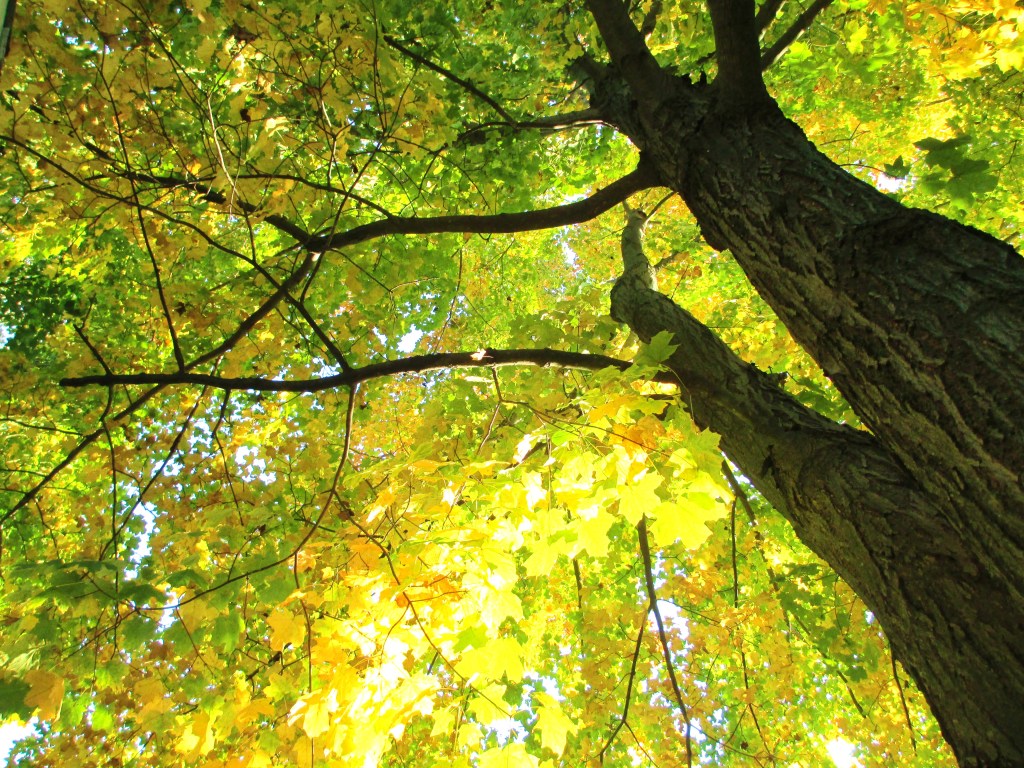
I point up at installation art, architecture, and intra-species imbroglios. I shoot high or down at the earth below my feet, excising external cues so viewers may have no idea what they are seeing, or how it fits into its surroundings. I shoot at reflected images which will never reappear in exactly the same light, color, or form.
The context is gone, so imagination can take over.
Ups and Downs
I’ve learned that sometimes, when the surf is so high it drowns out other sounds, and one is poised to click a shutter on another plebian midline Golden Ratio shot, I should pause. Look up and down.
I might find something only fleetingly present, and irreplaceable.
My new friend, Sophie the pup
You never know what may flash across the heavens, or have settled quietly at your feet.
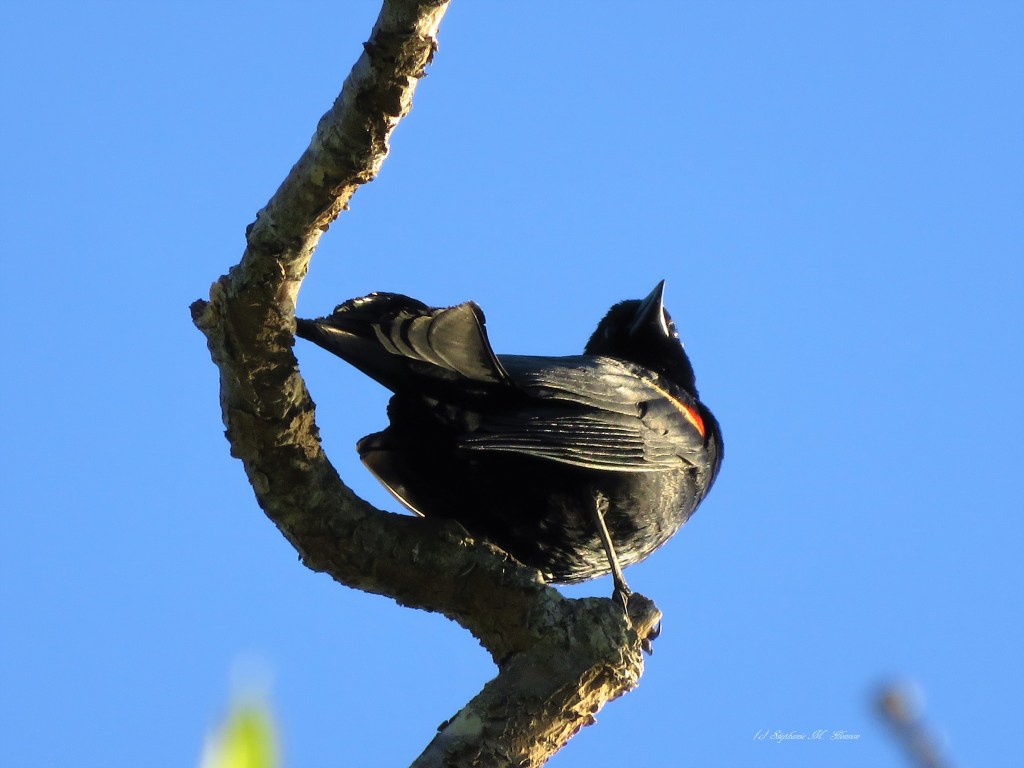
Not in the sense in which that characterization is made in my line of work, but in many other ways. Framed so he seems to pop out in bas-relief against a cloudless powder blue sky. His vivid, sharp-edged wintry colors seem to propel him towards the viewer as he bows away from a filmy floral bokeh. On closer inspection, one frond has broken clean through at its elbow: another hint of the season.
He’s frozen in time and space by a rectangle of sky so constrictive that he appears to be craning against and breaking free of its confines. Looking inquisitively down and out of the frame in which he was forever captured.
Only I can tell you who was on tip-toes on a Maine oceanside path on that long-ago morning. Chin tilted up to return this wee Flying Wallenda’s side-eyed glance as he balanced on a crimson frond.
My fingers were so cold they felt welded to my camera. My winter shots tend to be far sparer than the unending rectangular frames which entomb other seasons’ scenes.
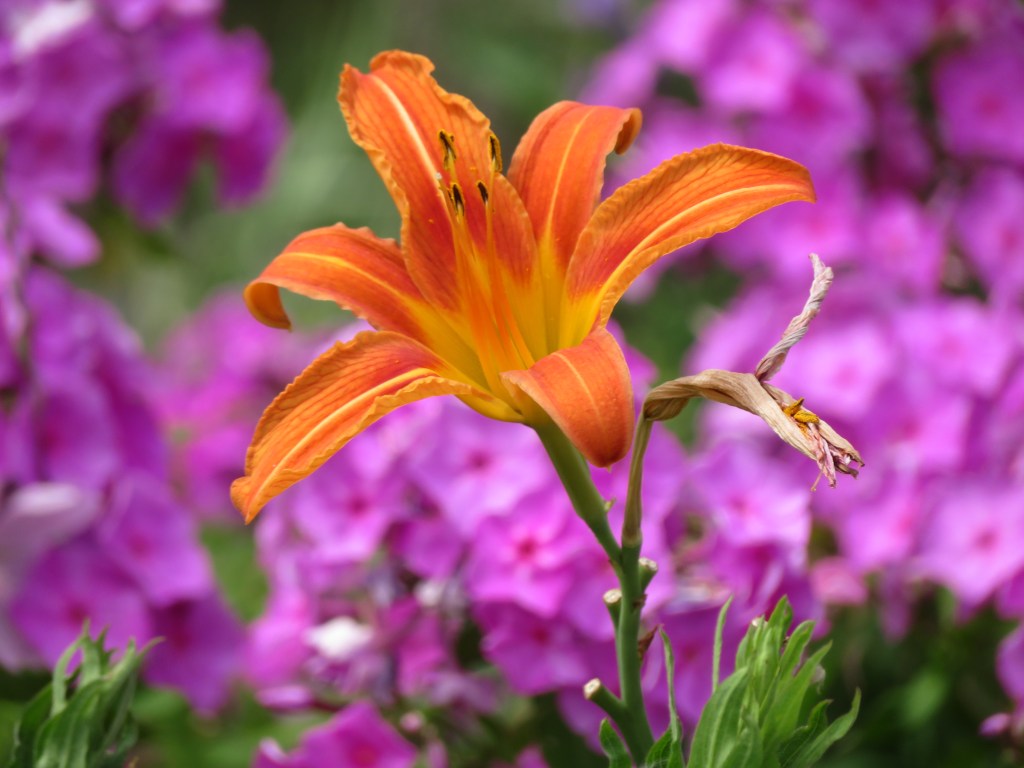
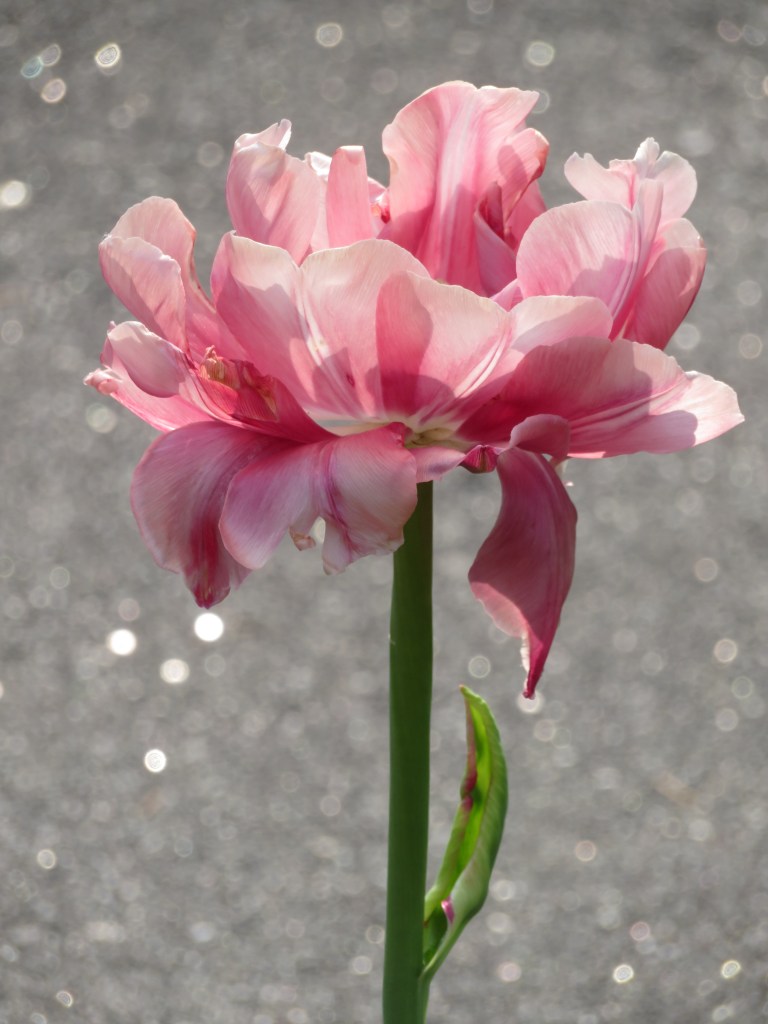
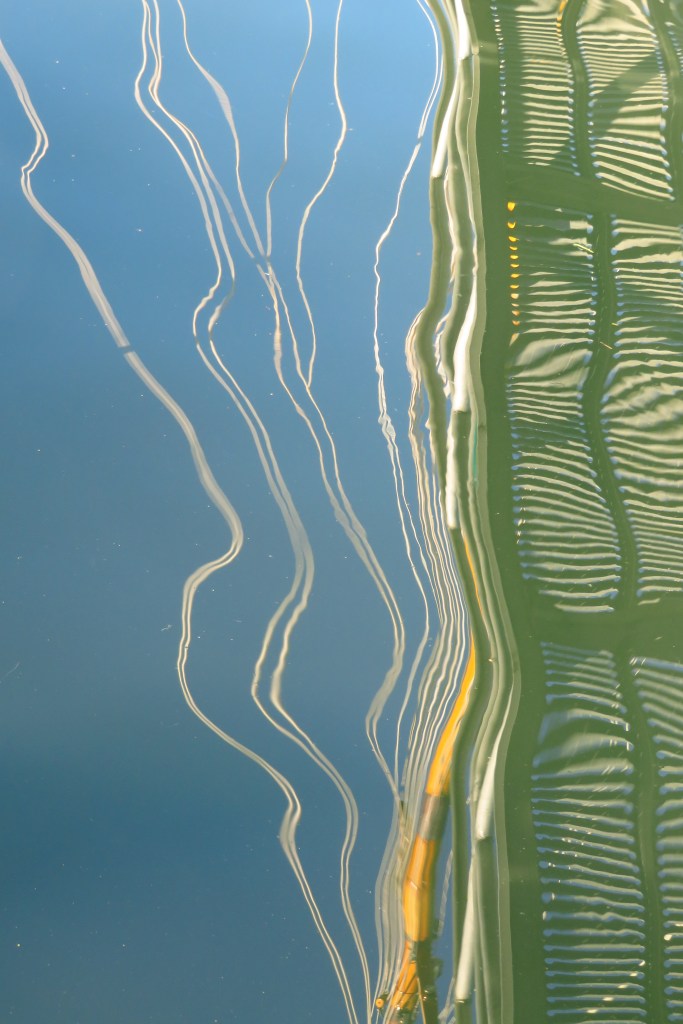
In every season, each image’s framing allows viewers to fill in the blanks, based on contextual clues. These may be as concrete as deducing the months in which a given bloom is likely to erupt and flourish in New England. Or as abstract as interpreting a wavering pattern reflected in slightly rippled water on a cloudless day.
Strangely, I’ve written about absent lens artists’ frames more than once before:
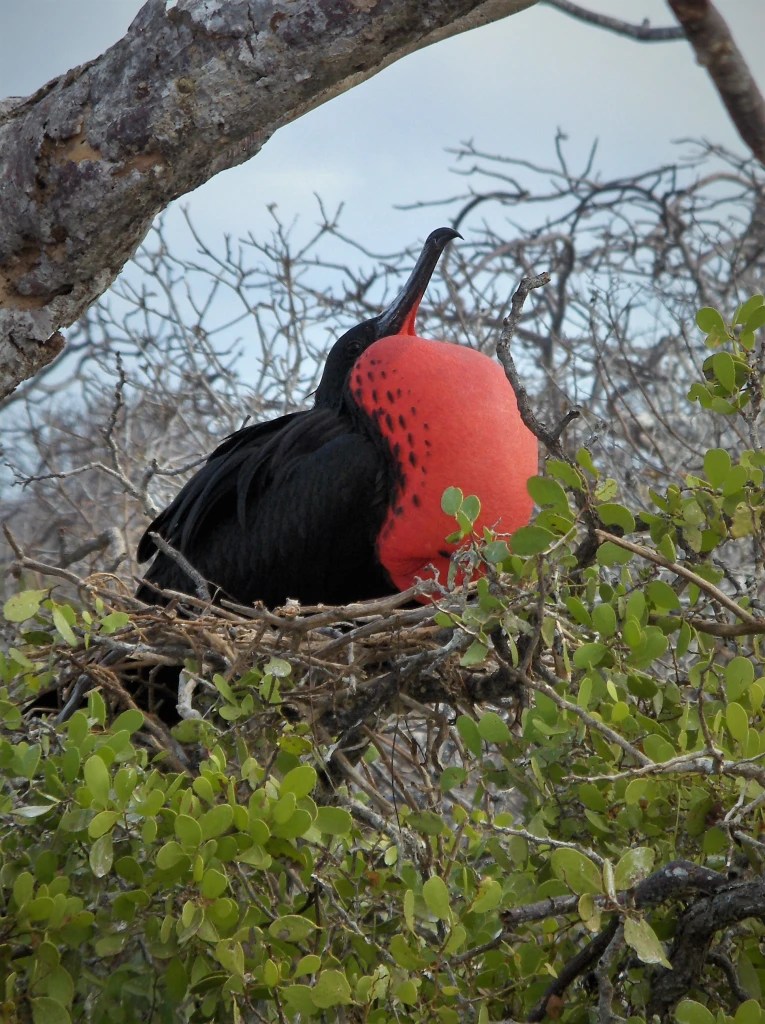
Both within and outside the frames [my husband] Jim created each time he sparingly clicked his camera’s shutter, there was love. This was not anthropomorphism–although the scene as female frigates gathered around a scarlet-throated male echoed what I understand to be the premise of a reality show involving the distribution of a limited number of roses.
Inside each frame is something Jim loved and preserved about his window on this world: its brilliant colors and creatures, plants and geological formations, and the spectacular beauty of sights he had never seen before and never would again–at least from this earthly vantage point–on all that grows and erodes and decays and grows again around us.
On the other side of the lens was a man relishing everything about a trip he knew would be his last, with the family he loved and will forever love him. Each of his photos can transport us back to the warmth of that sun, the sounds of sea lions, the feeling of being able to reach out and touch his arm or the back of his shirt as he found himself among winged and earthbound creatures near the end of the visible world and his time in it.
The artist’s frame allows the viewer to recapture the world it holds. It also allows us to see the artist outside of each preserved moment, whether capturing something real or imagined, aspirational, or merely magical . . . .
Art travels in time, sometimes even more readily than we do.
But he’s also still framed here for you to see and imagine this once present soul, engaging with another being on an icy winter morning.
In the penultimate scene of a five-season show centered on a family mortuary (avert your eyes if you don’t want a spoiler), an artistic daughter takes a photo of older family members seeing her off as she leaves home for the opposite coast. She is a true photographer, and is deliberate in what she seeks to capture in each frame.
Her older brother appears at her side, from his side of the veil, and gently tells her: “You can’t take a picture of this. It’s already gone.”
And it is.
But it’s also still with her, and anyone who truly studies the way she filled her frame.


















 Love in the Spaces