The Artist’s Frame

I confess.

This little fellow’s been framed.

Not in the sense in which that characterization is made in my line of work, but in many other ways. Framed so he seems to pop out in bas-relief against a cloudless powder blue sky. His vivid, sharp-edged wintry colors seem to propel him towards the viewer as he bows away from a filmy floral bokeh. On closer inspection, one frond has broken clean through at its elbow: another hint of the season.

He’s frozen in time and space by a rectangle of sky so constrictive that he appears to be craning against and breaking free of its confines. Looking inquisitively down and out of the frame in which he was forever captured.

Only I can tell you who was on tip-toes on a Maine oceanside path on that long-ago morning. Chin tilted up to return this wee Flying Wallenda’s side-eyed glance as he balanced on a crimson frond.

My fingers were so cold they felt welded to my camera. My winter shots tend to be far sparer than the unending rectangular frames which entomb other seasons’ scenes.

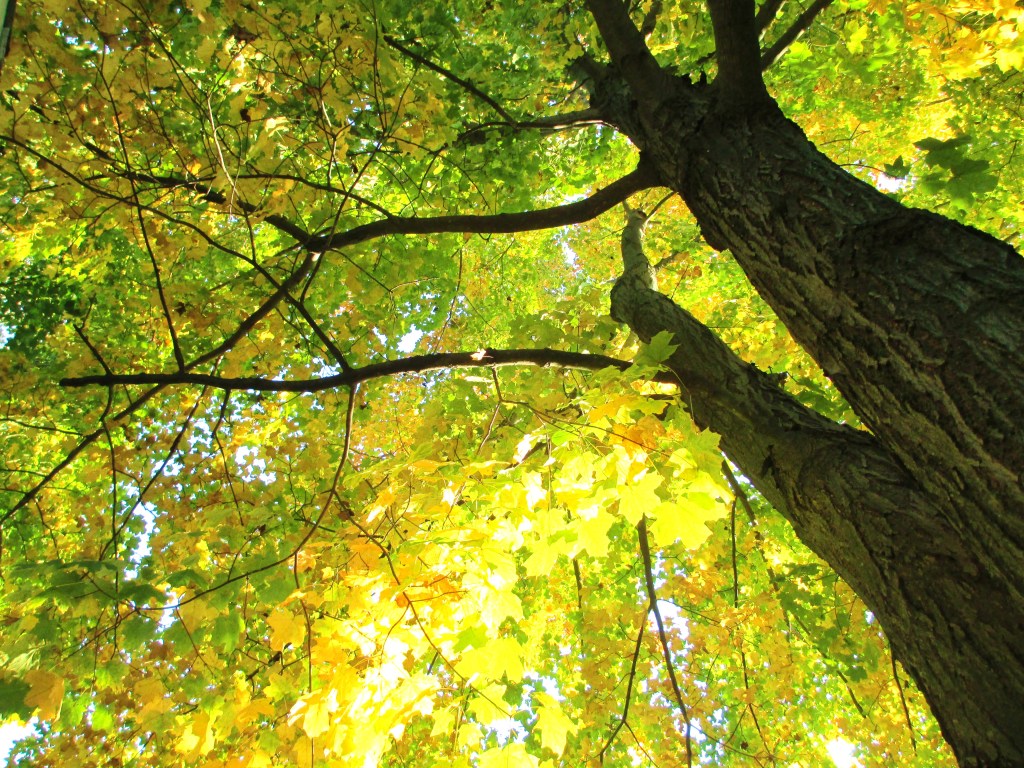
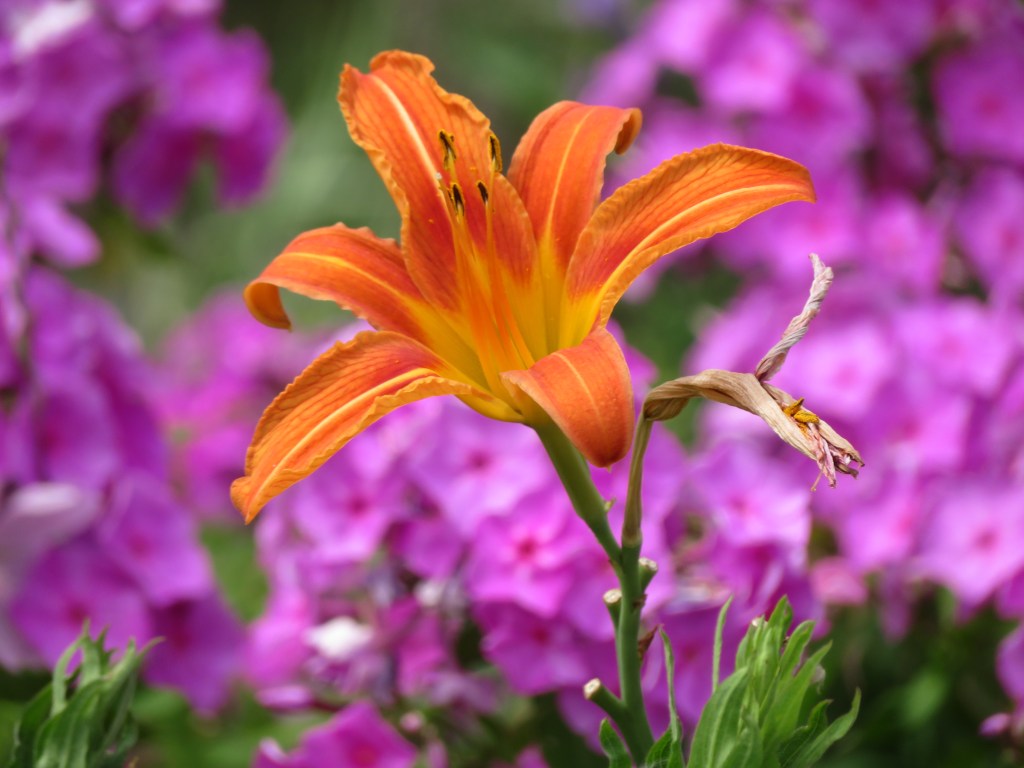
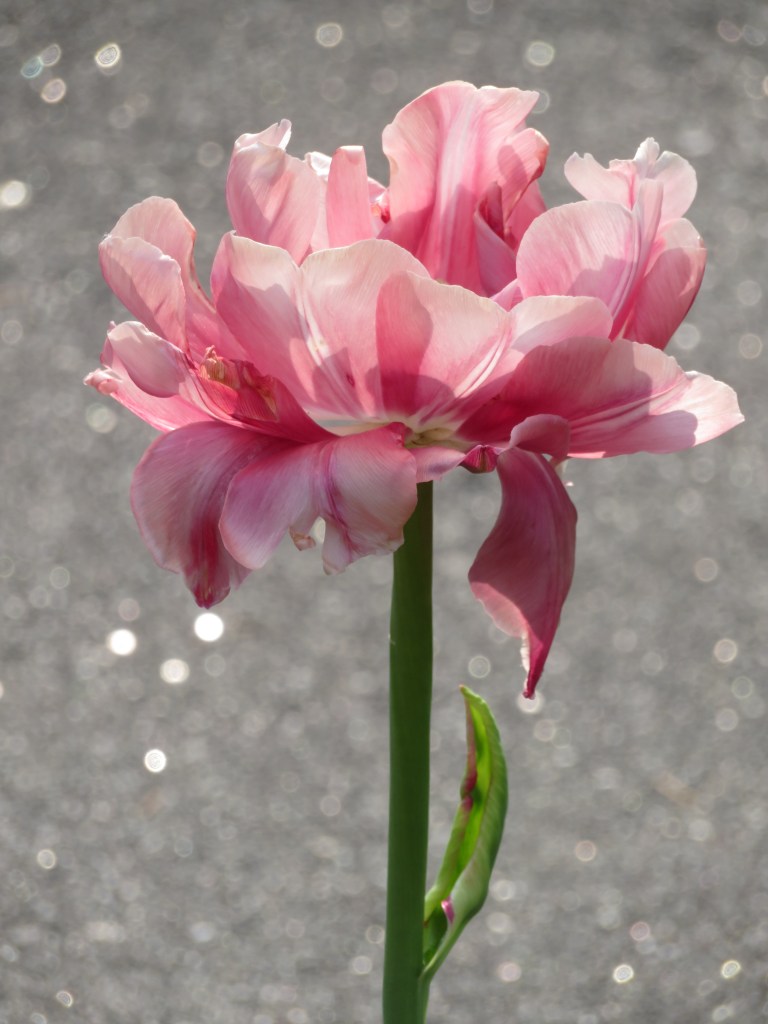
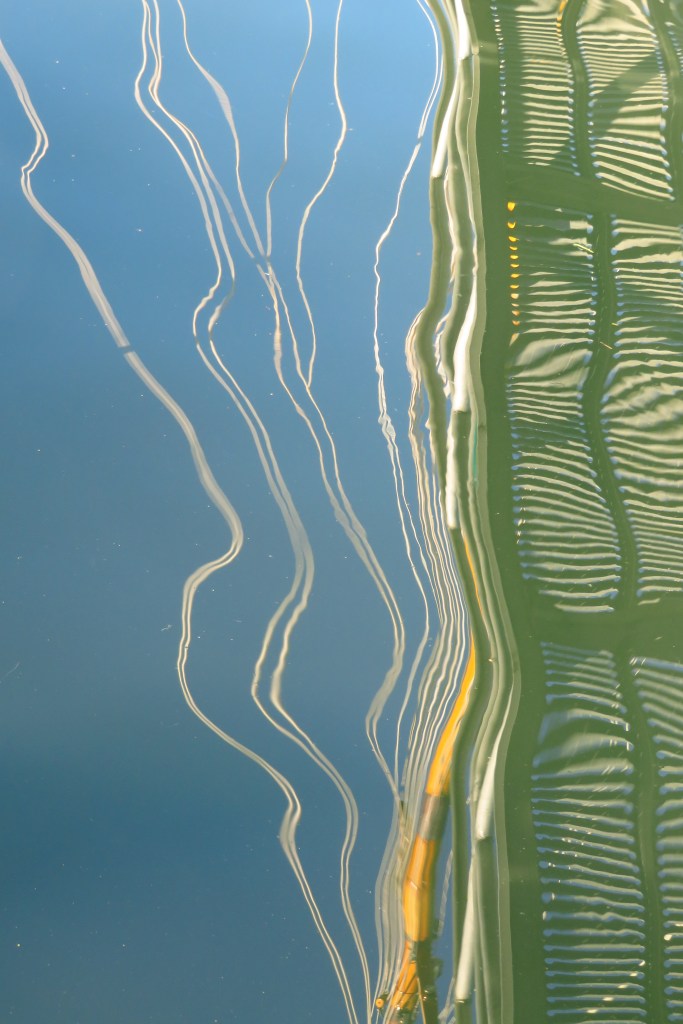
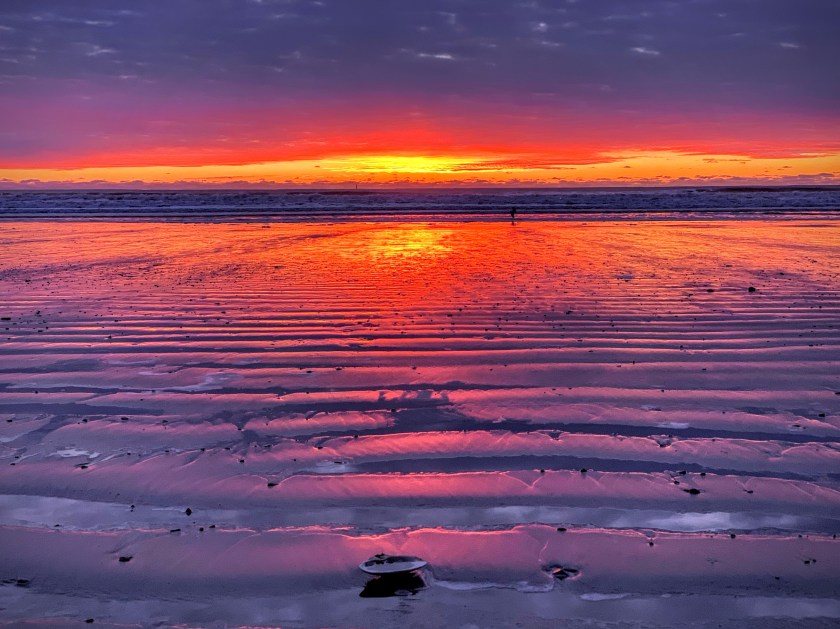
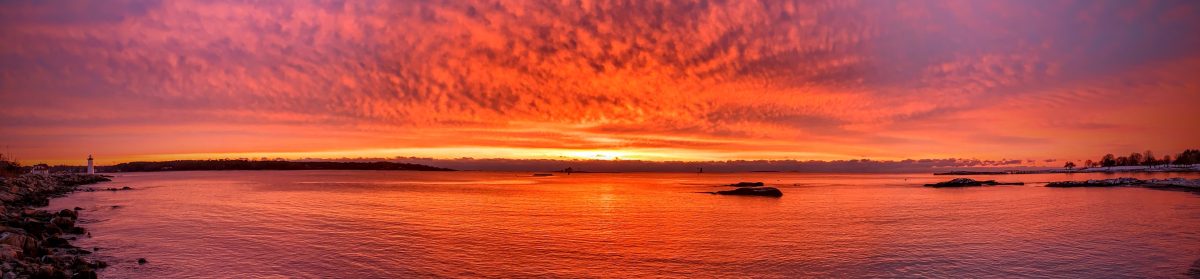
In every season, each image’s framing allows viewers to fill in the blanks, based on contextual clues. These may be as concrete as deducing the months in which a given bloom is likely to erupt and flourish in New England. Or as abstract as interpreting a wavering pattern reflected in slightly rippled water on a cloudless day.

Strangely, I’ve written about absent lens artists’ frames more than once before:

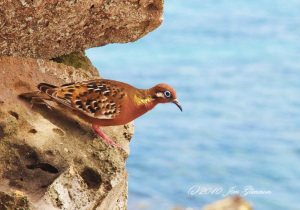
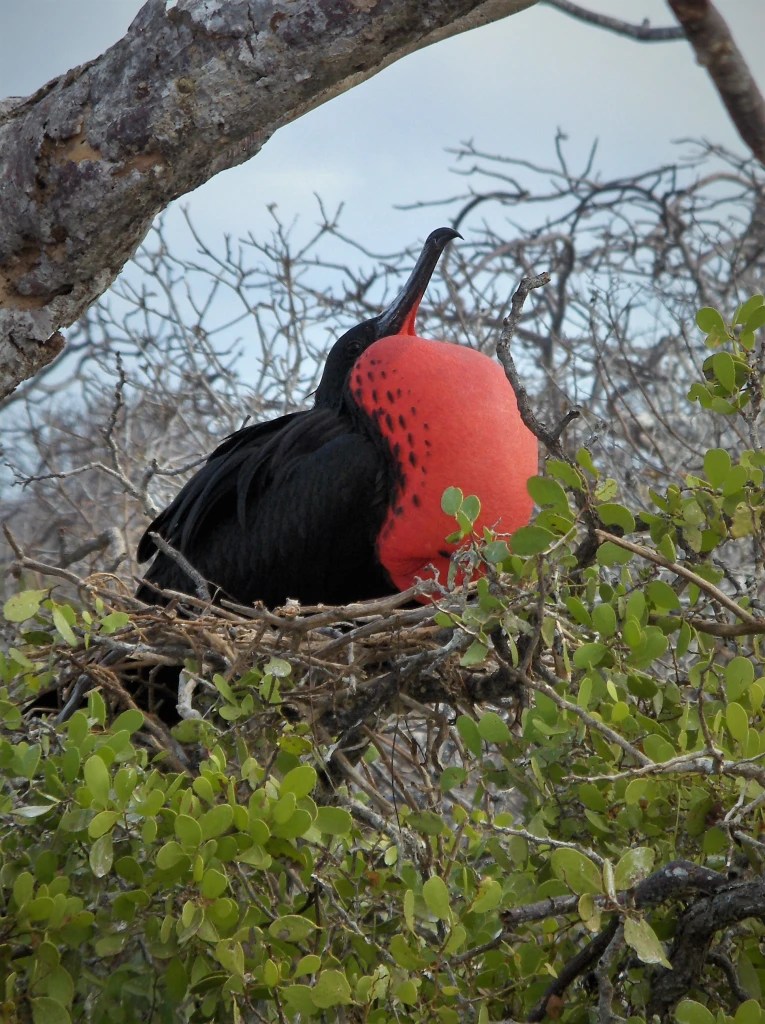
Both within and outside the frames [my husband] Jim created each time he sparingly clicked his camera’s shutter, there was love. This was not anthropomorphism–although the scene as female frigates gathered around a scarlet-throated male echoed what I understand to be the premise of a reality show involving the distribution of a limited number of roses.

Inside each frame is something Jim loved and preserved about his window on this world: its brilliant colors and creatures, plants and geological formations, and the spectacular beauty of sights he had never seen before and never would again–at least from this earthly vantage point–on all that grows and erodes and decays and grows again around us.

On the other side of the lens was a man relishing everything about a trip he knew would be his last, with the family he loved and will forever love him. Each of his photos can transport us back to the warmth of that sun, the sounds of sea lions, the feeling of being able to reach out and touch his arm or the back of his shirt as he found himself among winged and earthbound creatures near the end of the visible world and his time in it.

The artist’s frame allows the viewer to recapture the world it holds. It also allows us to see the artist outside of each preserved moment, whether capturing something real or imagined, aspirational, or merely magical . . . .

Art travels in time, sometimes even more readily than we do.

The Company of Ghosts
My winter bird, like my husband’s winter dove and frigates in another hemisphere, surely is long gone in traditional corporeal (and photographable) form. Parca’s creaking scissors have been wielded mercilessly since then. Glorious flighted birds are now pining for the fjords. They’re off the twig, having joined “the bleedin’ choir invisible.”

But he’s also still framed here for you to see and imagine this once present soul, engaging with another being on an icy winter morning.

In the penultimate scene of a five-season show centered on a family mortuary (avert your eyes if you don’t want a spoiler), an artistic daughter takes a photo of older family members seeing her off as she leaves home for the opposite coast. She is a true photographer, and is deliberate in what she seeks to capture in each frame.

Her older brother appears at her side, from his side of the veil, and gently tells her: “You can’t take a picture of this. It’s already gone.”

And it is.

But it’s also still with her, and anyone who truly studies the way she filled her frame.
On Edge

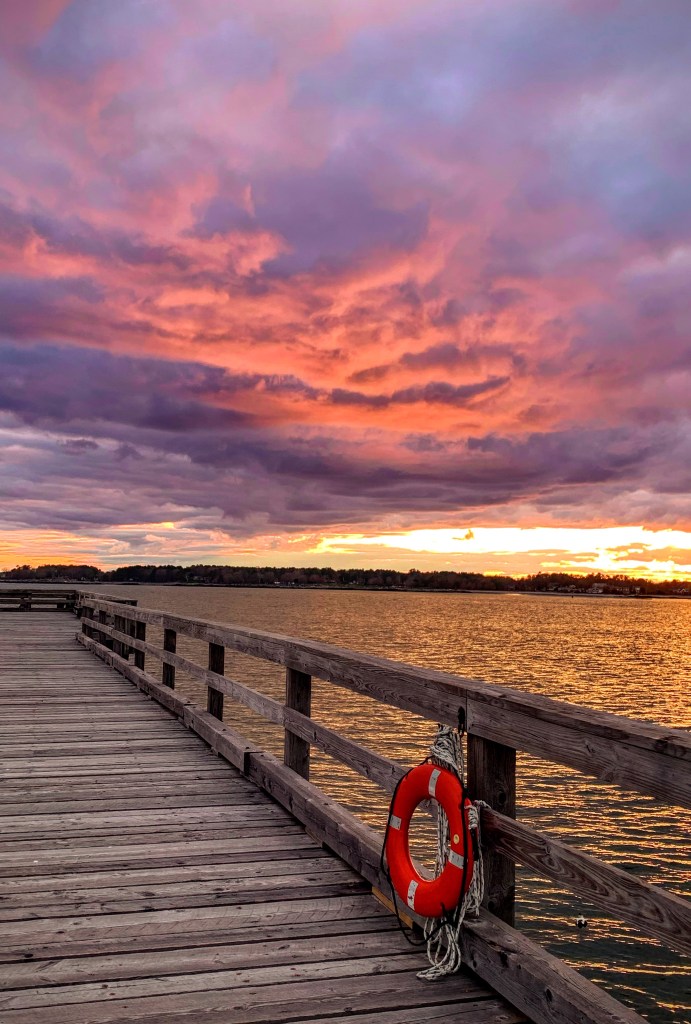
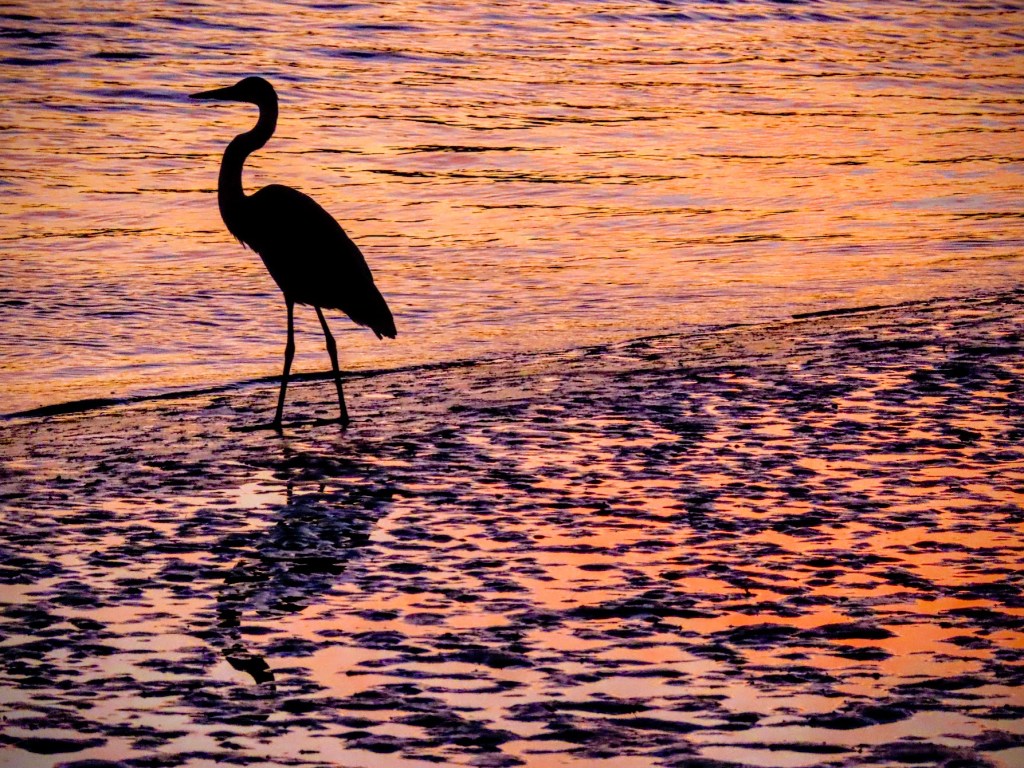
A horizon. The last day of a month. The contours of a moon as it waxes and wanes, or is bisected into planes by cloud ribbons. A season as it elides into its successor. A dock’s sharp edges rendered in wavering saltwater. The end of the visible world. On edge. Over the edge: on the verge of a nervous breakdown.

Edges of stone and glass and steel. Of solid and liquid, land and air. A rainbow’s or razor’s edge. The edge of extinction and at a day’s beginning and end. Crossing over the edge from photograph into art.

Of all the edges I’ve photographed, it’s the last and most metaphorical that immediately came to mind: not a visible border, but a feeling–of decided, edgy discomfort–captured in a single image of infinite shifting edges of basalt near the unsettled black sands of Reynifjara, Iceland. Sharply-shifting planes. Off-kilter bones of bilious algae-green.

Another feeling entirely was captured in photos near the end of my husband’s life, at the end of our world, when he held onto a cliff’s edge and snapped pictures of rare Pacific nesting birds:

“We rowed to the island where . . . offspring were likely to have recently hatched. . . . [He] carefully clambered to the cliff’s edge while the rest of us stood at the short distance the island’s circumference permitted. He beamed at us, his backpack weighting him as he stood with his back to the sheer drop-off to blue-green water and ragged volcanic rock. I held my breath as he slipped almost entirely out of view while leaning away from the cliff’s edge at a respectful distance from the nest, which was built into the cliff’s face and none of the rest of us could see. Jim may well have been the only human ever to have had that vantage point and beheld those new lives.

I watched the sun glint off something out of sight, probably his wedding band, as he clicked his camera’s shutter with his free hand. I shouted into the wind for my terminally ill husband, who would not survive that season, to be careful.

I am sure he grinned if my voice carried his way.”

Perpetual Spring

Spring ordinarily is death’s antithesis, as surely as it is winter’s.

At the end of our family’s harshest winter, my dying husband’s heart improbably would not let go of us. It refused to take its last beats until, at least by the calendar, winter had at last elided into the season of growing green that he had always tended to.

Just four days later, the snow had melted entirely away. That afternoon, in a sun-soaked Spring service at her school, one of our daughters read “A Man,” written by poet Louis Untermeyer after his father’s death: “I thought of you…. / And it was like a great wind blowing / Over confused and poisonous places. / It was like sterile spaces / Crowded with birds and grasses, soaked clear through / With sunlight, quiet and vast and clean. / And it was forests growing, / And it was black things turning green.”

One of her brothers read Amy Gerstler’s “In Perpetual Spring,” which ends with an expression of “the faith that for every hurt / there is a leaf to cure it.”  

Spring was my husband’s season–although all seasons were, in their way and his. He would rotate his birdfeeders’ weekly specials to accommodate anticipated guests, and make sure our porch was off limits to humans when robins began building their nests in a favorite corner of the 1805 ornamental molding atop its pillars.

The fruit trees he had planted would begin to bloom. His vegetables and fruits would soon make their way into the world. Armored khaki orbs of quince would drink in April showers and grow so heavy that they bowed the thick branches which hosted them. At their greatest girth, they often settled together on the ground, still attached at their stems to their sturdy trees. They congregated there like meditating buddhas, to be sniffed at by our perplexed beagles. Sour bruised blue-black grapes and fuzzed raspberries and peaches would cluster.

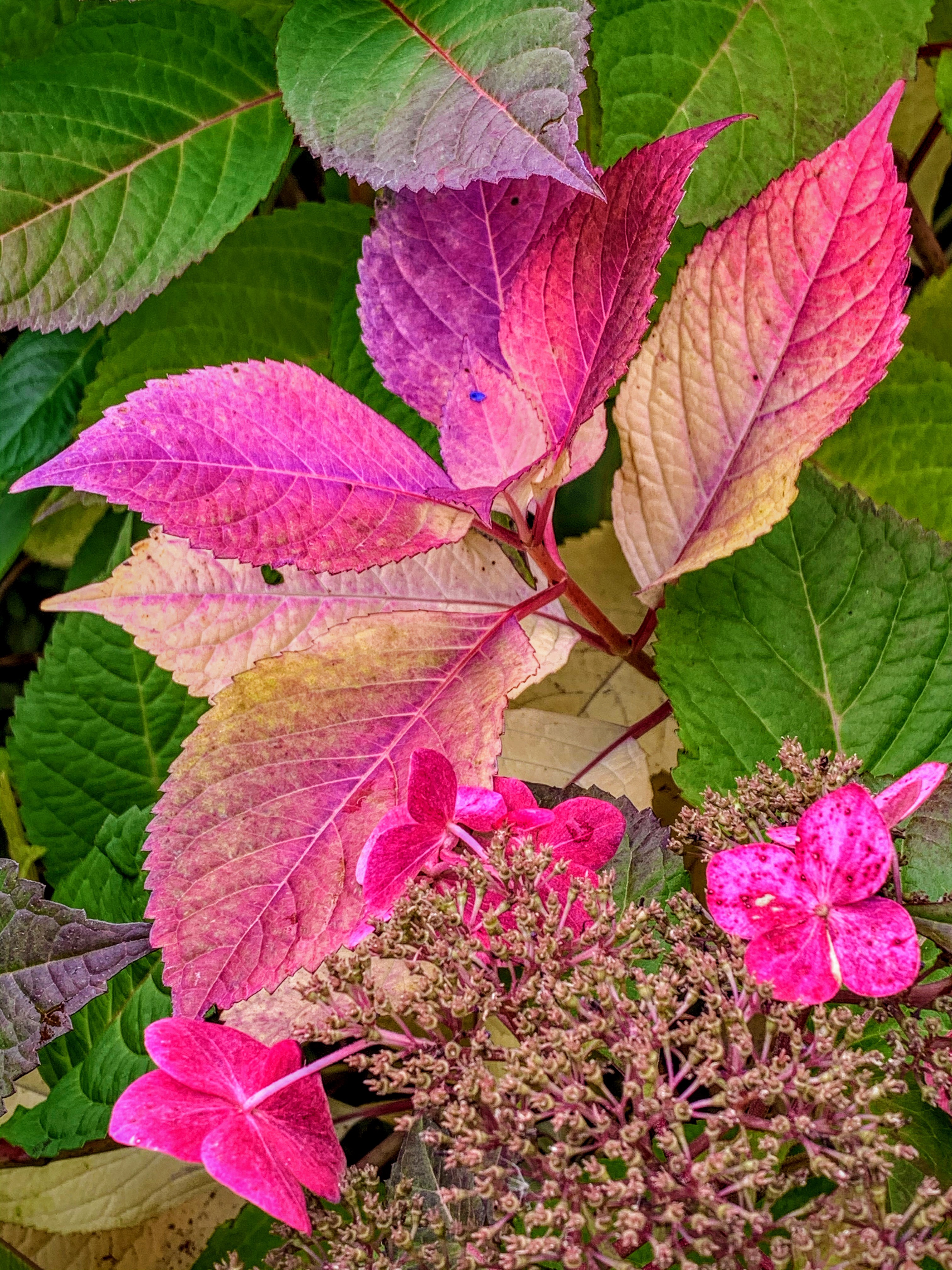
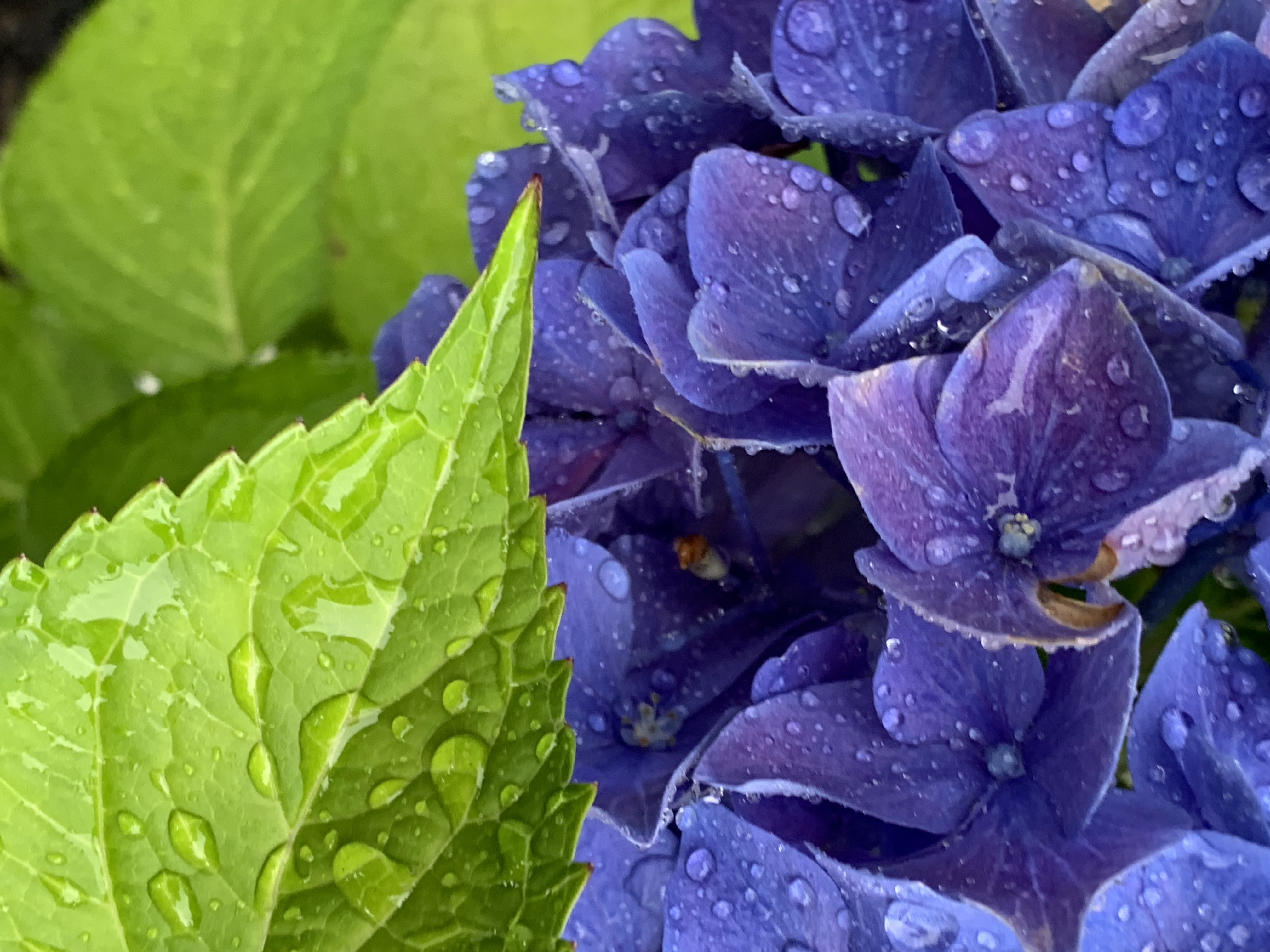
In true winter I would survey once colorful leaves entombed under ice, and headless bush branches and empty trees and abandoned robins’ nests. I would be certain none of them could be brought to life again, to bear peaches and sour apples and cartoonishly colorful hydrangea and rhododendrons. But in Spring they somehow still do.

Even that Spring.

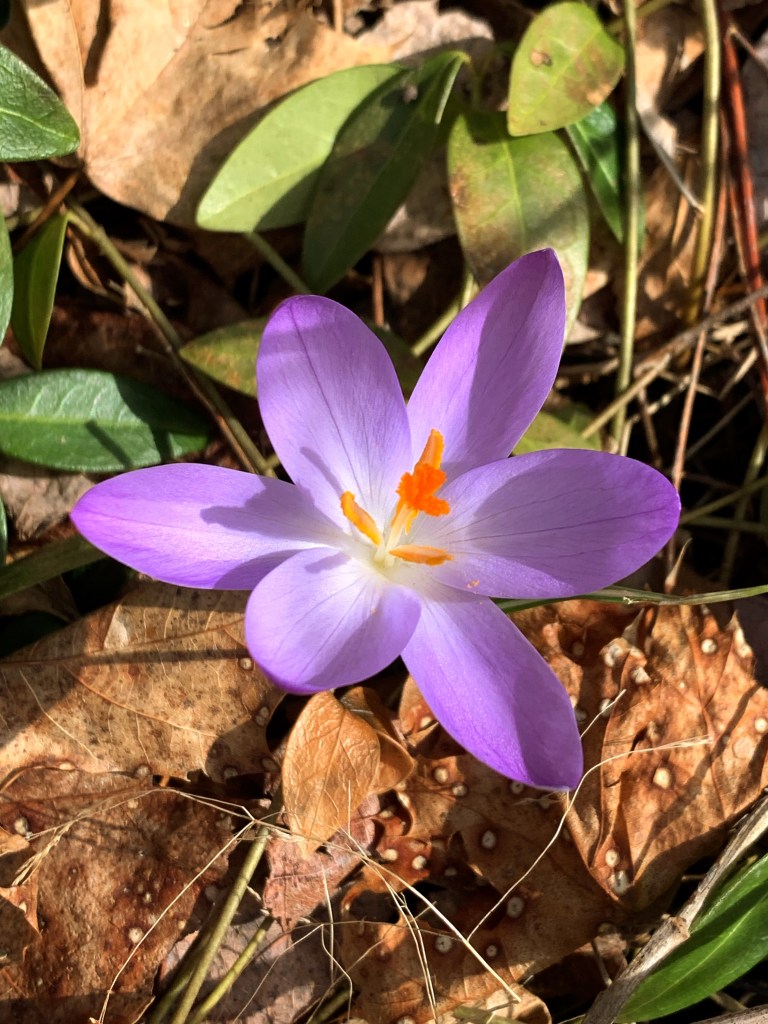
Since that singular March day twelve years ago, true Spring arrives for me not on the designated calendar date, but whenever I spot the first fully-bloomed flower. In New England, that has invariably been a crocus.

I picture it gingerly poking its way through richly layered leaves glossy with melting snow, as if doubting whether it truly is time to be visible and vulnerable. But once it peeks out above the dense autumn detritus, its lavender or buttered white soup-ladle petals relax, and it theatrically basks in the sun. A Fantasia character come to life, for as long as the light lasts.

Spring came a few days early this year.

Here Today . . .

img_9220

It might seem like an ordinary spot.

Now, as then, one rock’s broad surface comfortably seats a man over six feet tall, allowing him to look up at the much slighter young woman facing him under a Long Nights Moon.

You faced the moon and I faced you. . . .

Technically I have been alone when revisiting the spot, in mind or body.  Even now, few couples would make the rocky climb on a December night. Its most perilous stretches had no guard rails then. Hemmed by poison ivy and washed by surf, scattered signs warned of the trek’s perils, beginning with the precipitous drop from unsteady earth to roiling sea. 

And we talked about the future we hoped to have and came to be

From the narrow, rutted path’s highest point, where the young man sits and she stands, an  overlook offers a panoramic view of the horizon, bracketed by ridged limestone shelves angled into the seabed, as glaciers had decreed.

img_6546 copyThe young man’s vision is razor-sharp, as it will remain all his life. Beyond his moonlit partner he sees a swath of inky, noisy ocean punctuated only by a rocky outcropping miles from shore. There, tiny Boon Island personifies the word “barren.” No less a luminary spirit than poet Celia Thaxter, of New Hampshire’s convivial close-knit Isles of Shoals and their blooming gardens, is said to have once described Boon Island as “the forlornest place that can be imagined.”   
Despite its size and solitude, its uneven granite has drawn in and grounded ships over the centuries. And more than one sturdy stone lighthouse there has been storm-toppled into the sea, rearranging itself into mazes on the ocean floor.

The distant toothpick of the most recently rebuilt lighthouse is in fact New England’s tallest. Standing at strict attention atop the granite pile where nothing grows, it laconically cycles its pure white light, lest another insufficiently attentive traveler come too close. 

Compared to its nearest neighbor, the gaudily scarlet-strobing, holiday-bedazzled and aggressively photographed Nubble Lighthouse, one would have to concentrate very carefully to commit this shy slender cousin to pixels or film. When one does, the tiny island itself often appears to be hovering above the water, as if it is present both as we know it to be and also its own ghost.

img_8061 copy

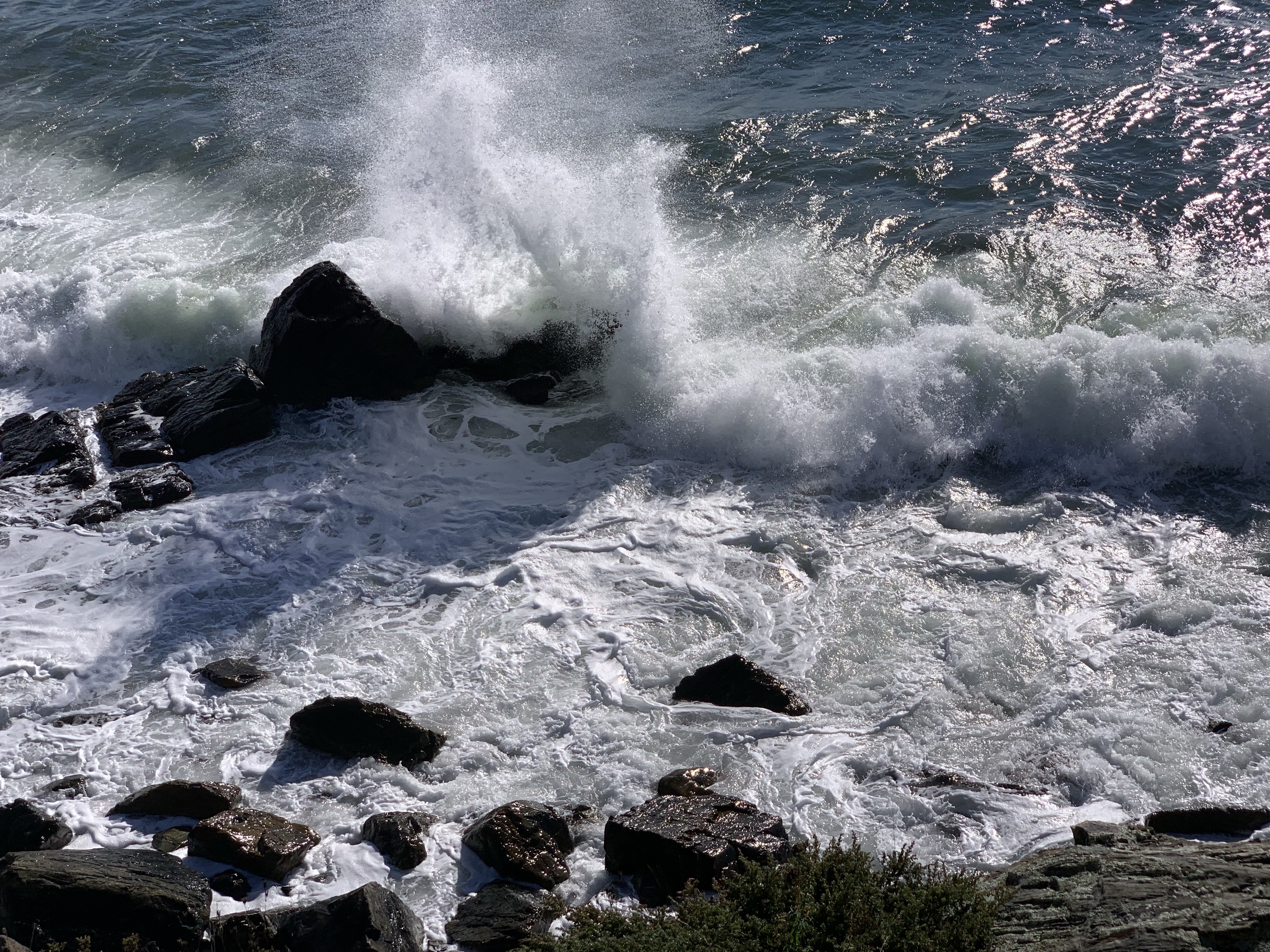
At this spot my husband and I shared at the cliff’s edge, the only sound likely to be heard during any season gently floated upwards. Thousands of water-smoothed stones companionably clattered as waves cycled below. They mingle and chatter as each wave washes over them and recedes, resettling their companions only slightly as they all await the next incoming wave. The sound becomes less mellifluous only in the most ferocious storms–the rare, intense storms we sometimes do not sense are coming, and which might fell even the most dependable beacons.

It is no coincidence that this single quotidian patch of earth and rock snuck itself into  my subconscious memory, and in turn has played a role in both my  fiction and non-fiction.

My husband died almost twelve years ago, but I will always find him–and our younger selves and our future children–in this spot, at least as present as the rocky shore and surrounding sea, and the seagulls who pause to quietly survey the rising sun along with me.