Live-blogging never lost love, from Blue Angels in the backyard to penguins on the Equator
Author: Stephanie
In her spare time, Stephanie has published articles and delivered talks in arcane fields like forensic evidentiary issues, statistical presentations of human and canine DNA testing, jury instructions, and expert scientific witness preparation. She attended law school near the the banks of the Charles River and loves that dirty water; she will always think of Boston as her home.
You are welcome to take a look at her Facebook author page, or follow @SMartinGlennon on Twitter and @schnitzelpond on Instagram. Bonus points for anyone who understands the Instagram handle.
All content on this blog, unless otherwise attributed, is (c) 2012-2023 by Stephanie M. Glennon and should not be reproduced (in any form other than re-blogging in accordance with the wee Wordpress buttons at the bottom of each post) without the express permission of the domain holder.
“Not a red rose or a satin heart,” as poet Carol Ann Duffy wrote. Nor “a cute card or a kissogram.”
Not that there’s anything wrong with those.
Love is often linked, aptly and sometimes egregiously, not only to light and dark but to food and drink. Comfort foods which harken back to the idiosyncratic home cooking of childhood, at least for those, unlike my own sons and daughters, lucky enough to have grown up with a competently sustained culinary oeuvre. Obscenely costly symbols—authentic Champagne, caviar, pure 24K gold itself shaved over Black Forest Truffles as insular and dense as volcanic rock. Family recipes handed down for better and for worse. Flourlesss chocolate wedding cake. Fresh cardinal-red strawberries and purple cauliflower. Friends who make and feed us the only foods we can manage to eat in times of abject grief.
In my experience, rarely had love’s layers been called to mind by the sulfenic acid particulates which aerosolize as one dissects a vegetable.
But on my counter sits a stalwart couple: a towering purple onion listing slightly over its companion, a small golden onion, as if giving shelter. They have long outlasted all their brethren, delivered to me by a friend not driven to distraction with anxiety at the thought of going inside in winter to purchase daily bread. Only their surfaces are slightly worse for wear, separating along sepia fissures at their translucent outermost layers, furling ever so slightly, more like Rilke’s unending rose petals than the chafing away of our own perishable brittle epidermal layers, cracked by sub-zero cold.
Although I unceremoniously felled some of their brethren, I do not plan to do harm to these companionable Alliums.
I consider them my Valentines.
Early in the pandemic, knowing both of the exceedingly difficult anniversaries which inhabit my outsized winters and in-house medical issues (soon to be compounded by my mother’s CoVid diagnosis), friends from work began driving significant distances to bring me food.
After a scale revealed that I had dipped down into double digits, I was delivered troves of healthy food, including bountiful salads someone had endured quite a lot of volatile red onion vapor to adorn. . .along with a not inconsiderable amount of my favorite less healthy treats. The sustaining bounty arrived on my birthday, and fortified me for the hollowed-out holidays which followed. My brother brought me highly sweetened booze, just in case, to toast my birthday and Jim’s, although of course Jim does not age. A friend sent Maine coffee to warm my mornings, and then decaffeinated coffee once I had to forgo the real thing.
Writ large, multitudes, alone and in countless communities, continue to risk their own health to continue to provide meals and groceries to those in need of them.
A century ago, in the pandemic season of her time, Julia Neill Sullivan, at 72, cooked pots of food in the small cottage on Ireland’s west coast where she had raised thirteen children, hauling meals across a stony field to those stricken by influenza and too weak to feed themselves. More than 50 million people perished worldwide, but her own grace in her remote corner of the world ensured that others would survive. Generations have followed them.
Suffering and deprivations are immense. It is hard to know where to begin, and daunting to consider all that we cannot heal or fix—certainly not by ourselves, and maybe not while we still walk here.
But the gift of grace is ours to take as far as each of us can carry it. It is exponential and enduring. Trauma can unfold and carry its scars across time, but so does the grace “to help in time of need.”
In his last newspaper column, at the end of May, Jim Dwyer wrote about those who at their own peril now come to the throne, to feed the sick and those whose calling is to minister to them. He also gifted us all with this final sentence about what Julia Sullivan did a century ago: “In times to come, when we are all gone, people not yet born will walk in the sunshine of their own days because of what women and men did at this hour to feed the sick, to heal and comfort.”
Food is not, strictly speaking, love, but the impulse and the calling to bring or serve sustenance to someone else is. We all need, and may be called upon to give, any “provision for the way” that we are capable of giving.
“….I also know how important it is in life…to measure yourself at least once, to find yourself at least once in the most ancient of human conditions, facing blind, deaf stone alone, with nothing to help you but your own hands and your own head….”
— Primo Levi,A Tranquil Star
Simmering, solitary, stone alone on rocks half jutting from the Atlantic, facing bottomless sky.
I am grateful to still have a home and a job, and be able to give to those who do not have such safe harbors, yet I cannot think of another physical space that is not fraught. I cannot believe it is cost-free for any of us to see our communal spaces, inside and outside, as places we no longer comfortably occupy together. Danger lies in merely breathing the same air; different wounds lie in not being able to.
I first noticed the transformations by day, as my professional community began to identify ways to minimize what must be done in human company and ascertain what can be accomplished alone and at a distance.
It quickly became apparent that it is hard to physically separate the humans who carry out a process or purpose from each other without eliding the humanity of what they do.
This is not restricted to our occupations and avocations. What do we all lose once it may be lifesaving not to sit in sustained silence with someone who is grieving, bereft, not prepared to speak? When the colleagues are missing from collegial problem-solving, the give-and-take of people with different life and work experiences at a pace that permits contemplation before setting course? How do our responses change when we do not have time to envision less immediately-evident possibilities, or even lighten a discussion with humor, when we do not have the luxury of letting our minds wander as far as they need to in order to regroup as an experienced team to tackle what is at hand? What do we lose when we need to come up with answers whose critical feature has been elevated to contact-free speed?
What do we all lose when we can no longer offer a hand or shoulder or an unbarricaded face to someone in physical or psychic pain? When we can only offer up an electronic voice to be held up by a stranger to, at the mercy of an internet connection, whisper into the ear of a dying parent? When a frightened pediatric patient cannot read the kindness of the shrouded caregivers trying to assist her?
Without the noise and energy of the sheer presence of more than a handful of people, now spread out like thumbtacks in spaces meant to hold connected communities, it is not just the people who are absent. And when we are reduced to action, to business itself, to the in-and-out tasks we must still perform, we are forced to contend with our unadorned selves. How we proceed is limited by the absence of comradery, of the shared history and understanding and burdens of traumatic work and other collective pain.
Into this continuing, exhausting breach, we may be accompanied by our own insufficiently tended demons, cast into excruciating relief because they are now our only constant companions.
******
Given the existential perils the world faces, my losses are of little moment. Still, they limit what I might have been able to put out into the world. I realized, for example, that I seem to have lost the capacity to write non-fiction about loss, which at its best someone else might then identify as communal, not something that need always be suffered alone, as I do now, adrift from communion and companionship among those whose earthly presence I did not understand I had grown so much to depend on.
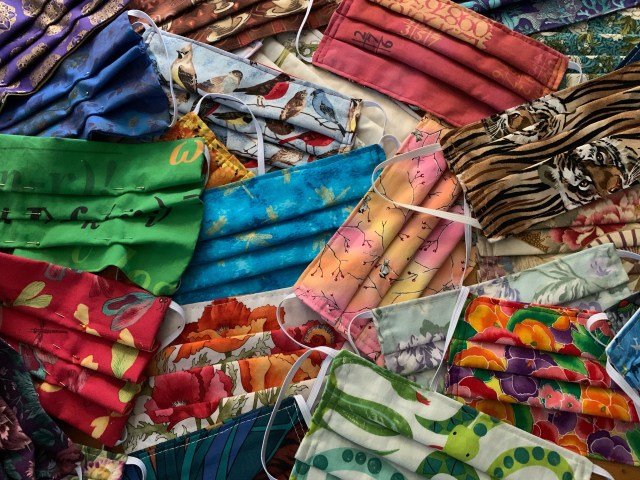
Now I am only relatively confident of my identity as the green eyes above the mask and suit jacket. But even on those occasions when we physically assemble in some form, usually somewhere on the spectrum between resignation and terror of attendant risks, masks allow us to conceal so much.
Sheared off from the corpus of each of these communities, I have discovered it is nearly impossible to understand my omnipresent self. My capacity for memoir, such as it ever was, seems to have escaped me this year–problematically, because that is the stuff of this blog.
(If you have been with me here for awhile, first, thank you from the bottom of my still aching heart. And second, I apologize for the exponentially increasing spaces among posts.)
There seems no point in writing about life apart from anyone else. In retrospect, it seems telling that the last time I was able to write about my family immediately followed the small, masked, stringently-separated gathering of family members at my father-in-law’s September funeral. There I finally could share space with family, although I could not hug, or even closely approach, my own son after his reading for his beloved Papa.
Yet in these same strange times when non-fiction seems incapable of being instructive, writing fiction has become so easy as to be unsporting. Unreality composes itself at the keyboard. I am but the fingers which hunt and peck, rapid-fire, to generate stories.
At the age of nine I lived an isolated life as a less-than-welcome American in Meudon, Hauts-de-Seine, where I read Agatha Christie and Edgar Allen Poe and tried my wee hand at crime fiction, very loosely speaking. I used blue felt tip pens to replicate rigid typeface within brightly-colored fabric-covered sketch books. My inspiration was tertiary: fiction by authors who, as far as I can now tell, had no professional experience, and possibly no significant life experience, with violent crime and its detection and consequences.
Decades later, I have become more immersed in the memories of such transgressions than I apparently can bear to process. In a handful of sleep-bereft early pandemic months and in the particular solitude of winter’s enduring darkness, some 70,000+ words of what I would have described as crime fiction materialized on my computer screen. The story might just as easily have appeared full-blown as I slept, were I a far more gifted sleeper.
It took a third-party’s eyes on the draft to illuminate this mystery, explaining that she recognized missing pieces of my life–that it was not crime fiction at all, but a biography of intergenerational trauma, still writing itself forward.
It was not that I could no longer write about lived experience but that solitude has made it easier to write from memory’s reservoir, in a different voice that extends it to a heartbreakingly whole cloth, which includes the invisible brothers and sisters who share some of the harsh experiences which transform truth into stories we can live with, in some measure. This non-fictional fiction has become the only way I can bear to commit some truths to words, to expose them to daylight in whatever ways mere language can.
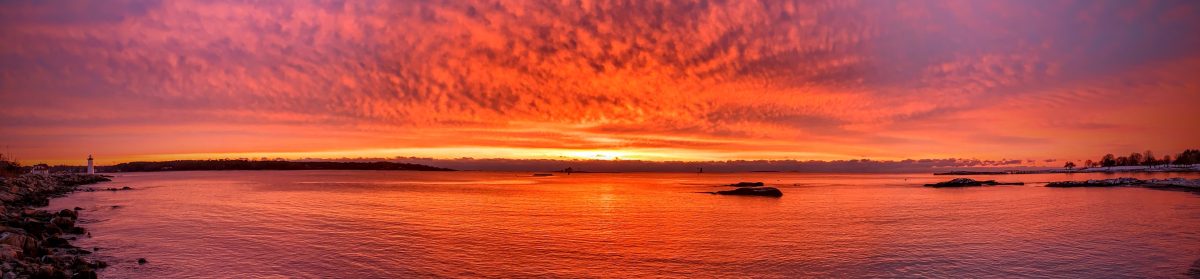
Seachange wrought by the ocean’s battering force can make sharp-edged glass bearable to touch; it can subdue the razored edges of the immense cantilevered stones and jagged rocks I navigate as incoming waves present me with tidepool offerings of reflected pre-dawn light.
Living creatures are different. They may harden against onslaught, or the risk of it. Shock and tumult and the fear of their future repetition, particularly when a traumatic event was impossible to see coming, can elevate the apprehension of another impact into an immobilizing force. Embedded pain may condition our brittle, wounded selves to brace against a next blow, to hold ourselves far too rigidly together, trying not to let the fissures show. But those stress points still change the shape of what comes next.
I am learning that the steeling itself, feeling utterly alone to confront what comes next, can facilitate the next breaks, if not the next breakdown. A greenstick bone fracture heals quickly and leaves no traces precisely because the site of the injury remains so pliable that its residue disappears in the healing. A child’s bones can snap clean through, as one of my daughters’ forearms once did in a short fall from a piano bench when she was three, yet heal so completely that within weeks an x-ray will reveal no trace of the trauma; these greenstick children mercifully will not be imprinted with an expectation that the pain will revisit them.
The pandemic has taught me that all too often I remain on high alert, particularly fearful of the one thing I consciously still fear: harm to the people I love and, who, unlike their father, are still here. “Here” now means out and away, out there. The daughter whose bones healed so seamlessly is on another continent, and I have no idea where and when I might be able to see her again. I cannot hug her or her siblings any more than I can touch my ghost husband’s shoulder.
I find myself incapable of cushioning lesser discomforts by taking care of myself; I push myself until a first wave of percolating back pain becomes something immobilizing, as if ignoring what pains me is mastery and not its opposite: surrender.
Only when I am outdoors at off hours, taking stock of the gloriously unending shore and heavens, do I let myself settle as the waves cycle in, without steeling myself and my aching, surgically-rearranged spine against a next terrible blow.
In these months of transformed community, my subconscious seems to have rewritten catastrophic experience as fiction. In this maelstrom, perhaps the superficially non-biographical has become the comparatively safer place to which my wounds and memories have fled and disguised themselves as something other than my life.
Maybe this is simply a fleeting new voice for ancient communal experience that merely feels like it springs from one’s own lived years. As poet Louise Glück wrote:
I tell you I could speak again: whatever returns from oblivion returns to find a voice: from the center of my life came a great fountain, deep blue shadows on azure seawater.
If at the beginning of this endless year your hope; your belief in justice, or love, or redemption; or your faith itself had fissures, then like score marks on paper they may have left you–like me–more vulnerable to being reshaped in unwelcome ways by outside forces. Without the palpable presence of the multitudes of fellow beings most of us used to walk and sit with and otherwise be among, distractions and self-protective filters of the metaphorical (non-N95) kind are hard to maintain.
But we can still safely breathe in and out to unseen others from where we find ourselves–in love, in any art at all, in service, in food, in flowers, in fiction and non-fiction, pictures, spoken and sung words, old-fashioned written letters, fabric, and photographs taken when the rest of the world is asleep. Even when it deeply hurts to put something out into the world still out there, it may speak to someone who feels equally unseeable.
“Ibis Ascending,” Garden of Peace, Boston, Massachusetts
. . . you are much more than simply dead/ I am a dish for your ashes / I am a fist for your vanished air….
Charles Bukowski, “The Unblinking Grief”
Ten years ago today, at 12:52 p.m., give or take a minute-without-end, the surgeon pointed to a scan I would not have looked at even could I have seen it that far across the windowless white room.
“This is your tumor,” she said to my husband, whose keen eyes would have immediately absorbed the labyrinthine contours of his inoperable pancreatic tumor.
Some of the things he did next, knowing what he knew as as a physician, have puzzled me for most of that decade.
I instantly knew there was no hope: he would certainly die within months, as he did. But at times he seemed to think otherwise.
I now know I had framed and answered the wrong questions.
In the past year I’ve found clues in the strangest places.
******
Garden of Peace
Within a city block in Boston, on two sides of a magnificent courthouse I was drawn to even as a kid–and in which as an adult I have for decades argued to uphold first-degree murder convictions–are two dedicated gardens. Only one contains flowering plants.
The other is made of stone.
I’ve never encountered another soul in either.
The Garden of Hope is dedicated to cancer patients, and to curing cancer. Visiting it makes me feel ineffably sad.
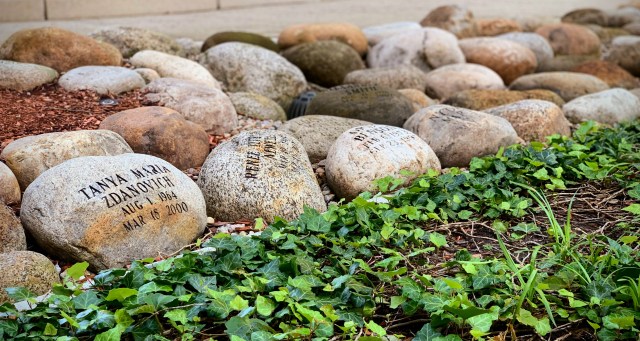
The Garden of Peace is dedicated to homicide victims. Stones are engraved with their names and dates of birth and too-early death. Water circles through from a granite orb, representing the weight of grief resting with victims’ survivors. Visiting it gives me hope.
In the space between them I may have finally come upon some answers.
*****
Within an hour of his out-of-the-blue diagnosis, my outwardly robust, healthy husband sat in the Lahey Clinic’s expansive lobby, reading journal articles on his laptop about pancreatic cancer.
I pressed myself against an outside stone pillar far broader than I, my skin feeling as if it were steaming from the day’s heat, and wept. I, distinctly not a physician, immediately knew there was no hope: he would die, soon. As he did.
He knew exactly what his protein marker levels spelled out. He knew how dire the meetings ahead would be. He knew what the oncologists would say.
I didn’t grasp the medical in-between, but the stand-still second I heard the diagnosis I absolutely knew the end.
When it was time to go back inside and accompany him to a PET scan he closed the laptop screen, calmly looked up at me, and said, “Whatever happens, it looks like I’m going to need an extensive course of chemo.”
Already, I had trouble computing what he was saying. What’s the point, I thought, but did not say.
And I continued puzzling as he subjected himself to ghastly side-effects from twelve-hour infusions of chemotherapy drugs over the rest of the summer. He must have known they wouldn’t help. Nurses were swathed in full PPE so as not to come into contact with the poisons they were injecting into his port, turning his tongue to cotton with which he could not form words, leaving him nauseated and too exhausted to move, sometimes sleeping 20 hours a day, turning his hair white, casting a dark spell that made taking a sip of cold liquid like swallowing broken glass.
I would wander aimlessly around the chemotherapy wing; when not piecing together angel puzzles I would gaze at the same photographs and posts and calendars with something approaching….anger: they were always of and about survivors, always about those who would live. Survivors’ Poker Night, Survivors’ celebratory Banquets. Nighttime meetings for survivors of different types of cancer. Bright ribbons of different colors, but nothing rendered in black.
Nothing for those without hope of “getting well.” There isn’t even a Hallmark card for that.
The physician-patient’s own physicians wouldn’t bring up hospice care. When I mentioned it to his oncologist, he nearly fled the room, murmuring how good my assuredly dying husband still looked. Eventually, during an emergency admission when he had only weeks left, and after I’d made multiple requests to the floor staff for a hospice referral, Jim picked up the phone in his hospital room and referred himself for end-of-life care.
Through this brutal, fruitless treatment, the tumor did not shrink. Its cells had spread to his liver, likely before he had been diagnosed. His pain was indescribable.
Why was he putting himself through this?
By the time November arrived and we were hastened out a Master of the Universe surgeon’s examining room door and into the dark with a dismissive, “Good luck,” even my husband’s human and humane doctors knew no additional course of treatment was to be ventured. He promptly, joyously, planned his dream trip with our children. As he finalized the details he paused. I asked him why.
“I’m wondering if I should get insurance for me.”
Again, my mind, flashing to the $82,000 bill for two vials of a single post-chemotherapy drug, did not compute. “We have insurance.”
“In case I die there.”
In case we had to bring back his body, I then understood. I had to look away.
Uncharacteristically, he briefly balked after computing the final numbers. I voted “no” on trip insurance. He told me how much it would be to take the six of us on the necessarily short-notice last family trip–well over what my paltry public servant’s salary would thereafter allow. “It’s going to cost a lot.”
“Oh yes, we are going,” I heard myself saying. “I can always get a second job later.” We understood what “later” meant.
*******
It was only this winter, nine years after my husband’s death, when I began to understand why I remain so unsettled by the Garden of Hope, yet take solace from the Garden of Peace, which takes death–almost always sudden and violent–as its starting point.
I have far too narrowly understood what hope is, raging against reality and unable to release my own grievance against the universe for not including my husband among those who could ever have hoped to be cured.
I lost hope because I shared that narrow view of it.
Jim never once lost hope; he seamlessly and instantly recalibrated it to whatever reality he encountered.
He was never in denial; he completely accepted not only what he faced, but what we who have to carry on did.
He didn’t sign up for those horrific treatments because he expected to be cured, or even feel any better, but maybe he thought it plausibly could get him just enough time to see one of his children graduate, or move his daughter into her freshman year at the school where he and I met, or climb another mountain, or take photographs of a Darwin Finch. And he did climb that mountain, and he did take those pictures. And as tired as he was, both were glorious.
The recalibration of hope came naturally to him, and is always possible.
This is the tenth Father’s Day that has dawned for my children without their father here with them. This year, they all are also separated from each other, occupying different spaces on two continents.
Seven years have passed since we brought his ashes to billow into an underwater cloud at Northern Ireland’s northernmost point.
And, strangely, it is just four years since my own father died on Father’s Day , after living to teach generations of students and be a grandfather to young adults.
I am a theoretical physicist’s daughter: I understand chaotic progression cannot be undone. But I can’t help feeling the world might seem a little less profoundly disordered were they here now.
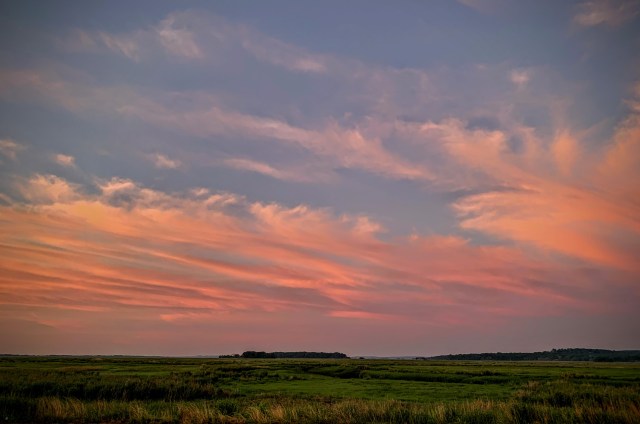
I don’t usually remember to look behind me, but this time I did. The color there was gentle, the clouds swirling and soft, without the hard bright edges of the too-bright-to-behold sun being delivered squalling into the horizon for the day ahead.
Sometimes looking back is uncomplicated and beautiful.





 Love in the Spaces