Tell me Why….

Aukerie, Iceland

“Tell me why….”

The generic three words appear in countless songs. Today, I happen to hear them in a (no-longer) boy band’s lyric. Improbably, that particular earworm began burrowing before the turn of this Century.

The tone and cadence in asking for an explanation of “why,” as with most communication, is important. It can be calmly delivered, or beseeching–even a crie de couer.

It can be inquisitive, and take us back to the wonders of the world as they begin to catch our young children’s attention outside infancy’s cocoon.

Why is the sky blue?

“Why do manta rays leap above the ocean?”

It can express the joyful wonder and bottomless despair of other unanswerable questions and pleas for explanation.

“How could I have been so lucky to spend this life with you?”

“Why him?”

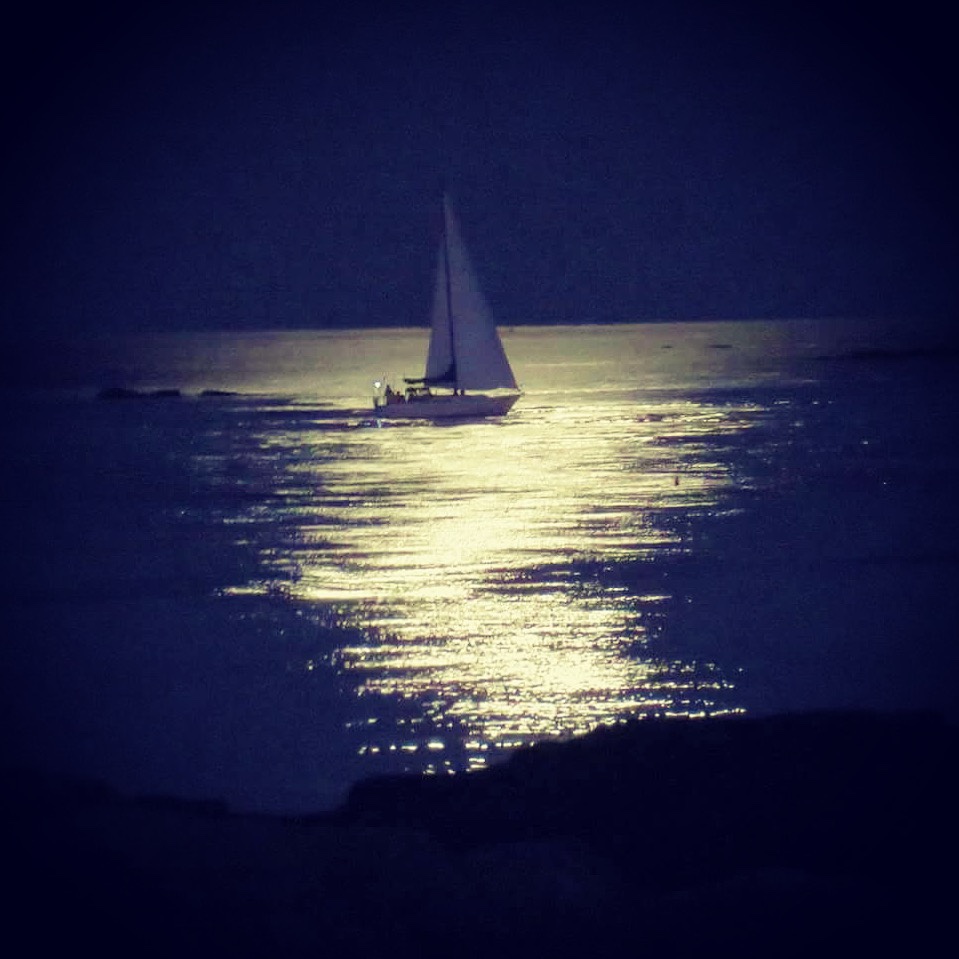
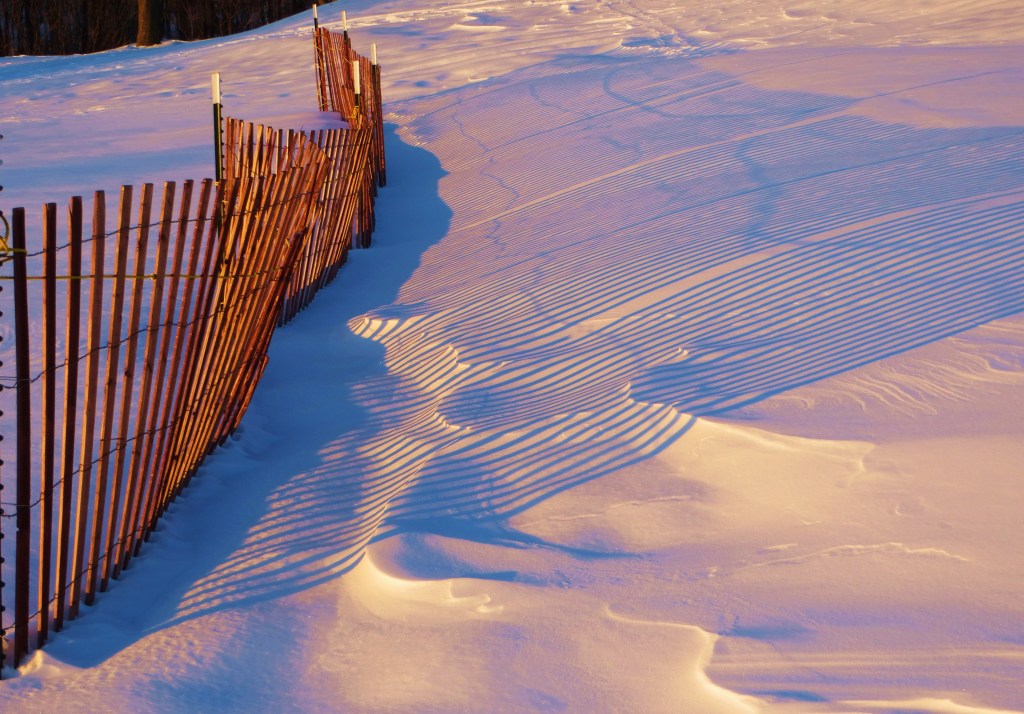
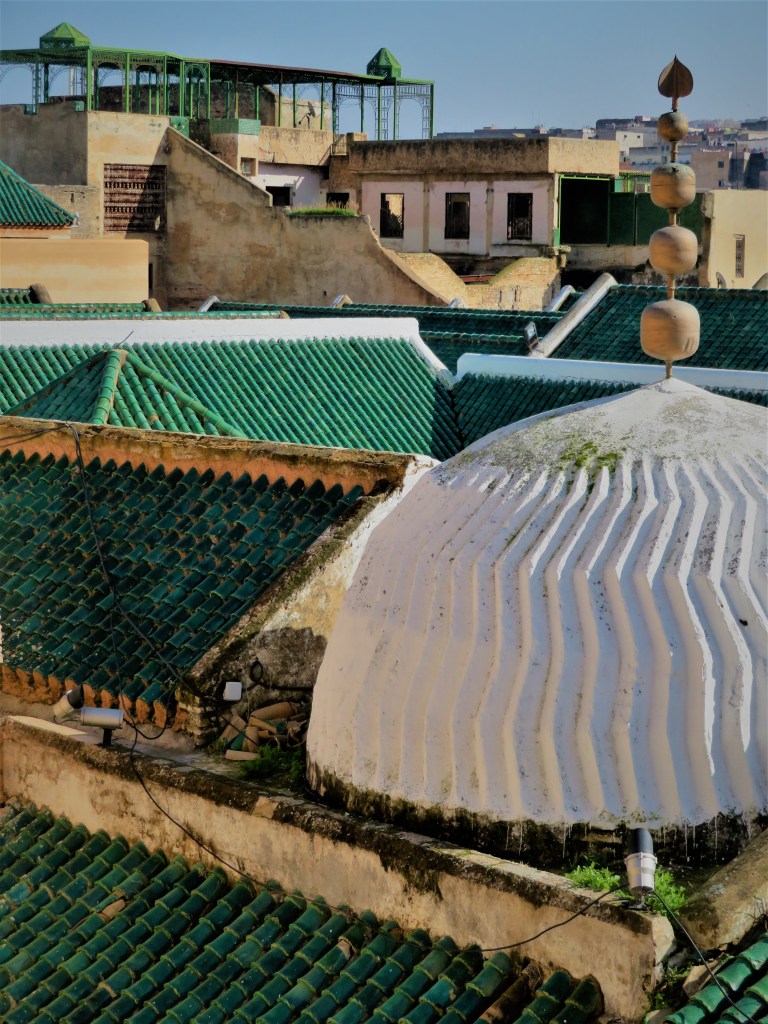
I’ve taken on the task of picking out a portfolio of ten photographs I most want to share, and the more formidable challenge of explaining my choices. I realized after selecting them that I took most of them while I was alone, at least among humans. The few exceptions were taken in countries and on continents far from my assorted homes.

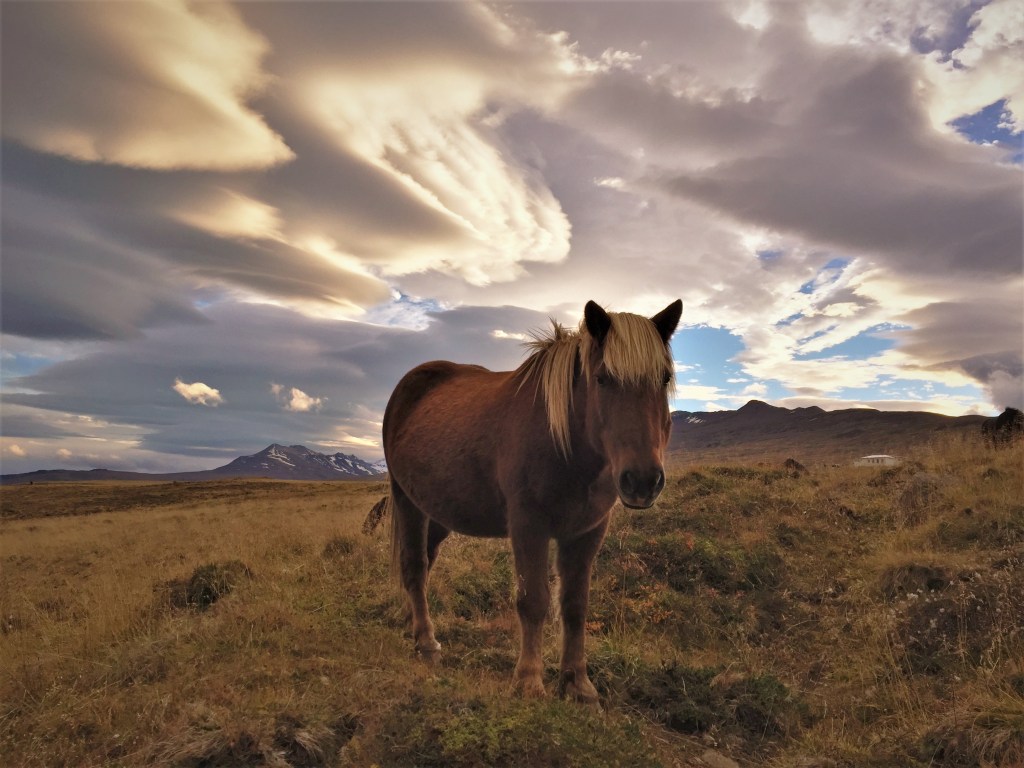
Above, an Icelandic pony was perfectly framed among lenticular clouds as the sun started to drop in Aukerie. I treasure revisiting the peace and beauty and even the pure air of that day.
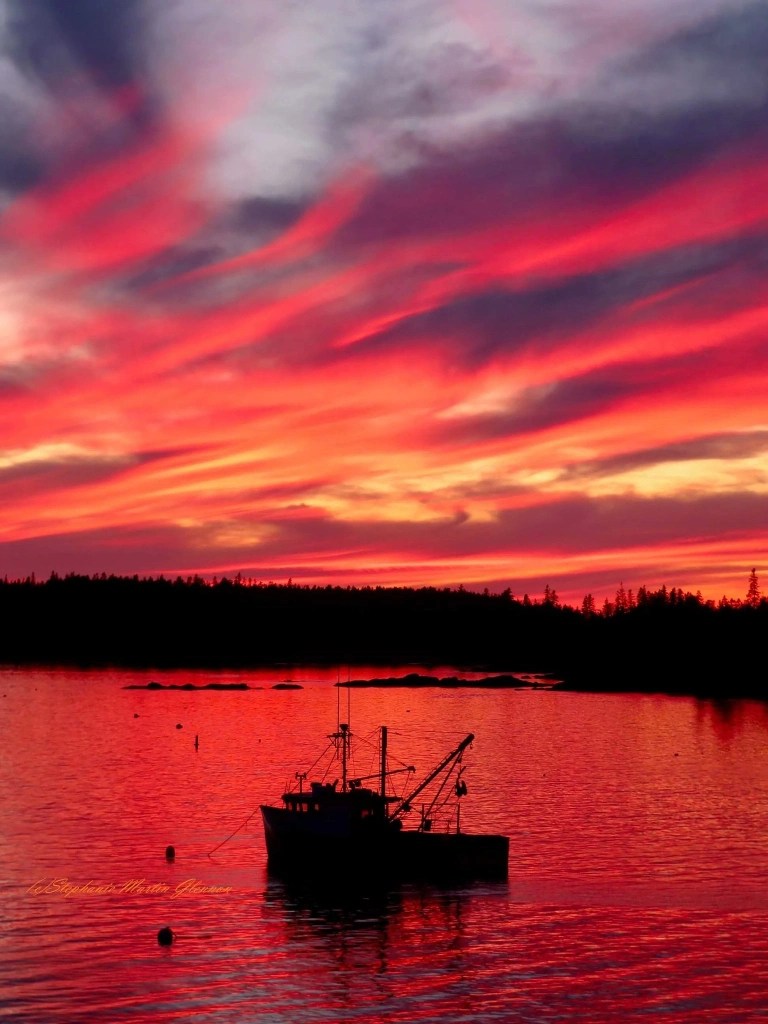
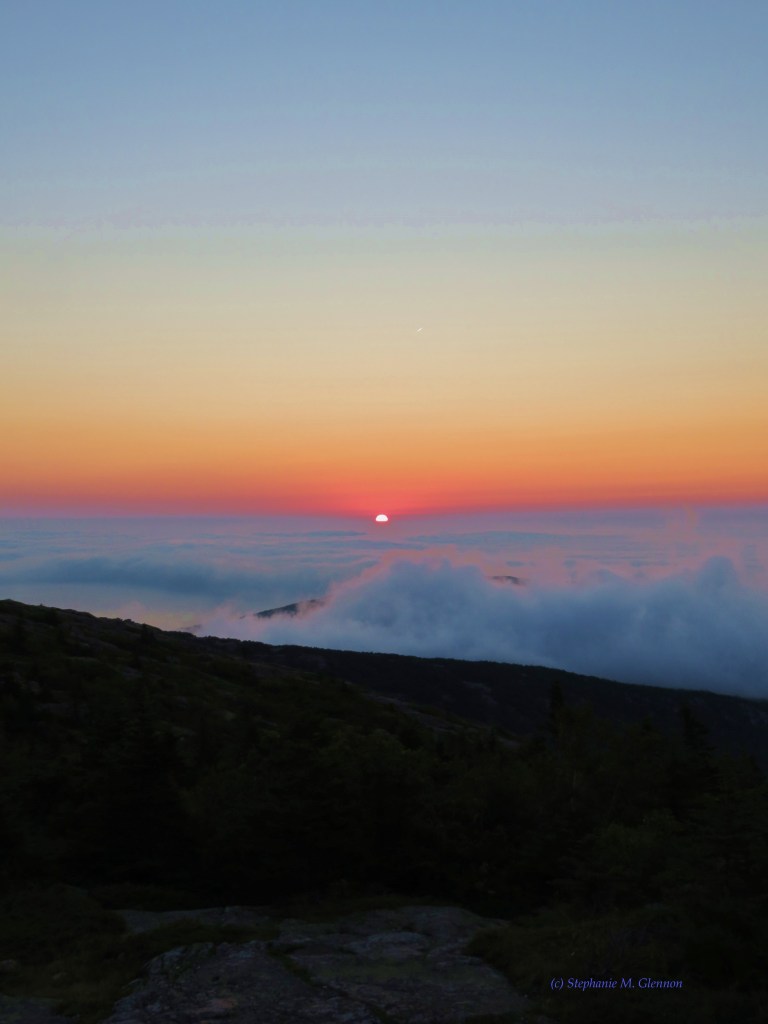
I was completely alone in Southwest Harbor for this astonishing sunset on Mount Desert Island. Acadia National Park was a very special place for my late husband and for our children as they grew. It took quite awhile for me to be able to travel by myself and be able to recapture more joy than melancholy there. I felt my husband’s presence as I took this picture, as I do every time I look at it.

An extraordinary ordinary palm frond towered above me, and calls me back to a cool night with regal birds milling all around. In the unseen background, the High Atlas Mountains formed ribbons of snow atop vivid blue peaks.

Each sunrise moment is an ephemeral work of art, there for us to keep and share and revisit in a photograph.
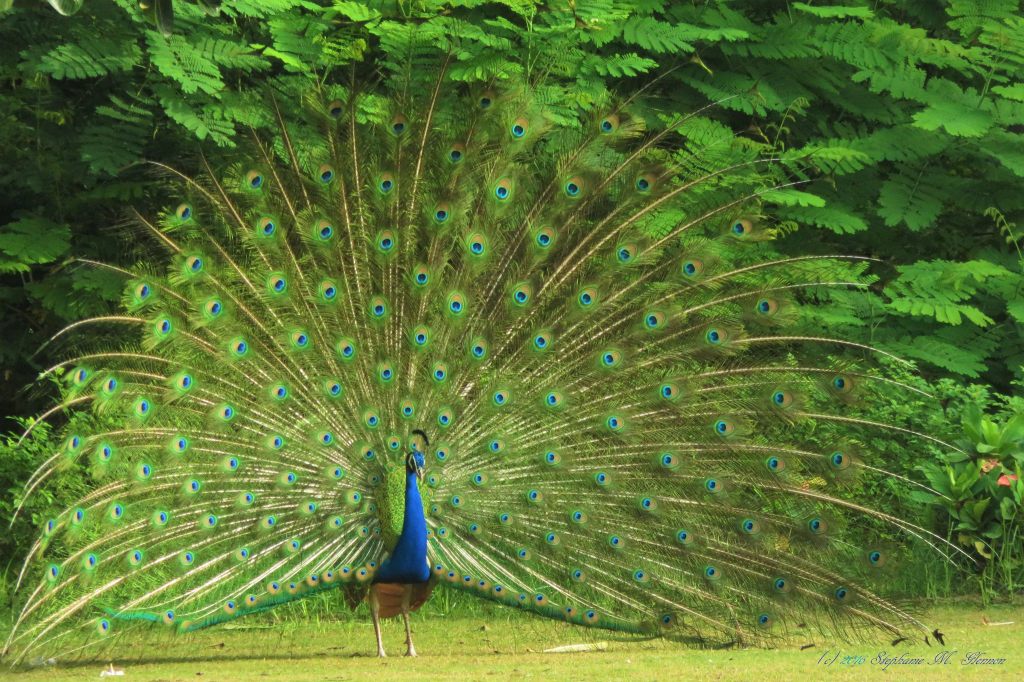
A return to deep greens and blues. . . . In New England’s coldest days, I can still feel the warmth and wonder of walking along a field filled with peacocks in Rajasthan, India.

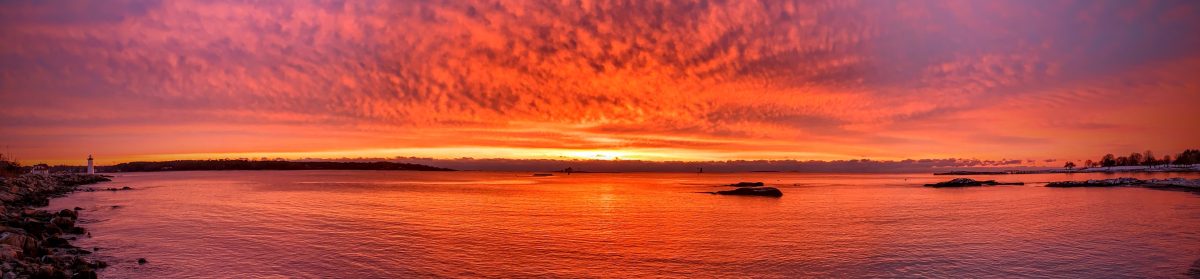
From the same spot in Newcastle, New Hampshire, one can see two lighthouses in two states, and endless permutations of light. This is one of my favorite glimpses of dawn.

A juvenile Kingfisher was my companion for sunset at the Artichoke Reservoir, a hidden jewel in Essex County, Massachusetts. The photo brings me peace; I remember how the sight helped me to breathe and settle my soul at a time of frantic medical issues in my family.

I’ve taken countless of Whaleback Lighthouse from two state’s shores. This one stands alone: without touching the picture’s natural color, it looks to me like a silkscreen print of sunrise.

A snapshot in a butterfly garden in Western Massachusetts preserved a butterfly taking flight, and the rich colors of a tropical forest in a distant part of the world.
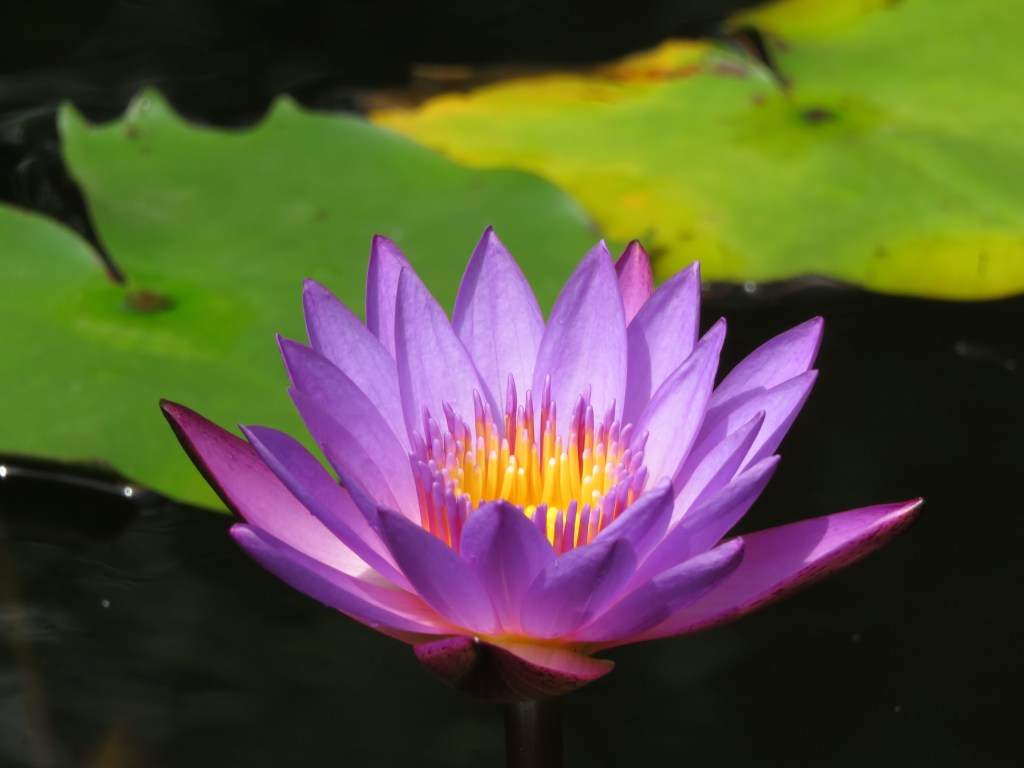
A single water lily… on a glorious day spent on another continent with one of my daughters. The simple shot carries me back to her, and to the sun and golden birds outside an ancient fort and museum in Jodhpur, the Blue City.
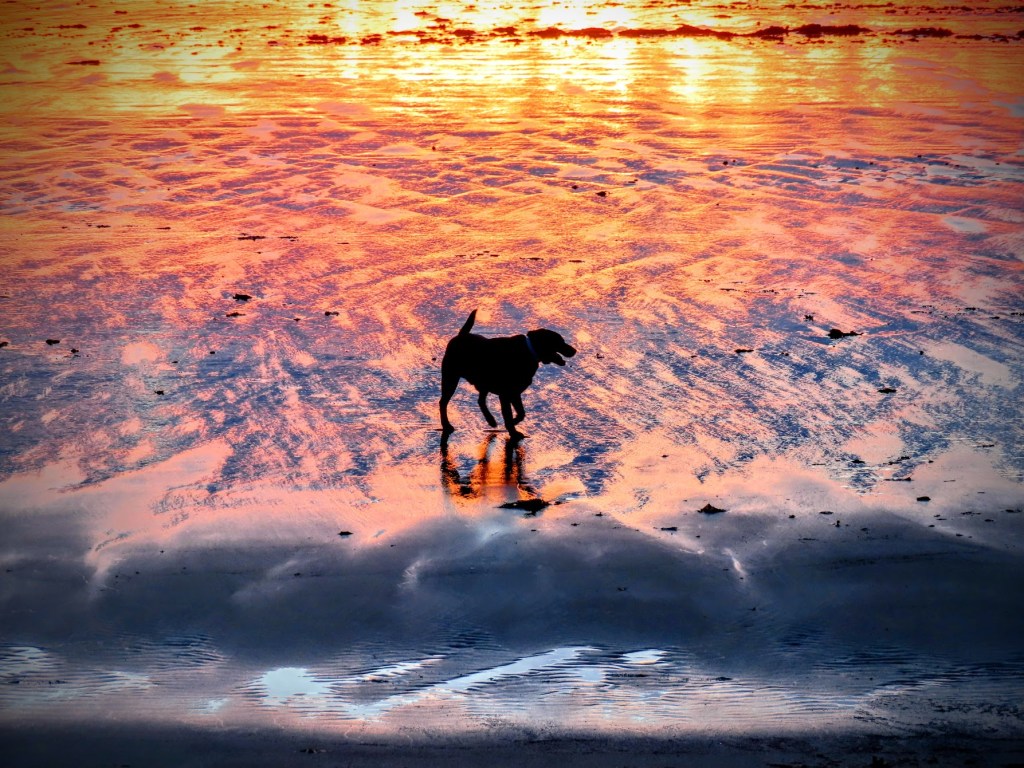
And I am sneaking in one more photo, the last I was able to take of the beloved and protective faithful companion of a sterling neighbor who contributed so much to every part of the world he occupied, and will be profoundly missed after leaving all too inexplicably soon. His handsome dog passed only weeks later, to join him in another view of such earthly wonders.

Primes of Life

I rarely photograph primary colors. I grew up in a household where paints were rigidly sequestered in their tubes and only sparingly dabbed onto precious watercolor paper. But outside, even primary colors are rarely static.

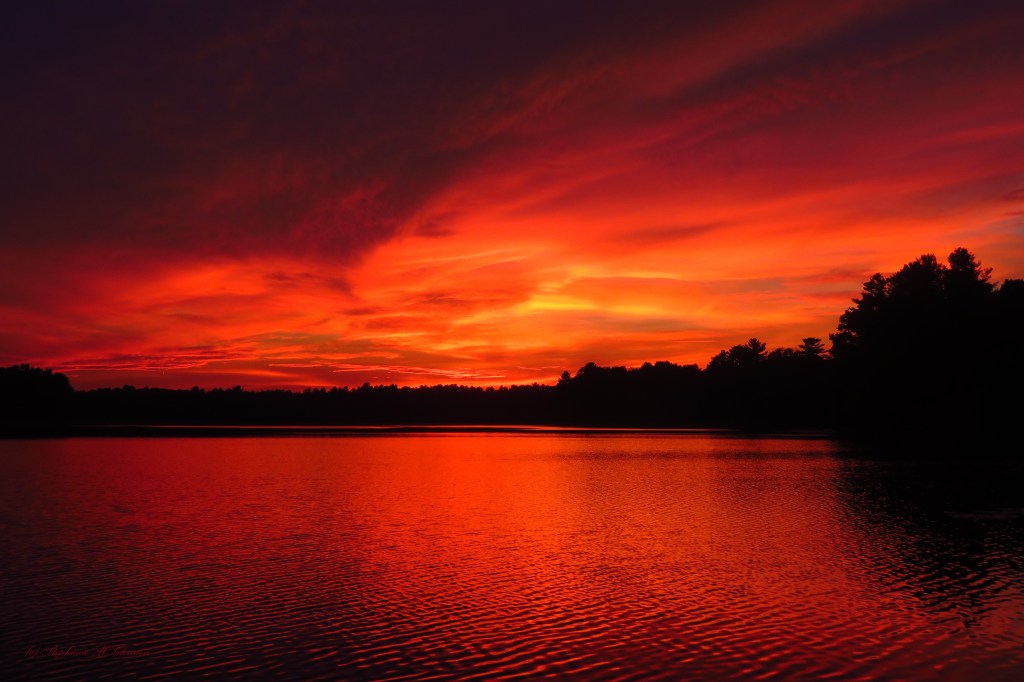
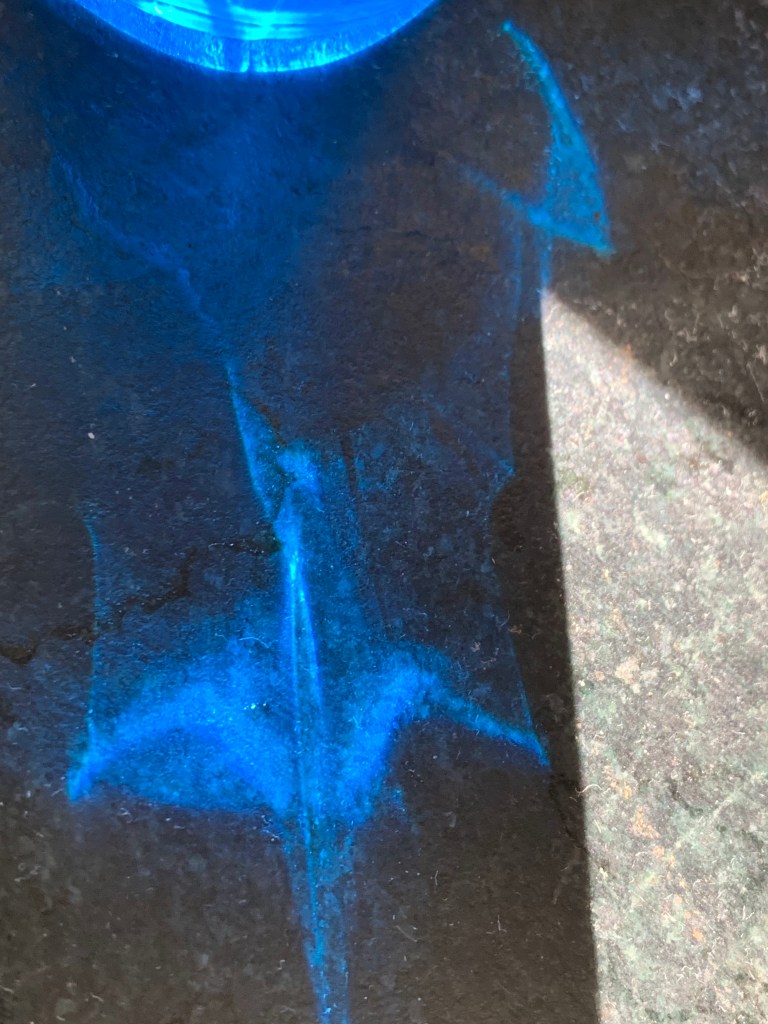
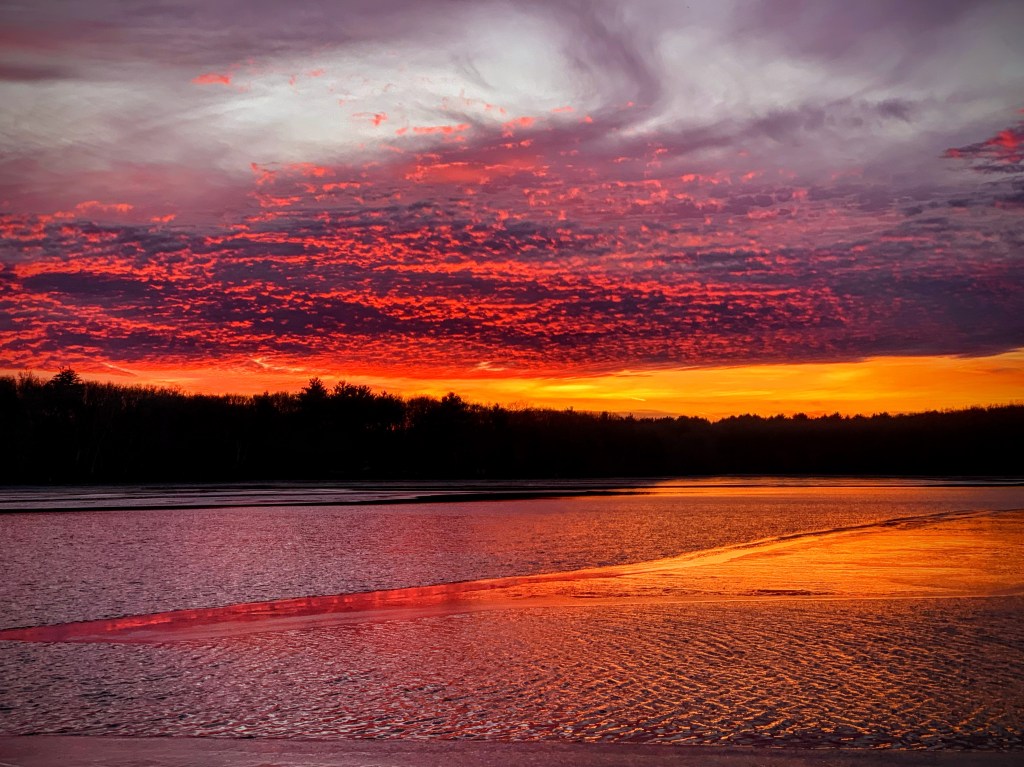
Of course, sometimes color itself is an illusion. Georgetown, Massachusetts’ reservoir is not filled with scarlet water. Portsmouth, New Hampshire’s colonial-era waterfront is not actually bathed in yellow. No ancient cobalt fish, nor any color at all, resides within the soapstone slab below; it is plebeian daylight refracted through dishwashing liquid.

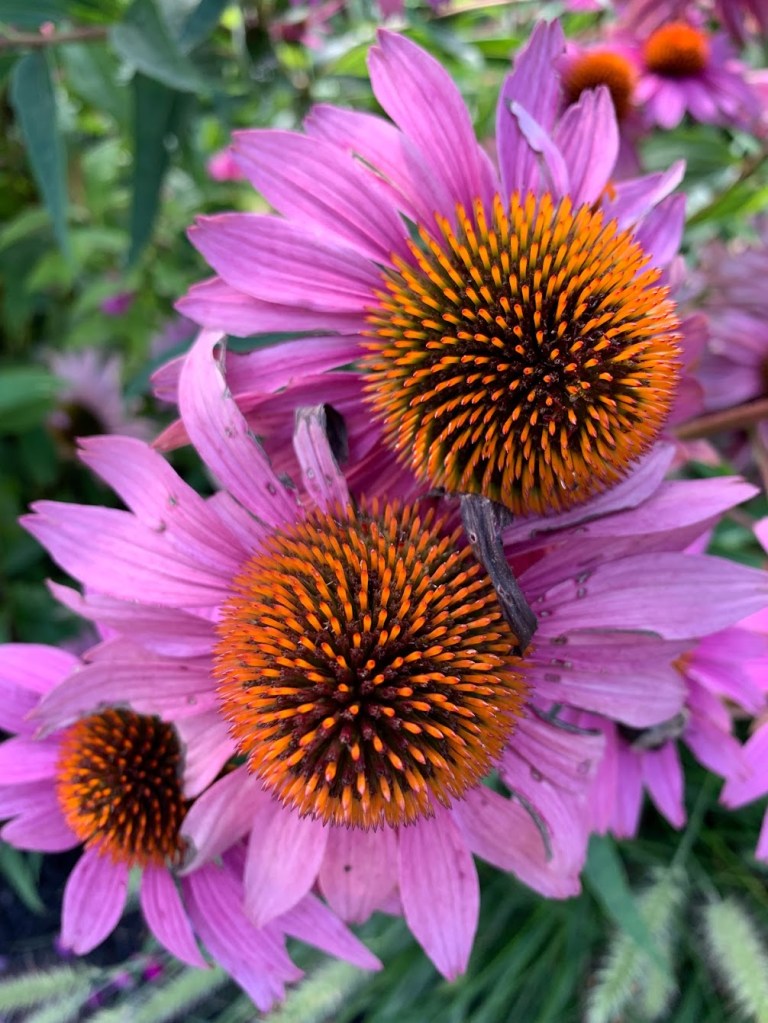
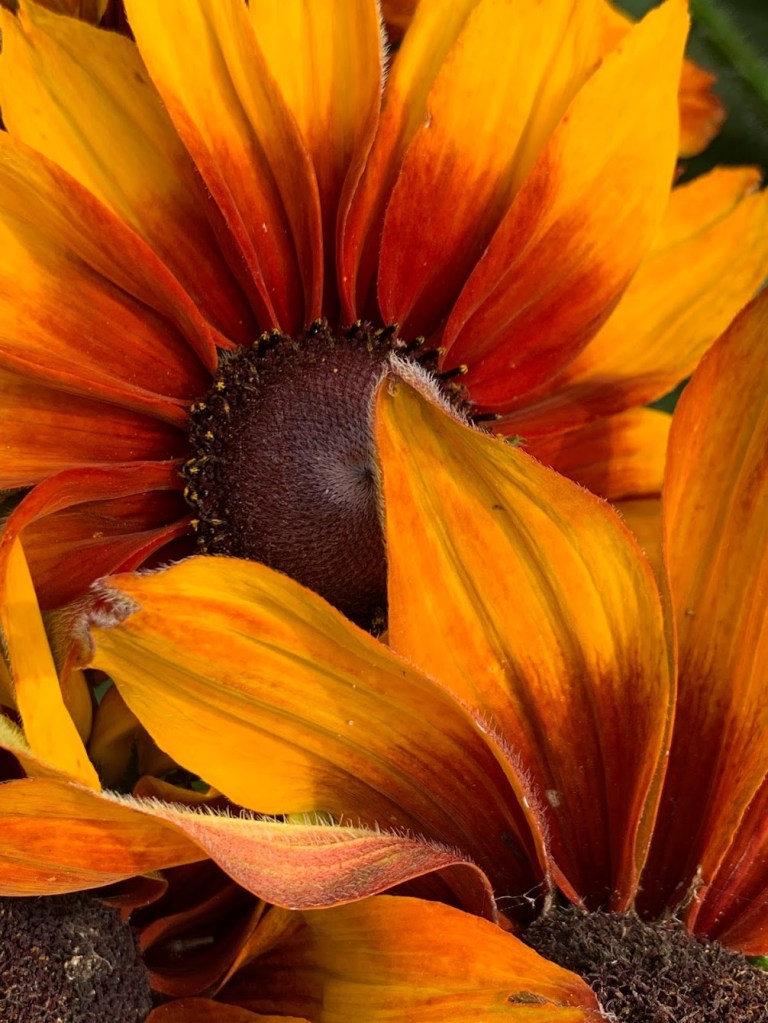
In general, I find pure and primary colors less interesting to capture. I’m drawn to gradations. To transfigured, quickly changing–even messy and decaying–colors all along each spectrum. One kind of magic happens as opposites on the color spectrum gather, in autumn leaves and gardens and water and sky.

And the changes are always worth waiting for. The slightest disturbance to a pure red sunset over water may turn it into strings of rubies over rippled black velvet, and to violet dragon’s breath clouds.

Looking Over

The more rarefied the vantage point, the rarer (and hence ordinarily overlooked) is the view.

I once followed waterfalls, hiking through woods to a mountaintop garden in New Hampshire’s Ossippee Mountain Range. The mountains were rendered in green at street level, but bathed in bright blue from on high.

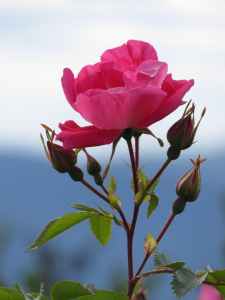
This rose stretched exuberantly at the Castle in the Clouds that Father’s Day. Like an outgoing youngest child in a large family, it launched itself above its brethren and refused to be overlooked.

It was not so very far from Mt. Washington, which my husband and I had tried to climb on our 15th wedding anniversary. Ultimately we had to give up on seeing the sights from the highest vantage point in New Hamspshire available to mere mortals. I had insufficient ballast, and was no match for fierce winds across a broad open expanse of rock. It was too difficult to hold onto my steady spouse, and I was nearly swept off the mountain’s face.

(The nearby Mt. Washington Hotel is sometimes mistaken for a very different overlook: The Shining‘s Overlook Hotel; I can assure you the White Mountains’ version is far more serene).

Sometimes I have found myself in thinner air, overlooking a golden world as the sun sets. Or walking through seas of swirling pastel clouds atop Acadia’s Cadillac Mountain, taking in the Northeast’s crown view of a rising sun.

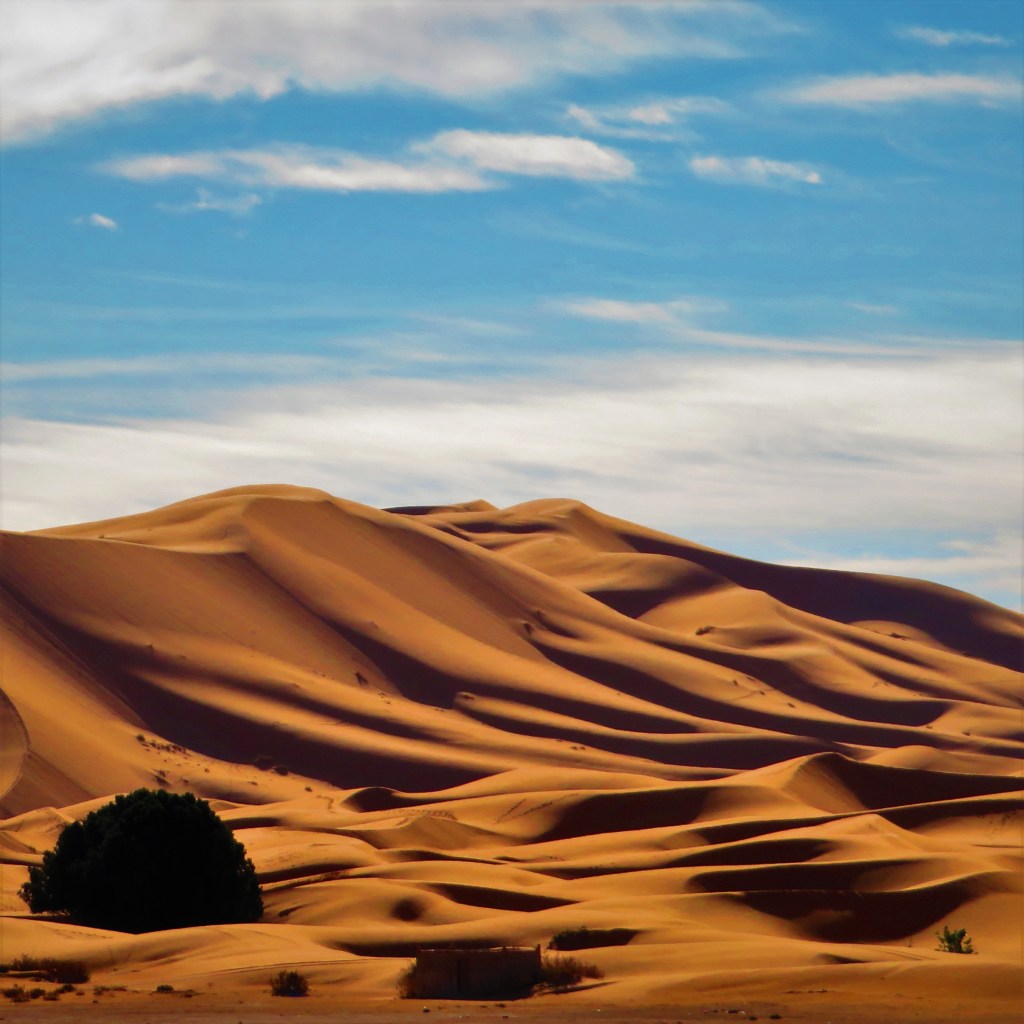
In more recent years, I’ve looked over land and sea and sandscapes from atop camels and towering dunes. From watchtowers and volcanic islands. I’ve surveyed ancient blue and pink cities and violet seas from slitted holes in stone castles and fortresses.

From a distance of many years, I realize I’ve found myself climbing ever-farther upwards on such days.

At dizzying heights, I feel closer to my missing piece. He frequently took photos from such spots when he was here with us, on “earth, our heaven, for a while.” Words I read from Mary Oliver’s “A Pretty Songat his service.

In some ways, we can best see what we’re missing from on high. Where the heady view is also heavenly.

A man looking out over the City of Lights with his daughters, not knowing it would be the last time. The same man on a Equatorial island cliff, knowing it was for the last time, and seeing the rarest of Pacific nesting birds.

One of my children recently told me of Sgùrr Dearg, where we earthbound folks may survey both very present Puffins and great swaths of the visible world from the Inaccessible Pinnacle.

If she climbs it someday, I hope she’ll send me a picture of what she overlooks.

Warp and Weft

Imperfect Reflections (c) SMG 2018

Movers could have unfurled the enormous Persian rug in one of two ways.

Once spread out, it fills more square feet than did our entire first apartment as newlywed grad students.

A symmetrical design falls away in layers from a central medallion reminiscent of a quavering diamond, outlined with both gentle waves and angled peaks.  The rug is distinctly in my husband Jim’s calm color palette: gentle golds, russets, and moss greens, with a smattering of milky blue. (I find that I gravitate to riots of color, at least when I surface from grief to come up for air.)

Over the years I have, heel-to-toe, paced these never-ending lines while preparing to argue cases, waiting interminably as my customer service calls were “escalated” up the line, and giving and receiving both good and Very Bad news.

After the not inconsiderable task of unfurling the rug in my newest home–now three full cities and one state distant from its original tenure with us–I saw that the movers’ serendipitous choice of where to deposit it has laid bare its deep flaws.

Some might have discarded this rug many moves ago.

Had it faced the other way, its mutilated corner would have been hidden from view underneath the cream-colored couch (which, of far more recent vintage than the rug, bears only a minor flaw: a sprinkling of puppy teeth marks) .

But now the abraded corner has been splayed for all to see, if they are in the habit of periodically looking down to see where they are going.

Patches of hand-knotted wool have entirely worn away; fringe has thinned to weary threads.

The selvage cannot be salvaged.

The manner of injury was inadvertent; the cause was over-watering (of a potted ficus that towered over me).

The venue was a more modern home, the sun-soaked slightly sunken living room, to be exact.

My husband made very few mistakes in his all too short years, especially when it came to living creatures.  But boy, did he over-water that plant.

The water, in turn, seeped through drainage holes in its large clay pot, and into a significant swath of the perfect new rug that was then our most expensive purchase in our years of marriage.

We did not actually notice this until we were almost ready to roll the rug up for a move to the old house he loved so much, where his earthly possessions would remain for me to tend to when we moved the next time, and the next.

The damaged portion is now a tattered island moored to the mainland by its underside, where it seems Jim fashioned a large rectangular dressing from carefully cut adhesive strips of silt-colored paper.

Over the years the adhesive hold has become more tenuous; fissures have developed, revealing ragged shallow ridges of scored, carmelized once-sticky paper which poke through the surface like baleen teeth.

The rug’s measurements are the same, but  it is off kilter.  Perfect symmetry is a thing of the past. It’s as if only this portion of the rug has aged–badly, in the way too severe a shock robs a body of its power to entirely heal.

Even in the dark, this damage would make itself known by the gentle crinkling sound the paper dressing still makes when a foot or paw treads even lightly upon it.

I have left the rug that way, not simply because it is far too weighty for me to move.  It is right at my home’s threshold; if you enter and simply glance down you will see it, cross over its threadbare glory, and perhaps contemplate its story.

It was pristine when it came to us.  Jim purchased it after careful appraisal, and with some consternation about the price–more than we had paid for any car we’d purchased, and four times the entire semester’s cash he’d carried as a college freshman–in the dog days of  August.  Our first baby was in my arms and a welcome breeze came in.

For awhile the rug was the only furnishing in our living room.  In the only shaded corner was a large stone fireplace where we posed our perfect baby boy in the tiny Santa suit his Aunt Liz gave him before he was born.

A year later, I sat on it in a room still bereft of furniture , and baby Sam gently patted the belly under which his brother dwelt.

After we had next moved, by then with three preschoolers, we returned to the empty  house for one last visit.  Our smiling sons sat on the two low wooden steps into the living room, where our seated toddler daughter’s image was reflected in the gleaming wood floor.

I have noticed, only in retrospect, that once we became parents Jim became more of a caretaker to all living, growing things.   He brought the ficus home shortly after we brought home our firstborn, and surrounded our homes with bird feeders which he carefully maintained.  Over the years he planted and maintained flowers and bushes and trees and grew berries and vegetables he readily sacrificed to wildlife visitors, rather than safeguarding in a way that might endanger critters emerging from surrounding woods. He even enlisted and supervised less complex organisms, tapping maple syrup, tending to sourdough bread starter, and brewing beer.

He maintained bird feeder cities, tending more meticulously to their culinary sensibilities than I ever was capable of when attempting to sate our humans and beagles.

Perhaps it is needless to say I am not such a fan of perfection.  Maybe it’s just a chicken and egg proposition, as I have never been close to that mark.

I now have another, far smaller rug that appears to be perfectly symmetrical.  I acquired this magic Mughal carpet in Uttar Pradesh, where one of my daughters and I saw such rugs being hand-made.  Unlike the damaged rug at my home’s threshold, its asymmetry is well hidden but complete: due to the arrangement of its warp and weft, from one side it is deep sapphire, and from the other a steel blue-gray.

Little in life satisfies the human impulse to see and seek beauty in perfect symmetry.  And among what is worth holding on to, few things are unscarred.