Vanished Air


“Ibis Ascending,” Garden of Peace, Boston, Massachusetts

. . . you are much more than simply dead/  I am a dish for your ashes / I am a fist for your vanished air….

                                                              Charles Bukowski, “The Unblinking Grief


Ten years ago today, at 12:52 p.m., give or take a minute-without-end, the surgeon pointed to a scan I would not have looked at even could I have seen it that far across the windowless white room.

“This is your tumor,” she said to my husband, whose keen eyes would have immediately absorbed the labyrinthine contours of his inoperable pancreatic tumor.

Some of the things he did next, knowing what he knew as as a physician, have puzzled me for most of that decade.

I instantly knew there was no hope: he would certainly die within months, as he did.  But at times he seemed to think otherwise. 

I now know I had framed and answered the wrong questions.

In the past year I’ve found clues in the strangest places.

******
Garden of Peace

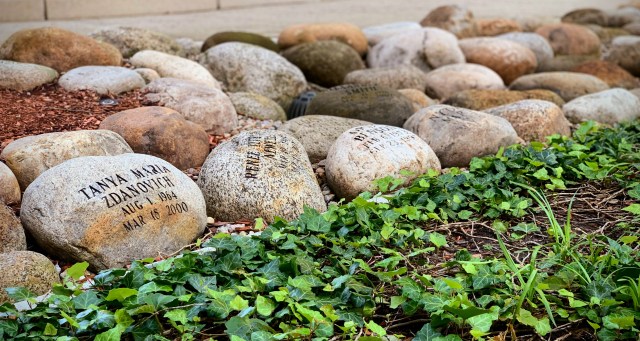
Within a city block in Boston, on two sides of a magnificent courthouse I was drawn to even as a kid–and in which as an adult I have for decades argued to uphold first-degree murder convictions–are two dedicated gardens.  Only one contains flowering plants.

The other is made of stone.  

I’ve never encountered another soul in either.

The Garden of Hope is dedicated to cancer patients, and to curing cancer.  Visiting it makes me feel ineffably sad.

The Garden of Peace is dedicated to homicide victims.  Stones are engraved with their names and dates of birth and too-early death.  Water circles through from a granite orb, representing the weight of grief resting with victims’ survivors.  Visiting it gives me hope. 

In the space between them I may have finally come upon some answers.

*****

Within an hour of his out-of-the-blue diagnosis, my outwardly robust, healthy husband sat in the Lahey Clinic’s expansive lobby, reading journal articles on his laptop about pancreatic cancer.

I pressed myself against an outside stone pillar far broader than I, my skin feeling as if it were steaming from the day’s heat, and wept.  I, distinctly not a physician, immediately knew there was no hope: he would die, soon.  As he did.   

He knew exactly what his protein marker levels spelled out.  He knew how dire the meetings ahead would be.  He knew what the oncologists would say.   

I didn’t grasp the medical in-between, but the stand-still second I heard the diagnosis I absolutely knew the end.

When it was time to go back inside and accompany him to a PET scan he closed the laptop screen, calmly looked up at me, and said, “Whatever happens, it looks like I’m going to need an extensive course of chemo.”

Already, I had trouble computing what he was saying.  What’s the point, I thought, but did not say. 

And I continued puzzling as he subjected himself to ghastly side-effects from twelve-hour infusions of chemotherapy drugs over the rest of the summer.  He must have known they wouldn’t help.  Nurses were swathed in full PPE so as not to come into contact with the poisons they were injecting into his port,  turning his tongue to cotton with which he could not form words, leaving him nauseated and too exhausted to move, sometimes sleeping 20 hours a day, turning his hair white, casting a dark spell that made taking a sip of cold liquid like swallowing broken glass.

I would wander aimlessly around the chemotherapy wing; when not piecing together angel puzzles I would gaze at the same photographs and posts and calendars with something approaching….anger: they were always of and about survivors, always about those who would live.  Survivors’ Poker Night, Survivors’ celebratory Banquets.  Nighttime meetings for survivors of different types of cancer.  Bright ribbons of different colors, but nothing rendered in black.  

Nothing for those without hope of  “getting well.”  There isn’t even a Hallmark card for that.  

The physician-patient’s own physicians wouldn’t bring up hospice care.  When I mentioned it to his oncologist, he nearly fled the room, murmuring how good my  assuredly dying husband still looked.  Eventually, during an emergency admission when he had only weeks left, and after I’d made multiple requests to the floor staff for a hospice referral, Jim picked up the phone in his hospital room and referred himself for end-of-life care.  

Through this brutal, fruitless treatment, the tumor did not shrink.  Its cells had spread to his liver, likely before he had been diagnosed.   His pain was indescribable. 

Why was he putting himself through this?

By the time November arrived and we were hastened out a Master of the Universe surgeon’s examining room door and into the dark with a dismissive, “Good luck,” even my husband’s human and humane doctors knew no additional course of treatment was to be ventured.  He promptly, joyously, planned his dream trip with our children.  As he finalized the details he paused. I asked him why. 

“I’m wondering if I should get insurance for me.”

Again, my mind, flashing to the $82,000 bill for two vials of a single post-chemotherapy drug, did not compute.  “We have insurance.”

“In case I die there.” 

In case we had to bring back his body, I then understood.  I had to look away.

Uncharacteristically, he briefly balked after computing the final numbers.  I voted “no” on trip insurance.  He told me how much it would be to take the six of us on the necessarily short-notice last family trip–well over what my paltry public servant’s salary would  thereafter  allow.  “It’s going to cost a lot.”

“Oh yes, we are going,” I heard myself saying.  “I can always get a second job later.”  We understood what “later” meant.  

*******

It was only this winter, nine years after my husband’s death, when I began to understand why I remain so unsettled by the Garden of Hope, yet take solace from the Garden of Peace,  which takes death–almost always sudden and violent–as its starting point.  

I have far too narrowly understood what hope is, raging against reality and unable to release my own grievance against the universe for not including my husband among those who could ever have hoped to be cured.

I lost hope because I shared that narrow view of it.

Jim never once lost hope; he seamlessly and instantly recalibrated it to whatever reality he encountered. 

He was never in denial; he completely accepted not only what he faced, but what we  who have to carry on did. 

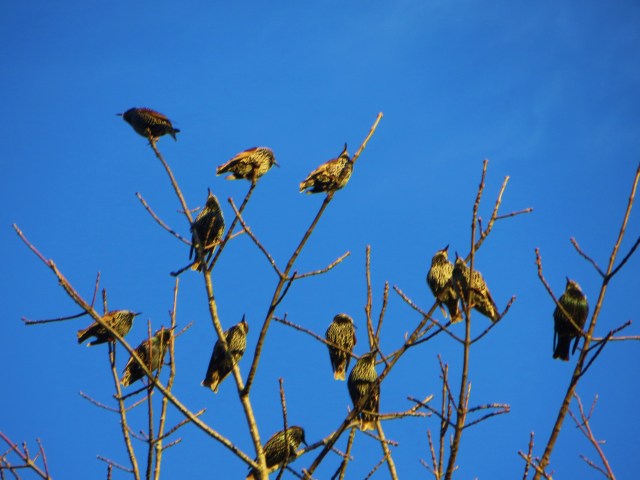
He didn’t sign up for those horrific treatments because he expected to be cured, or even feel any better, but maybe he thought it plausibly could get him just enough time to see one of his children graduate, or move his daughter into her freshman year at the school where he and I met, or climb another mountain, or take photographs of a Darwin Finch.  And he did climb that mountain, and he did take those pictures.  And as tired as he was, both were glorious.

The recalibration of hope came naturally to him, and is always possible.

But I still have a lot of work to do.


.  
 

Jubilation in Unlikely Places

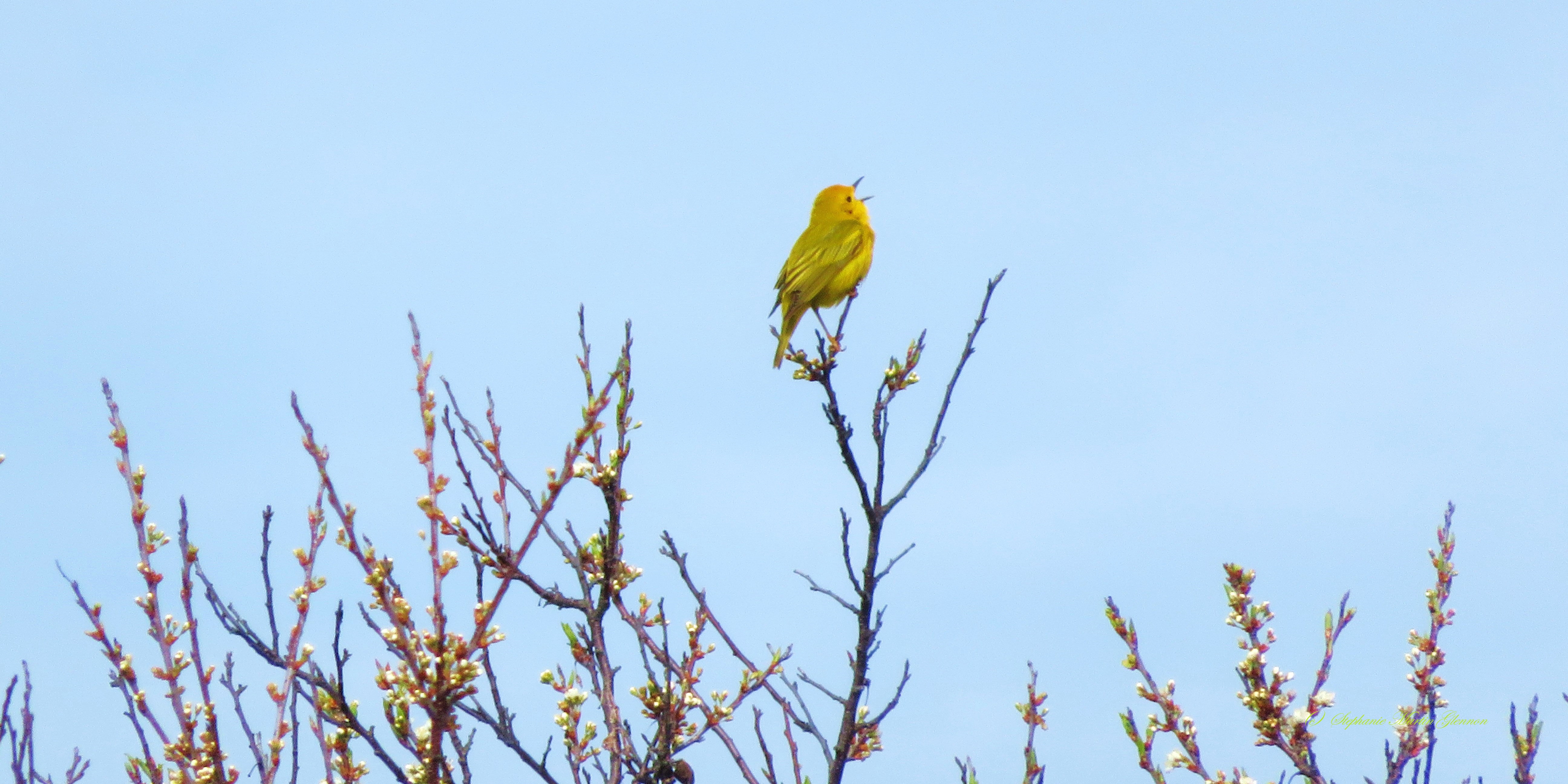
singingyellowbird

What does jubilation look like?

Does it look the same to the grieving as it does to those not mired in grief?

Jubilation is different in kind, and not merely in magnitude, from happiness–and happiness itself may seem out-of-reach to those who long for the lost.

(I do not think “jubilation” meant what “Cecilia’s” lover thought it did; in context, he seemed merely to have been besotted by her sporadic company.)

To Frederick Buechner, jubilation was joy, a “dance of unimaginable beauty.” He saw happiness as merely a pale byproduct of “things going our way, which makes it only a forerunner to the unhappiness that inevitably follows when things stop going our way, as in the end they will stop for all of us.”  He points out that the Last Supper was eaten with knowledge of Jesus’ impending death, and as an occasion “was in no sense happy,” but nonetheless was an opportunity for him to express, without irony, “that my joy may be in you” (John 15:11).

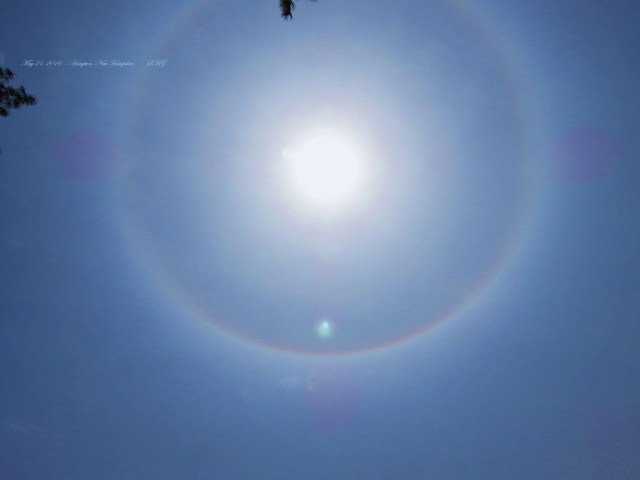
Today I saw jubilation in what may seem the unlikeliest of places, including a cemetery where dozens of people gathered around a headstone, linked our hands in a large circle, then looked up to see our earthbound configuration echoed directly overhead in a perfectly round rainbow that lingered until we let go.

227


On my still-healing leg, I walked with a fellow widow whose friend’s family had organized an event honoring a brother who died from pancreatic cancer, the same hideous disease that took my husband from us when he was barely out of his 40s.

One sister had made a wall of photographs selected by people who loved others who had died of cancer.  Each one of of those faces radiantly smiled into a camera, and it was impossible not to smile back at the memories of pure joy captured forever and chosen to introduce our loved ones to people they had never met: one young man cradled the smiling baby son who would turn one just before his father died; another, on a canted surfboard, caught an enormous teal wave; a woman smiled from underneath a wool winter cap; my Jim grinned as he soaked in the sun at an outdoor Richard Thompson concert. (No one other than the two of us could have dreamed he was terminally ill, and his fanny pack contained a continuous infusion of chemotherapy drugs plugged into his implanted port, underneath an orange T-shirt.)

I realized that no grief dwelled in these pictures of those for whom we grieve.

These were pictures of jubilation.  Each face and stance expressed complete joy in a moment, unfiltered by the tears and longing of the living who gathered today, or the weight of their survivors’ memories of their illnesses and pain.

“Joy,” Buechner wrote, “does not come because something is happening or not happening, but every once in a while rises up out of simply being alive, of being part of the terror as well as the fathomless richness of the world…”

During that last outdoor concert before he died, Jim was not thinking one whit about his cruel affliction.  He was feeling the late summer sun’s warmth, enjoying a cold bottle of orange juice, listening in a lawn chair at sunset to one of his favorite performers, playing one of his favorite songs.  He was jubilant.

“You can go with the crazy people in the Crooked House
You can fly away on the Rocket or spin in the Mouse
The Tunnel of Love might amuse you
Noah’s Ark might confuse you
But let me take my chances on the Wall Of Death….”


Why I Hate “Bucket Lists”


168


The term “bucket list” appears to have originated as a type of sorting algorithm in computer programming.

Since an eponymous 2007 film, it has come to stand for a checklist of things to do before one dies.

In any bookstore you can find tomes consisting of lists of things to do before you “kick the bucket.” Fifty Places to See Before You Die, or 100 pieces of music to hear before shuffling off this mortal coil.   A Hundred Books to Read before commencing to pine for the fjords.

Of course there are places I’d like to go with my children, and adventures I hope to be able to share with them.   I’d even like to be the kind of person who could parachute out of a plane or zip line through a rainforest, but none of my hopes and dreams in this life consists of solitary indulgence.

My problem is with parading around with “bucket lists”; I recoil from their premises.

Why? Continue reading “Why I Hate “Bucket Lists””

The Rusty Nail

Galapagos_101221_225

It is Jim’s birthday.   The last birthday he spent with us fell one month, to the day, after the November afternoon when we learned my husband’s illness was incurable.

It has been said that by one’s 50th birthday, one has the face one deserves.  Jim, barely into his 50s when diagnosed with pancreatic cancer, had a classically handsome, serene face.  Gentle humor, occasionally with a devilish edge, was always there.

This was the face he always will have, the way I believe I’ll always remember it, with uncanny precision.

He did not reach–not nearly–the old age that Simone de Beauvoir described as “life’s parody.” His story walking with us ended with the “[d]eath [that] does away with time,” that “transforms life into a destiny: in a way it preserves it by giving it the absolute dimension.”

(Nor did he live to see the face I would have at fifty–although he would have loved me even if it proved an artistic disappointment.)

Every day is an anniversary of something meaningful to our family, but there seems something extra fraught about the anniversary of a birth and of a death.

The day his beloved parent died, and from which his life unwound, the character who voices The Goldfinch noted “used to be a perfectly ordinary day but now it sticks up on the calendar like a rusty nail.” The author revived the simile 749 miraculous pages later, musing about the multitudinous kinds of beauty which will become leitmotifs in different lives: “The pieces that occur and recur.  Maybe for someone else. . . it wouldn’t be an object.  It’d be a city, a color, a time of day.  The nail where your fate is liable to catch and snag.”

(In the novel, at least two lives become derailed by one painting of a small bird.  Is it a coincidence that its provenance is absolutely settled by two small nail holes visible only from the back of–and only by one who possesses and handles, out of its frame–the eponymous masterpiece?)

Another character understands that “beauty alters the grain of reality,” and the protagonist sees some acuity in “the more conventional wisdom: namely, that the pursuit of pure beauty is a trap, a fast track to bitterness and sorrow, that beauty has to be wedded to something more meaningful.”

What does any of this have to do with a birthday?

It began with a bird.  (And, to be fair, I’m taking some decent medication; this post may make absolutely no sense when I re-read it.)

For Jim’s birthday post, out of all the photos in all the gin joints in the world, I picked one of a Galapagos dove.  My picture is blurry, but it captures one of the most beautiful things I have ever seen.  Just three Decembers ago I was with Jim and our children when we saw it; he took his own stunning, clear photographs and I am smitten with those, too.

The dove moves across time, taking me back to that moment when every sense absorbed this creature’s beauty in its equatorial setting, when neither I nor even Jim–despite what he already had endured and what was soon to come–felt any pressing physical burden. The dove also somehow springs forward in time, as if it were in my line of vision right now, instead of today’s icy reality of a winter storm and a wracking muscle spasm.

I have realized since taking this picture that, especially after Jim’s death, I began looking for birds everywhere.  Apart from our children, little seems as artful, as beautiful, as alive for the ages.  I sought and still seek out these fleeting, singing, sailing creatures.

As The Goldfinch’s narrator discovered, “between ‘reality’ on the one hand, and the point where the mind strikes reality, there’s a middle zone, a rainbow edge where beauty comes into being, where two different surfaces mingle and blur to provide what life does not: and this is the space where all art exists, and all magic.”  He continues: “And–I would argue as well–all love.”

Our lives become caught on assorted nails . (In Jim’s voice, I hear, “You say that like it’s a bad thing.”)

Zooming in on a memento, or on the pixels or painting or other rendering of an original, we see the stunning color, the patterns, the movement, the life that existed as of one moment in time; “Step away, and the illusion snaps in again: life-more-than-life, never-dying.” From a distance, in time or space, we see the unseeable: layers underneath protective or careless coverings, beauty of one kind, preserved or worn away.  Even when something has deteriorated or completely changed shape, we can see stories and history, life and love in what’s no longer to be found or seen in the traditional way.  

In flesh, feather, and delicate bone, my dove likely has long soared from this mortal coil. But there he is.  A blur from purposeful forward movement on black-tipped coral feet; a dab of yellow and a streak of vivid magenta above earth-toned wings, as if he has brushed against a freshly painted canvas; animated open eyes.

Pulling back, he is part of the landscape where our family took its last trip, part of an enduring species found only in such warmth and isolation, a majestic messenger among the creatures whose sounds I listen for every day.

A year ago on Jim’s birthday I spoke aloud to our beautiful beagles.  They listened.  I did that a little bit today.  But just after midnight, when the calendar called up December 10th and frozen rain tapped like weakened woodpeckers against black windows, I spoke aloud to the magical intersection between past and present.   It’s your birthday, I began. . . .

Perhaps I was revisited by that narrator who understood how our lives become entangled with some enduring facet of beauty and love and never let it go.

“Whatever teaches us to talk to ourselves is important: whatever teaches us to sing ourselves out of despair.”

sunset 013