The Artist’s Frame

I confess.

This little fellow’s been framed.

Not in the sense in which that characterization is made in my line of work, but in many other ways. Framed so he seems to pop out in bas-relief against a cloudless powder blue sky. His vivid, sharp-edged wintry colors seem to propel him towards the viewer as he bows away from a filmy floral bokeh. On closer inspection, one frond has broken clean through at its elbow: another hint of the season.

He’s frozen in time and space by a rectangle of sky so constrictive that he appears to be craning against and breaking free of its confines. Looking inquisitively down and out of the frame in which he was forever captured.

Only I can tell you who was on tip-toes on a Maine oceanside path on that long-ago morning. Chin tilted up to return this wee Flying Wallenda’s side-eyed glance as he balanced on a crimson frond.

My fingers were so cold they felt welded to my camera. My winter shots tend to be far sparer than the unending rectangular frames which entomb other seasons’ scenes.

In every season, each image’s framing allows viewers to fill in the blanks, based on contextual clues. These may be as concrete as deducing the months in which a given bloom is likely to erupt and flourish in New England. Or as abstract as interpreting a wavering pattern reflected in slightly rippled water on a cloudless day.

Strangely, I’ve written about absent lens artists’ frames more than once before:

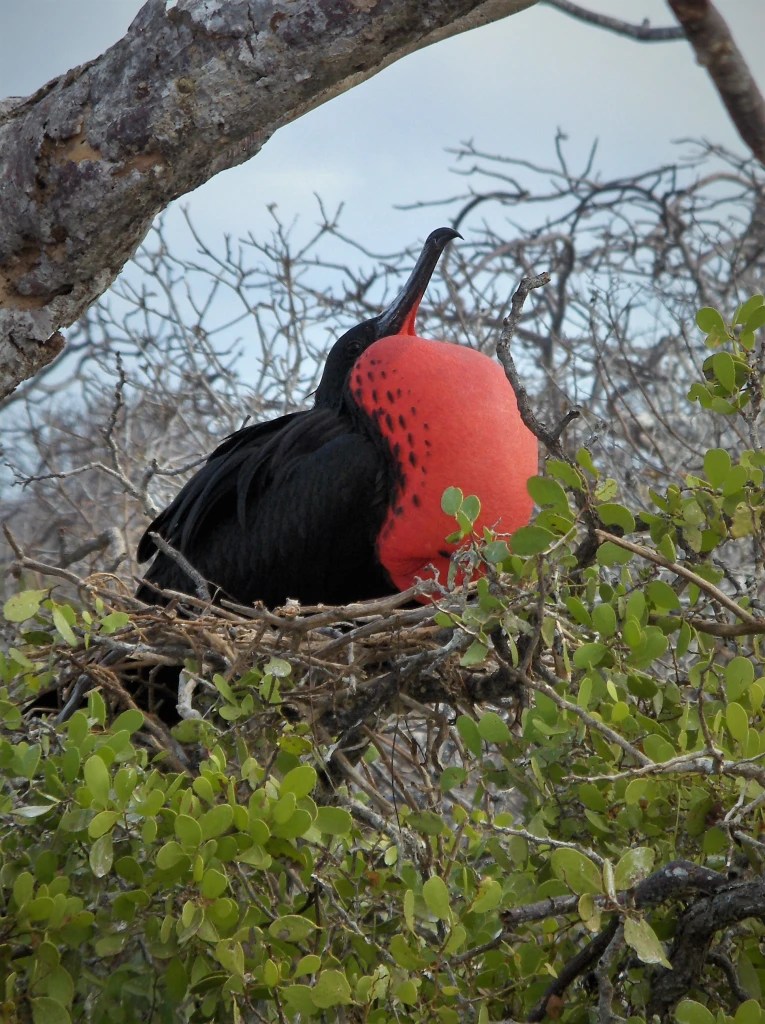
Both within and outside the frames [my husband] Jim created each time he sparingly clicked his camera’s shutter, there was love. This was not anthropomorphism–although the scene as female frigates gathered around a scarlet-throated male echoed what I understand to be the premise of a reality show involving the distribution of a limited number of roses.

Inside each frame is something Jim loved and preserved about his window on this world: its brilliant colors and creatures, plants and geological formations, and the spectacular beauty of sights he had never seen before and never would again–at least from this earthly vantage point–on all that grows and erodes and decays and grows again around us.

On the other side of the lens was a man relishing everything about a trip he knew would be his last, with the family he loved and will forever love him. Each of his photos can transport us back to the warmth of that sun, the sounds of sea lions, the feeling of being able to reach out and touch his arm or the back of his shirt as he found himself among winged and earthbound creatures near the end of the visible world and his time in it.

The artist’s frame allows the viewer to recapture the world it holds. It also allows us to see the artist outside of each preserved moment, whether capturing something real or imagined, aspirational, or merely magical . . . .

Art travels in time, sometimes even more readily than we do.

The Company of Ghosts
My winter bird, like my husband’s winter dove and frigates in another hemisphere, surely is long gone in traditional corporeal (and photographable) form. Parca’s creaking scissors have been wielded mercilessly since then. Glorious flighted birds are now pining for the fjords. They’re off the twig, having joined “the bleedin’ choir invisible.”

But he’s also still framed here for you to see and imagine this once present soul, engaging with another being on an icy winter morning.

In the penultimate scene of a five-season show centered on a family mortuary (avert your eyes if you don’t want a spoiler), an artistic daughter takes a photo of older family members seeing her off as she leaves home for the opposite coast. She is a true photographer, and is deliberate in what she seeks to capture in each frame.

Her older brother appears at her side, from his side of the veil, and gently tells her: “You can’t take a picture of this. It’s already gone.”

And it is.

But it’s also still with her, and anyone who truly studies the way she filled her frame.
Past Contrasts

Each snippet of the past is shaped by contrast. Then and now. Before and during and after. The light that was and the light we now see. The place where we stood, the air we breathed, the living and the dead.

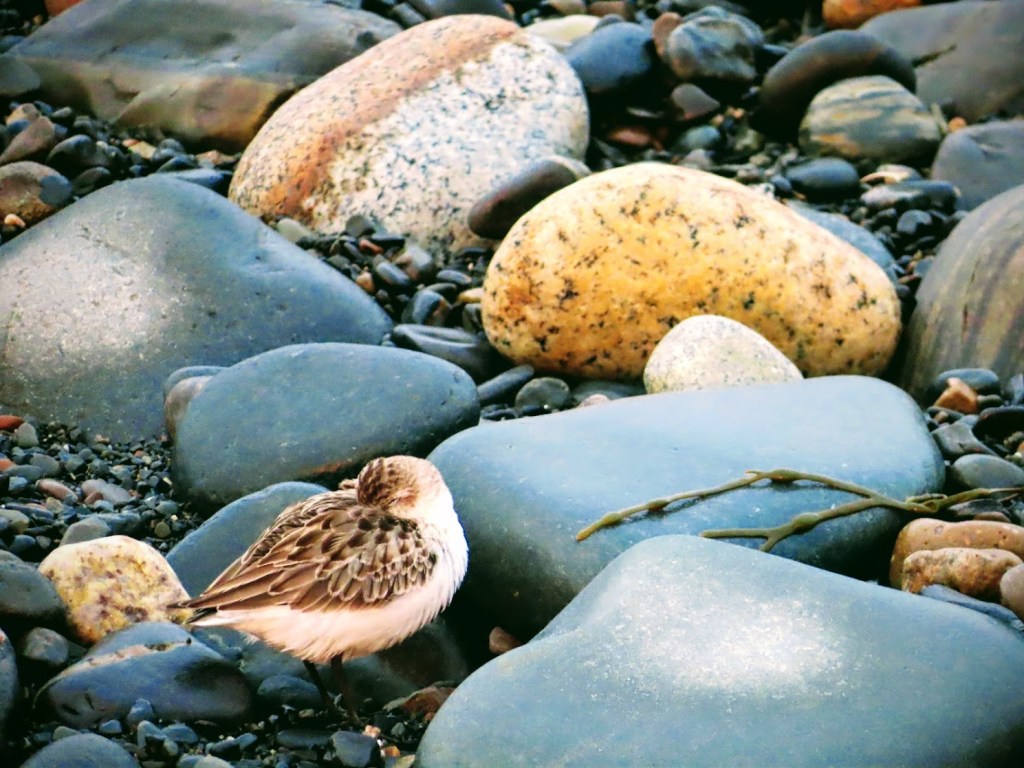
When I took the above photo, I was struck by the near-perfect parallel positions of an eternal rock and a juvenile Plover (who may have been preening or its opposite, hiding from relatively giant petite me). They shared cream undersides and identically angled topcoats of variegated rust and oak.

A single sentient being and an eternally evolving rocky shore, perfectly positioned together in the millisecond I captured them.

And each photo I take represents another contrast: I am both outside and in my own head, here today and somewhere in the past.

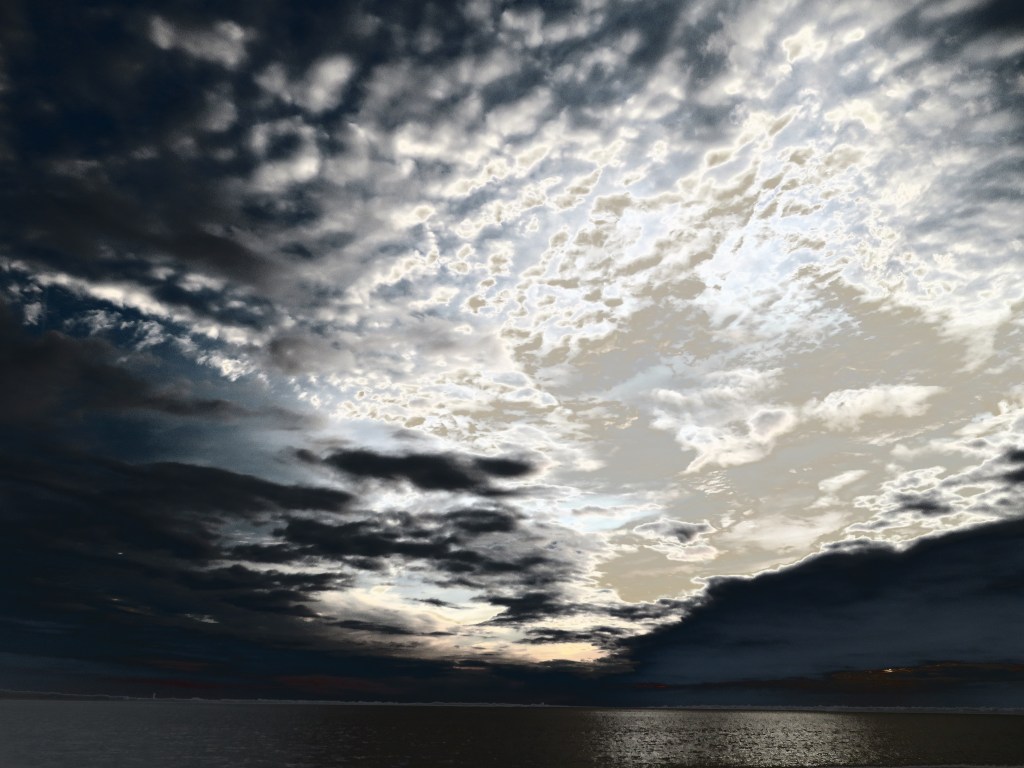
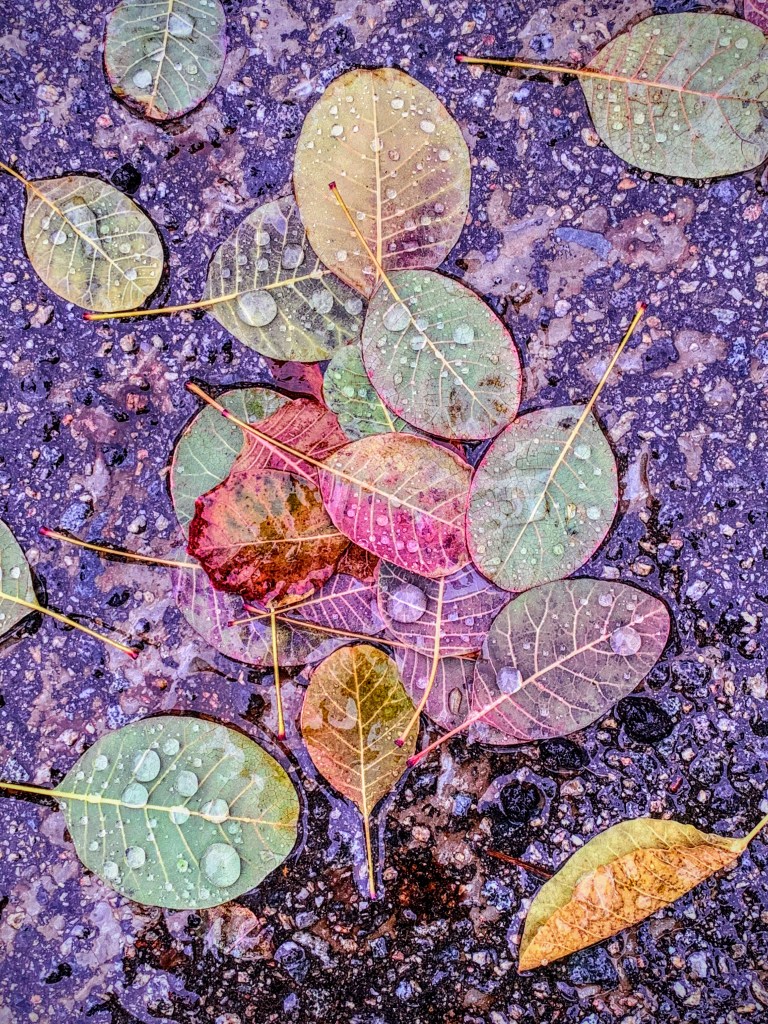
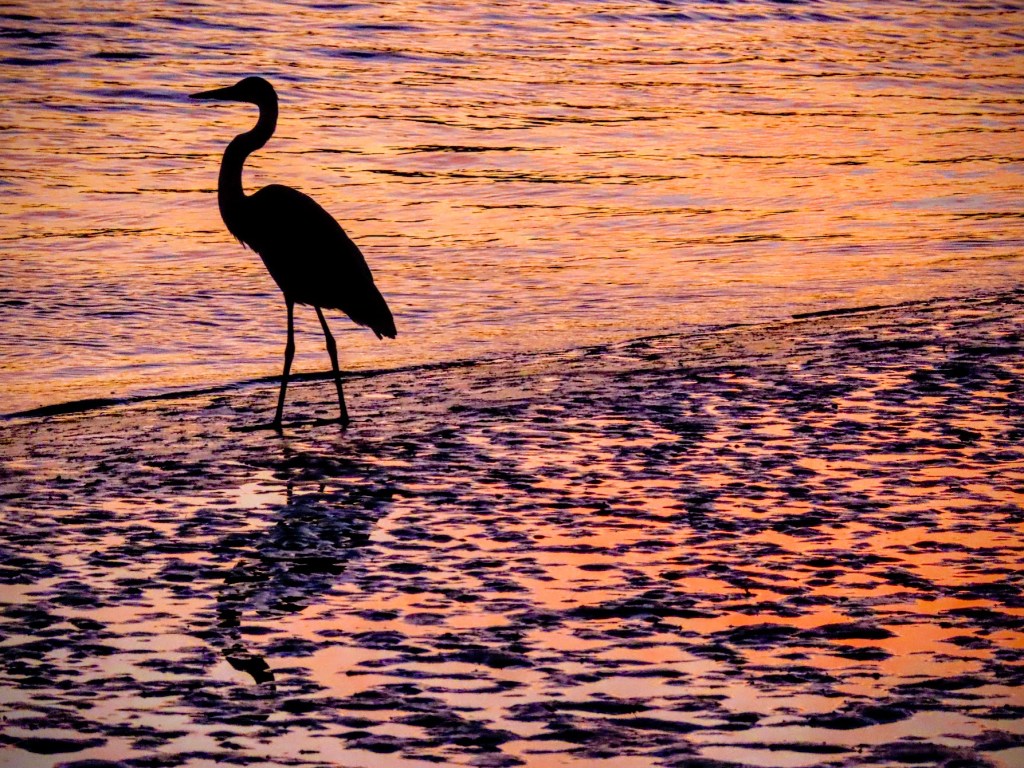
In a single image you may find opaque and transparant, solid and liquid, shallow and deep. Man-made and nature-born. Straight lines turned to wavering reflections. Black and unbound color. Earth and fire and water and sky. Day and night.

Earthly and ethereal. Prickly and soft: an adorable peril. Black and white.

Oil and water. Aloft and anchored. Vibrant and fading.

Liquid and solid. Water and ice. Trapped and free, by degrees.

An unfinished panorama my husband
had been piecing together

Finished and unfinished. Work and play. Practice and perfection. Hits and misses. Monsters and men. On and off base.

Sound and silence. Alone in a crowd.

Gone and still here.

Now Face West

This is the tenth Father’s Day that has dawned for my children without their father here with them.  This year, they all are also separated from each other, occupying different spaces on two continents.

Seven years have passed since we brought his ashes to billow into an underwater cloud at Northern Ireland’s northernmost point.

And, strangely, it is just four years since my own father died on Father’s Day , after living to teach generations of students and be a grandfather to young adults.

I am a theoretical physicist’s daughter: I understand chaotic progression cannot be undone. But I can’t help feeling the world might seem a little less profoundly disordered were they here now.

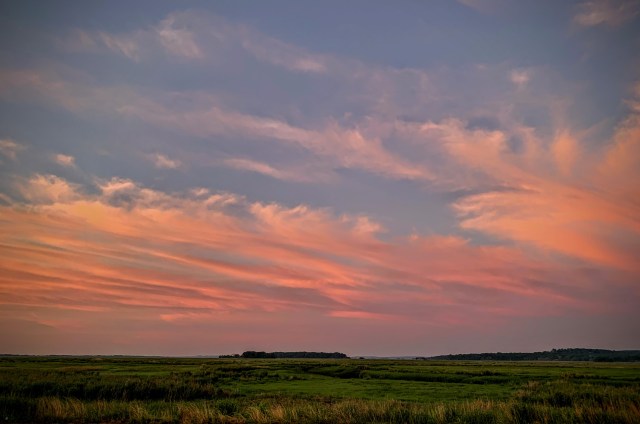
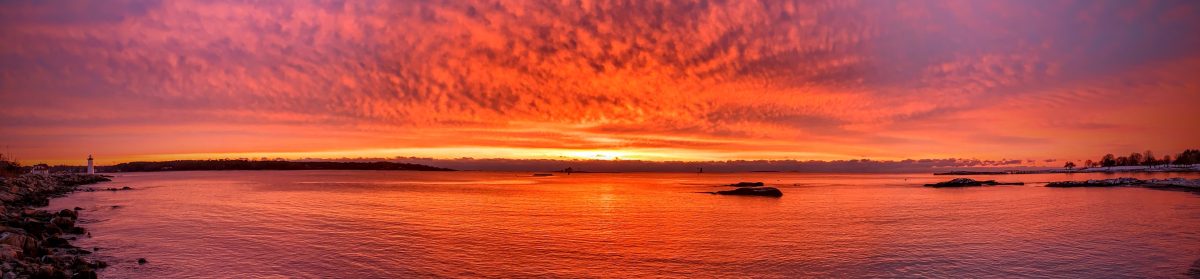
I don’t usually remember to look behind me, but this time I did.  The color there was gentle, the clouds swirling and soft, without the hard bright edges of the too-bright-to-behold sun being delivered squalling into the horizon for the day ahead. 

Sometimes looking back is uncomplicated and beautiful.  

Happy Father’s Day.

Father’s Day 2020


Spring Forward, Fall Back Down

IMG_8249 (2)
Frozen in Time (c) Stephanie M. Glennon


Spring forward, fall back down…”

I know, I know: it couldn’t be much more wintry in New England.

It’s a balmy -6 degrees, enhanced by an order of magnitude for those who dally with windchill.  Boston had its highest recorded tide, sweeping an icy gray lagoon into waterfront streets.

My big boy beagle gazes at me with recrimination when I am compelled to turn around and whisk him back toward home.  He clearly has places to be, but unknowingly relies upon my limited capacity to exhibit adult common sense.  My less than-scientific measure of when I have ventured half as far as we safely can go is the loss of  sensation in triple-gloved hands.  The outermost layer belonged to Jim: enormous blue-green knitted wool  gloves into which Rufus still pauses to press his snow-dusted nose, retrieving scents of his puppyhood.  I am violently allergic to wool. Angry winter welts encircle my right wrist, which one over-sized glove accidentally touched as I struggled to shovel a path through blizzard remnants.

Even my camera is too cold to do its job.  I dare not risk its delicate inner mechanisms’ life for a picture–even of wavering sea-smoke etched in bright gold across the horizon, or planes of dazzling white which migrate across eye-level snowdrifts, or tree branches encased in ice glittering under a super moon.

Other than at sunrise and sunset, which in winter tend to take place during work days, when they rarely can both be seen, bright color has disappeared from the landscape.  It may visit in the form of  a scarlet cardinal or blue jay, or a burst of berries holding fast for them to find.

But this lyric spanning the other seasons has taken its place as resident ear-worm.

I first heard the Weakerthans’ song on the radio while driving back from a solo trip to Bar Harbor.

My city’s still breathing (but barely, it’s true)
Through buildings gone missing like teeth
The sidewalks are watching me think about you,
Sparkled with broken glass
I’m back with scars to show.
Back with the streets I know
Will never take me anywhere but here

My status could be the answer to a riddle: I occupy a new old home in my old home state, having left our old old home in a new home state.

But I am back with streets I know.  In a place I never before lived, I feel I am back home.

Wait for the year to drown
Spring forward, fall back down
I’m trying not to wonder where you are

One daughter came to my new old home for Christmas, bearing a discrete tattoo she explained to me is based on Slaughterhouse Five.

Spring forward, fall back.  I realized it’s not just a handy trick to set clocks to mark time in the seasons that bookend winter’s essence, but a Tralfamadorian progression through life–including waxing and waning grief and hope.  A (Billy) Pilgrim’s progress, if you will (HT Mr. Vonnegut).

I shall try to seize on those glimmers, bright traces which foretell spring or commemorate fall, even when blanketed by colorlessness–the orange fish which glided underneath inches of pond ice as we skated at the old home we shared, the leaf  whose lime stem tilted toward the sun as if it still could absorb light when my beagle’s front paw sank ever-so-slightly into a frozen puddle’s surface, leaving in uneven colonial bricks’ lacuna a ghostly misshapen cameo, a reminder of our presence there made possible by a New England winter.